Well humans have needs one of them is survival... One can easily say that their life is more important than their childs but a robot that is programed for such a task cant just go have sex or go to parties like the uncaring parent does...
Nature shows that there is hardly anything more feroucious than a female defending her offspring, no matter wheather animal or human. There's species-specific and individual exceptions, yes, but that's the general rule. What you describe here is a minority situation, and you suggest a general solution for it that is not called for and would be unwanted by the most part of the population.
Apart from that, the psychological effects of careless parents on their children are pretty much the same in early childhood even if there is another person/robot to prevent the worst. A robot canot give to a child what a mother or father can, ever, because the little buggers are able to recognise pretty well wheather they're welcome or not, and often these impressions over the first 6 years are a strong predeterminator for future character developement.
Plus, a child learns a lot of its parents without either of them realizing it: talking, interpreting and mimicking facial expressions and other basic behaviour patterns. A child raised by a robot would have a high chance to grow up to be a sociopath or show strong signs of autism, unless your Robot is indistinguishable from a human.
Then again, you're not talking about humans, so our psychology may not aply to whoever they are, but I dare say some psychological principals are almost universal, given that psychology is theorized to be formed along with the body during the evolutionary process.
In 50 years I'd be shocked if there weren't at least first-generation housebots, i.e. humanoid robots that do chores, etc. etc. In 100 years I'd be shocked if there was anything less than full-blown androids
I think you're going to be shocked for one major reason: AI hasn't made any significant advances in the last 20 years or so. The only thing that made you think it advanced is the mentioned increase in processing power, which makes AI faster, but not smarter. We're still using pretty much the same algorithms, we just can run more of them in less time, but there's few chances of ever making it really smart (in the way of reacting to a non-defined situation in a non-defined way that still makes sense). And with children, you can be happy if your Robot ever encounters a defined situation...
The only thing we have so far is one hell of a fast version of the chinese room analogy, but I doubt that that would ever get sophisticated enough to takle a task like child rearing. Whipping your floor, ok, that should work fine...
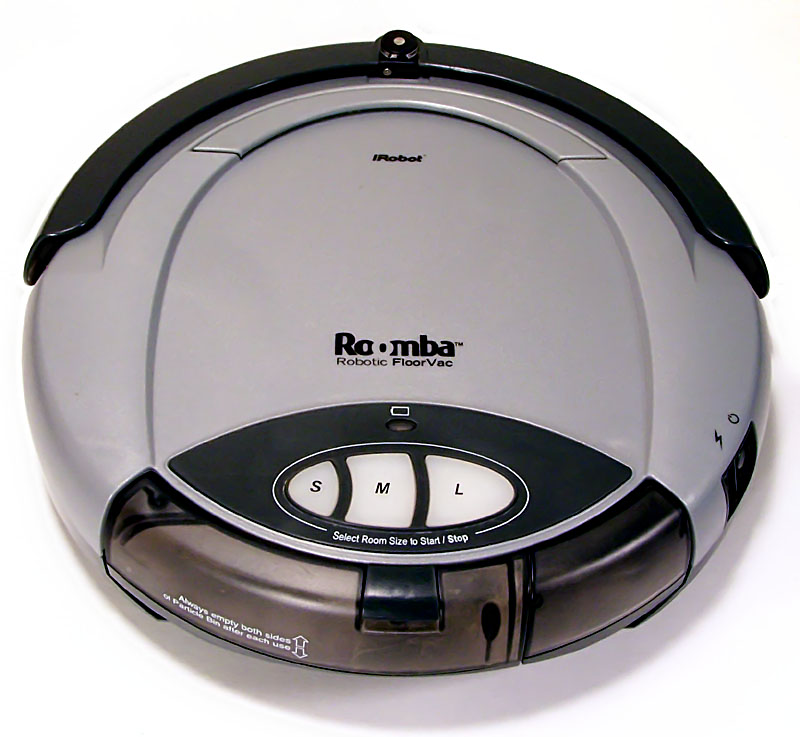
Then there's the construction problem of humanoid robots: They weight a darn lot, consume a lot of power and need a significant amount of their processing power for intuitive things like balance and eye-hand coordination. I don't think they make much sense. The Roomba is a pretty efficient design for whipping your floor, there's really no reason for it having two legs and two arms. A robot that serves your table would be better if it had rolls, a seizable area to put dishes, and one or more arms to put things were they need putting. Again, a humanoid design would be inferior. I simply don't see a reason for a non-specialized design that can do everything, when specialised alternatives are way cheaper and probably more safe.