Science Rapid Interstellar spaceflight, exploration and,colonization thread

Just because the colonists aren't human, doesn't mean they will be perfectly fine with... with... having... life-long... pregnancy-torture...

Also, your ratio of caregivers-colonists (adults to children) is horrendously bad; it is probably illegal for a daycare in the US...
 
Well such laws may not apply for another civialization...
 
I already seriously question the ability for a human crew to build such infrastructure in the wilderness, let alone the ability for a bunch of automatons to do it... :uhh:

The shuttles would be refueled in the wilderness, not the spacecraft itself. A small system could be used to generate electricity, split oxygen from hydrogen in water, a cooling system takes them down to a liquid state. It doesn't need a high rate, so it doesn't need to be very heavy. It could possibly even be smaller than a trailer, not even storing the LOX/LH-2 on site but dumping it into the shuttle's tanks as it's made.

Or, better yet, just use hydrogen and make the shuttles run off of fusion, dunno if you can get enough thrust from fusion, though.

Children onboard the ship (and even at the destination before the colony is properly established) are a bad idea. They tax resources while not being of much use to the operation of the ship or associated equipment.

The problem I have with embryos here, is that turnining people into baby-making machines can't be good socially.

I think almost as bad would be the effects of having an age-gap. There are negative consequences to this on the scale of the entire society...
 
Well such laws may not apply for another civialization...

"Another civilisation" does not mean "something magical happens here".

For example, if you... selectively bred a sapient species out of elephants, or parrots... they would face much the same problems here, if not worse.

The shuttles would be refueled in the wilderness, not the spacecraft itself. A small system could be used to generate electricity, split oxygen from hydrogen in water, a cooling system takes them down to a liquid state. It doesn't need a high rate, so it doesn't need to be very heavy. It could possibly even be smaller than a trailer, not even storing the LOX/LH-2 on site but dumping it into the shuttle's tanks as it's made.

Or, better yet, just use hydrogen and make the shuttles run off of fusion, dunno if you can get enough thrust from fusion, though.

Even be smaller than a trailer? Maybe... maybe we need to do the math first. ;)

Where are you going to get the hydrogen? From water? You still need to electrolyse the hydrogen, then. Getting it from a gas giant? Pretty difficult without extra infrastructure.

Even a surface-orbit shuttle needs quite a bit of propellant.

I think almost as bad would be the effects of having an age-gap. There are negative consequences to this on the scale of the entire society...

I don't know, I mean, there is an age gap between me and my parents of several decades and isn't like I can relate to them whatsoever.

Besides, the children will definitely have siblings of a similar age to socialise with anyway.

The 'baggage' of children onboard the ship and in the nascent colony is too high a price for the supposed age-gap mitigation.
 
Well we realy dont have a good example of the nature an ETciv... So...
But they may have completely different needs not to say they are pure energy beings who feed on the dying souls of plants but to say that maybe they evolved where they are completely dependent on automata... Or they anarchic with a very weak government if at all... Or they are eusocial with no concept of death life or individuality...And just as cultures and traditions vary wildly here on earth their cultures may very wildly too... Biology plays into a factor too... Maybe embryos can feed off our equivalent of cricket food and dont need much care...
 
What's an "ETciv"?

Why would they be "completely dependant on automata"? Why would they be "anarchic with a weak government if at all"? Why would a eusocial species act in any way that is similar to what you describe?

Sorry, but it really sounds like Planet of Hats territory to me. There's a difference between "traits X, Y and Z could lead to this sort of society and culture", and "they could be obsessed with clowns", or whatever.

And it is a biology thing. The developmental requirements of a sapient organism, not only in terms of pure biology but necessary psychological learning, don't go very well with... "babies you can breed like mealworms".

"Don't need much care" makes absolutely no sense; organisms that do not display any (or much) parental care are usually unintelligent; intelligent organisms have longer developmental stages, are usually altricial, and require a lot of care.

And biology aside, you have to learn stuff. Otherwise that sapience is just wasted.
 
Etciv is my way of extraterrestrial civilization...
Well they could be completely dependent on automata because maybe they just sit in leisure like area of their planet while automata performs all farming and mining and etc... And the only way they survive is because the automata provides them stuff...

Im not saying that babies could be born and raised in gel but more or less develops in it instead and the parent(s) raise it from that point on...
 
Maybe someone's idea of leisure is farming and mining and stuff. And someone has to oversee the robots, etc. And if nobody needs to oversee the robots, maybe people will want to. After all, what are these people supposed to do all day? Vegetate?

"Growing in gel" is not as much as a problem as "child-to-parent ratio of 50". I'm pretty sure that is illegal in pretty much any daycare center anywhere on this world and probably in most off of this world, too...
 
Last edited:
Maybe someone's idea of leisure is farming and mining and stuff. And someone has to oversee the robots, etc. And if nobody needs to oversee the robots, maybe people will want to. After all, what are these people supposed to do all day? Vegetate?

"Growing in gel" is not as much as a problem as "child-to-parent ratio of 50". I'm pretty sure that is illegal in pretty much any daycare center anywhere on this world and probably in most off of this world, too...

However any species who may be dependant on automata may have developed to the point where they are put into a self made zoo... And if they want to enjoy the world outside the zoo could enjoy it through an automata like telepresense...

I didnt mean growing in gel i meant like instead of carrying a child in the womb you could put it in a artificial womb...
 
However any species who may be dependant on automata may have developed to the point where they are put into a self made zoo... And if they want to enjoy the world outside the zoo could enjoy it through an automata like telepresense...

Why? What's wrong with, y'know, experiencing the outside world for real?

And anyone who has even the slightest idea of what a proper zoo should be like would notice that animals require a good deal of [ame="http://en.wikipedia.org/wiki/Behavioral_enrichment"]enrichment[/ame] to keep them happy, and by extension, healthy. Work is a kind of enrichment; work is only bad when it's (a) too tiring, (b) physically detrimental and (c) uninteresting/boring to the party involved. Most people would work even if they didn't have to.

I didnt mean growing in gel i meant like instead of carrying a child in the womb you could put it in a artificial womb...

Yeah... that solves the painfully disgusting "baby factory" bit, but doesn't solve the child-rearing bit...
 
There will still be parents with the addition of robots... Maybe neurointerface tech may allow mind downloading or something similar...

The following image is what ill be colonizing in orbiter...
 

Attachments

  • Hab texture.jpg
    Hab texture.jpg
    48 KB · Views: 19
Oh yeah, let's all kill ourselves and make robots that supposedly think like us... :rolleyes:

A robot isn't a parent. A robot can be an intelligent childminder, but it isn't a parent. There's a big difference.

That looks like an interesting planet.
 
Last edited:
Oh yeah, let's all kill ourselves and make robots that supposedly think like us... :rolleyes:

A robot isn't a parent. A robot can be an intelligent childminder, but it isn't a parent. There's a big difference.

That looks like an interesting planet.

Well we realy dont have any data indicating whether a robot could be a good parent or not... We are still in the development stages of robotics and probably we wont be seeing robots in our houses intil 50yrs from now... So...

I made that planet myself using your advice... Thankyou...
 
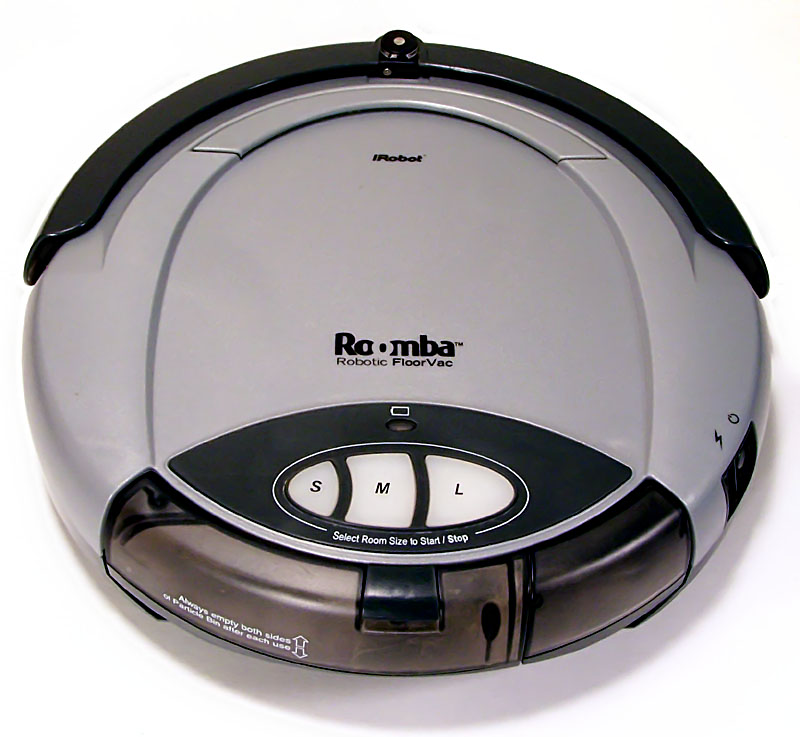
You sure?

Roomba_original.jpg


Ok, so you don't see them in every home. But they exist.

If most humans can't be good parents, how do you expect robots to do the job so easily? :shifty:
 
You sure?

Roomba_original.jpg


Ok, so you don't see them in every home. But they exist.

If most humans can't be good parents, how do you expect robots to do the job so easily? :shifty:


Well when i mean by robots i mean multi-task AI robots like in the movie IRobot... Well humans have needs one of them is survival... One can easily say that their life is more important than their childs but a robot that is programed for such a task cant just go have sex or go to parties like the uncaring parent does... Nor could it put its life over the childs as it has no life...
 
Even I, Robot gets the multi-task AI robot thing wrong. :rolleyes:

And bad parenting is certainly not limited to things such as abandoning children for partying or other such exploits...
 
Even I, Robot gets the multi-task AI robot thing wrong. :rolleyes:

And bad parenting is certainly not limited to things such as abandoning children for partying or other such exploits...

Well like i previously said we have no solid evidence that we can verify that proves or disproves robots can make bad parents in this decade... We should leave that to scientist in the future...
 
Hey, all I know is that generally organisms aren't brought up by can openers. Or entities that have absolutely no idea what children experience.

And that TV and video games don't make good babysitters. :facepalm:
 
Hey, all I know is that generally organisms aren't brought up by can openers. Or entities that have absolutely no idea what children experience.

And that TV and video games don't make good babysitters. :facepalm:

Usually people who underestimate machines end up wrong, and usually people who "overestimate" machines end up underestimating how well they'll do in the future.
Right now they're working on object identification/recognition in machines. 50 Years ago... Heck, 50 years ago your cell phone would have more processing power than a building-sized computer. In 50 years I'd be shocked if there weren't at least first-generation housebots, i.e. humanoid robots that do chores, etc. etc. In 100 years I'd be shocked if there was anything less than full-blown androids (and by that I mean robots asthetically like the ones from the movie iRobot. Personally I don't think people would ever make a robot you could ever mistake for a human...)

After all, you can make a robot do anything with the right software. Software is more or less all it takes, now, if anybody could figure it out. I remember hearing Japan already has robots in the works to assist the elderly at home in the upcoming decades.
 
Well humans have needs one of them is survival... One can easily say that their life is more important than their childs but a robot that is programed for such a task cant just go have sex or go to parties like the uncaring parent does...

Nature shows that there is hardly anything more feroucious than a female defending her offspring, no matter wheather animal or human. There's species-specific and individual exceptions, yes, but that's the general rule. What you describe here is a minority situation, and you suggest a general solution for it that is not called for and would be unwanted by the most part of the population.

Apart from that, the psychological effects of careless parents on their children are pretty much the same in early childhood even if there is another person/robot to prevent the worst. A robot canot give to a child what a mother or father can, ever, because the little buggers are able to recognise pretty well wheather they're welcome or not, and often these impressions over the first 6 years are a strong predeterminator for future character developement.

Plus, a child learns a lot of its parents without either of them realizing it: talking, interpreting and mimicking facial expressions and other basic behaviour patterns. A child raised by a robot would have a high chance to grow up to be a sociopath or show strong signs of autism, unless your Robot is indistinguishable from a human.

Then again, you're not talking about humans, so our psychology may not aply to whoever they are, but I dare say some psychological principals are almost universal, given that psychology is theorized to be formed along with the body during the evolutionary process.

In 50 years I'd be shocked if there weren't at least first-generation housebots, i.e. humanoid robots that do chores, etc. etc. In 100 years I'd be shocked if there was anything less than full-blown androids

I think you're going to be shocked for one major reason: AI hasn't made any significant advances in the last 20 years or so. The only thing that made you think it advanced is the mentioned increase in processing power, which makes AI faster, but not smarter. We're still using pretty much the same algorithms, we just can run more of them in less time, but there's few chances of ever making it really smart (in the way of reacting to a non-defined situation in a non-defined way that still makes sense). And with children, you can be happy if your Robot ever encounters a defined situation...
The only thing we have so far is one hell of a fast version of the chinese room analogy, but I doubt that that would ever get sophisticated enough to takle a task like child rearing. Whipping your floor, ok, that should work fine...

Then there's the construction problem of humanoid robots: They weight a darn lot, consume a lot of power and need a significant amount of their processing power for intuitive things like balance and eye-hand coordination. I don't think they make much sense. The Roomba is a pretty efficient design for whipping your floor, there's really no reason for it having two legs and two arms. A robot that serves your table would be better if it had rolls, a seizable area to put dishes, and one or more arms to put things were they need putting. Again, a humanoid design would be inferior. I simply don't see a reason for a non-specialized design that can do everything, when specialised alternatives are way cheaper and probably more safe.

 
Last edited:
Back
Top