Follow along with the video below to see how to install our site as a web app on your home screen.
Note: This feature may not be available in some browsers.
ORBITER-FORUM will be temporarily closed at 2026-07-23 18:00 UTC while we complete some OF maintenance tasks. The amount of downtime is expected to take up to one hour, but probably less.
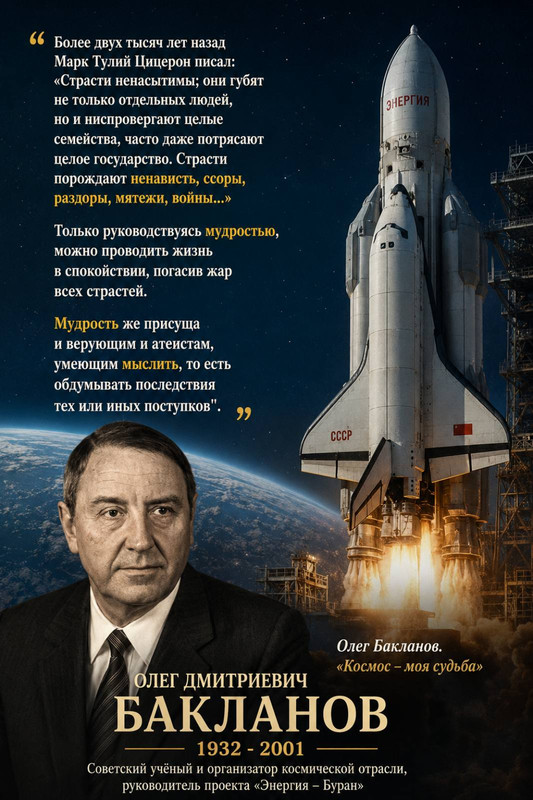
"Пуск первого штатного МКС(многоразовый космический комплекс) «Энергия–Буран» 1Л был запланирован на 15 октября 1988 года. При осуществлении автоматической программы запуска МКС, которая реализует последовательное прохождение более 350 команд на исполнение и проверку всех операций по подготовке носителя к полету за 41-й сек. до включения двигателей, произошел отбой. Причиной явилась неотстыковка платы системы прицеливания из-за заклинивания механизма соединения. Топливо с изделия было слито, причины определены
однозначно и устранены. Повторный пуск комплекса 1Л был реализован 15 ноября 1988 года успешно. Орбитальный комплекс «Буран»
совершил два витка вокруг Земли и автоматически приземлился на
специальном аэродроме на Байконуре при сильном встречно-боковом ветре (до 25 м/с) с большой точностью. Касание посадочной полосы с точностью до 80 м, отклонение от расчетной белой полосы – 1,5 м. Снаряжение ОК «Буран» было несколько нештатным: отсутствовали системы жизнеобеспечения и энергетическая установка для
энергообеспечения ОК при штатной продолжительности полета.
К первым летным испытаниям комплекса 6СЛ и 1Л надежность двигателей 11Д521 и 11Д122 была резко увеличена.
На момент запуска комплекса 6СЛ было испытано уже 135 двигателей 11Д521 в 432 огневых прожигах с общей наработкой 46 900
сек., что соответствовало 335 летным циклам. По двигателю 11Д122 были проведены 472 испытания на 96 двигателях с общей
наработкой 63 360 сек., что составило 138 летных циклов.
При пуске комплекса 1Л двигатель 11Д521 прошел 546 испытаний на 193 двигателях с общей наработкой 73 500 сек. (507 летных
циклов). В результате чего двигатель 11Д521 имел гарантированно 10 ресурсов по продолжительности работы при 5% увеличения величины тяги.
Двигатель 11Д122 к этому полету прошел 504 огневых испытания на 105 двигателях, имел общую наработку 80 000 сек. (174
летных циклов) и имел гарантированный трехкратный ресурс работы.
Таким образом, при обеспечении наземной и летной отработки МКС «Энергия–Буран» создан уникальный комплекс наземных стендов и экспериментальных установок, который может обеспечить надежную отработку всех перспективных и больших ракетносителей, разгонных блоков, многоразовых космических транспортных средств, орбитальных многоразовых кораблей и станций".(Олег Бакланов."Космос – моя судьба").
......................................................................
Цит.по: Олег Дмитриевич Бакланов
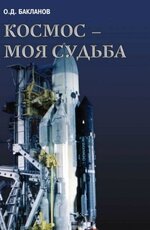
КОСМОС – МОЯ СУДЬБА
Записки из «Матросской тишины»
I том
Редактор-составитель В.П. Лысенко
_______________________________
Директор АНО «ОСЛН» Л.Г. Рудин
Дизайн, компьютерная верстка А.Е. Успенский
Корректор Л.И. Смирнова
Общество сохранения литературного наследия / Москва /2012 год
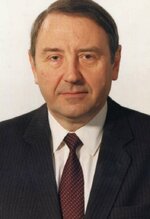
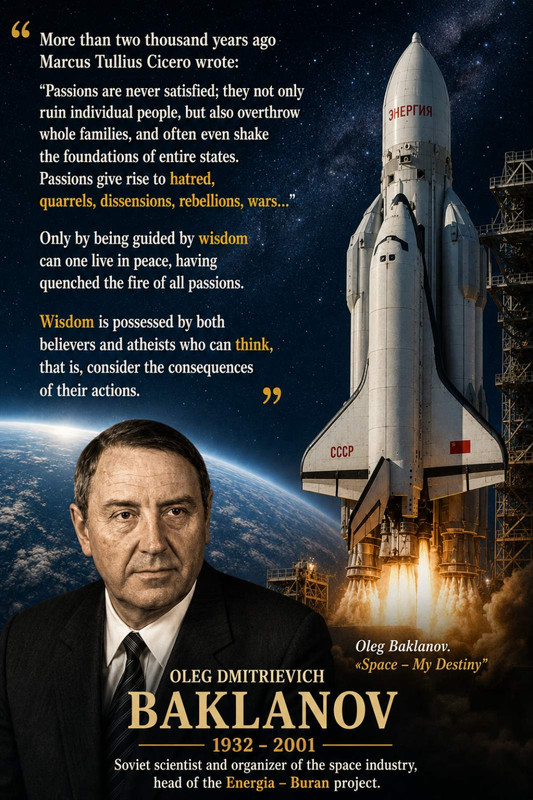
На фото слева - обложка книги "Космос - моя судьба": на фото справа - автор книги Олег Бакланов. "The launch of the first operational Energia–Buran reusable space transportation system (RSTS), vehicle 1L, was scheduled for October 15, 1988. During execution of the automatic launch sequence, which involved the sequential processing and verification of more than 350 commands over the final 41 seconds before engine ignition, the countdown was aborted.
The cause was the failure of a guidance-system board to disconnect because of a jammed coupling mechanism. The propellants were drained from the vehicle, the cause was identified unambiguously and corrected. The second launch attempt of vehicle 1L was successfully carried out on November 15, 1988.
The Buran orbital spacecraft completed two orbits around Earth and landed automatically on a specially prepared runway at Baikonur despite strong crosswinds and headwinds (up to 25 m/s), achieving remarkable accuracy. Touchdown occurred within 80 meters of the target point, and the deviation from the designated centerline was only 1.5 meters.
The Buran orbiter was not fully equipped for this mission: life-support systems and the onboard power system required for a full-duration operational flight were not installed.
Before the first flight tests of vehicles 6SL and 1L, the reliability of the 11D521 and 11D122 engines had been significantly improved.
By the time of the 6SL launch, 135 model 11D521 engines had undergone 432 hot-fire tests with a total operating time of 46,900 seconds, equivalent to 335 flight cycles.
For the 11D122 engine, 472 tests had been conducted on 96 engines, with a total operating time of 63,360 seconds, equivalent to 138 flight cycles.
By the time of the 1L mission, the 11D521 engine had undergone 546 hot-fire tests on 193 engines, accumulating 73,500 seconds of operation (507 flight cycles). As a result, the 11D521 engine possessed a guaranteed service life equivalent to ten full mission durations while providing a 5% increase in thrust.
The 11D122 engine, by that time, had completed 504 hot-fire tests on 105 engines, accumulated 80,000 seconds of operation (174 flight cycles), and possessed a guaranteed threefold service-life margin.
Thus, during the ground and flight testing of the Energia–Buran system, a unique complex of ground-test stands and experimental facilities was created. This infrastructure became capable of supporting the reliable development and testing of future heavy launch vehicles, upper stages, reusable space transportation systems, reusable orbital spacecraft, and space stations."
Director of the Society for the Preservation of Literary Heritage: L.G. Rudin
Design and layout: A.E. Uspensky
Proofreader: L.I. Smirnova
Society for the Preservation of Literary Heritage
Moscow, 2012
The photo on the left shows the cover of the book "Space is My Destiny": the photo on the right shows the book's author, Oleg Baklanov.
"El lanzamiento del primer sistema espacial reutilizable operativo Energía–Burán (vehículo 1L) estaba programado para el 15 de octubre de 1988. Durante la ejecución de la secuencia automática de lanzamiento, que implicaba la ejecución y verificación consecutiva de más de 350 órdenes durante los últimos 41 segundos antes del encendido de los motores, se produjo una cancelación automática.
La causa fue que una placa del sistema de guiado no se desacopló debido al bloqueo de un mecanismo de unión. El combustible fue drenado del vehículo, la causa fue identificada de forma inequívoca y eliminada. El segundo intento de lanzamiento del vehículo 1L se realizó con éxito el 15 de noviembre de 1988.
La nave orbital Burán completó dos órbitas alrededor de la Tierra y aterrizó automáticamente en una pista especialmente preparada en Baikonur, a pesar de fuertes vientos laterales y de frente (de hasta 25 m/s), logrando una precisión extraordinaria. El contacto con la pista se produjo con una precisión de 80 metros y la desviación respecto a la línea central prevista fue de tan solo 1,5 metros.
El equipamiento del orbitador Burán para esta misión no era completamente estándar: carecía de sistemas de soporte vital y de la instalación energética necesaria para una misión de duración completa.
Antes de las primeras pruebas de vuelo de los vehículos 6SL y 1L, la fiabilidad de los motores 11D521 y 11D122 había aumentado considerablemente.
Para el lanzamiento del complejo 6SL, se habían probado ya 135 motores 11D521 en 432 encendidos experimentales, con un tiempo total de funcionamiento de 46.900 segundos, equivalente a 335 ciclos de vuelo.
En el caso del motor 11D122, se realizaron 472 pruebas sobre 96 motores, acumulando un tiempo total de funcionamiento de 63.360 segundos, equivalente a 138 ciclos de vuelo.
Para la misión 1L, el motor 11D521 había superado 546 pruebas de encendido sobre 193 motores, acumulando 73.500 segundos de funcionamiento (507 ciclos de vuelo). Como resultado, el motor 11D521 disponía de una vida útil garantizada equivalente a diez misiones completas, manteniendo además un incremento del 5 % en el empuje.
El motor 11D122, para entonces, había completado 504 pruebas de encendido sobre 105 motores, acumulando 80.000 segundos de funcionamiento (174 ciclos de vuelo), y poseía una reserva garantizada equivalente a tres ciclos completos de servicio.
De este modo, durante las pruebas terrestres y de vuelo del sistema Energía–Burán, se creó un complejo único de bancos de ensayo e instalaciones experimentales. Esta infraestructura permitía realizar con gran fiabilidad el desarrollo y la validación de futuros lanzadores pesados, etapas superiores, sistemas espaciales reutilizables, vehículos orbitales reutilizables y estaciones espaciales."
Director de la Sociedad para la Conservación del Patrimonio Literario: L.G. Rudin
Diseño y maquetación: A.E. Uspenski
Correctora: L.I. Smirnova
Sociedad para la Conservación del Patrimonio Literario
Moscú, 2012
La foto de la izquierda muestra la portada del libro "El espacio es mi destino"; la foto de la derecha muestra al autor del libro, Oleg Baklanov.
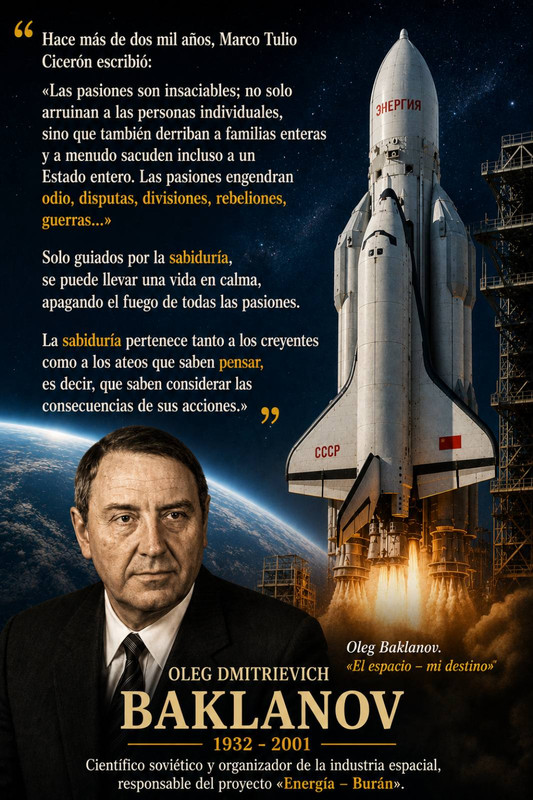
Космическая живопись в СССР. «Впервые на Марсе» (вторая половина 1950-х).
Художник Н. Кольчицкий Space painting in the USSR. "For the First Time on Mars" (second half of the 1950s).
Artist N. Kolchitsky Pintura espacial en la URSS. «Por primera vez en Marte» (segunda mitad de la década de 1950).
Artista: N. Kolchitsky
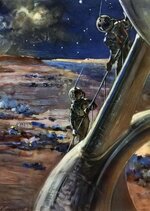
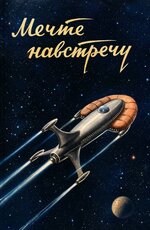
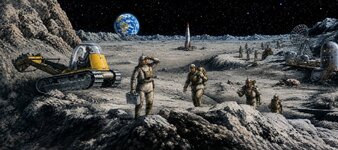
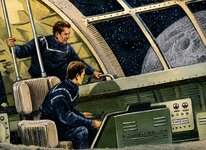
"…Самолет-ракетка опускается в глубь пропасти, которая, кажется, пронизывает Луну насквозь. Лучи прожекторов упираются в непроницаемый мрак, не в силах справиться с тьмой. На экране локатора вырисовываются контуры дна. Оно усеяно кратерами. Край стены наверху освещен Солнцем. Светлая полоса возникает где-то вдали и, все расширяясь, уходит, пропадает тоже вдали. Слабые блики ложатся на другую стену, вырывают из мрака прихотливый узор скал. На дне же — темно, ибо нечему рассеять свет. Лишь при искусственном освещении, включив фонари на скафандрах, путешественники могут заняться своей работой.
Ущелье интересно для них как естественный разрез Луны — тут сразу видно, какова «кора» лунного шара. Именно в ущельях они нашли гнезда радиоактивных руд, могли наглядно убедиться, что наша соседка богата редкими металлами, которые еще пригодятся людям.
Взяты пробы, засняты виды, сделано все, что намечено планом. Как огни маяка, светят во мраке прожекторы. Вот уже шире кусочек неба… ближе освещенная полоса. Наконец весь небесный купол — над ними, и самолет вновь набирает высоту. И темной полоской среди гор становится громадная расселина, где только что побывали люди".(Б. Ляпунов. «Мечте навстречу»
_____________________________________________________________________________________________________________ Цит. по: Б. Ляпунов «Мечте навстречу» Авторский сборник, первое издание).
Научно-фантастические очерки "...The rocket-plane descends into the depths of a chasm that seems to pierce the Moon all the way through. The beams of the searchlights strike an impenetrable darkness, unable to overcome the gloom. On the radar screen, the outlines of the bottom begin to appear. It is covered with craters.
The edge of the wall high above is illuminated by the Sun. A bright strip appears somewhere in the distance, widening steadily before fading away again far off. Faint reflections fall upon the opposite wall, pulling from the darkness the intricate patterns of the rocks.
But at the bottom there is complete darkness, for there is nothing to scatter the light. Only under artificial illumination, switching on the lamps mounted on their spacesuits, can the explorers begin their work.
The canyon is of great interest to them as a natural cross-section of the Moon — here one can immediately see the structure of the lunar crust. It was in such canyons that they discovered deposits of radioactive ores and were able to see with their own eyes that our celestial neighbor is rich in rare metals that may one day be useful to humanity.
Samples have been collected, landscapes photographed, and everything planned has been completed. The searchlights shine in the darkness like lighthouse beacons.
Now the patch of sky grows wider... the illuminated strip draws nearer. At last the entire celestial dome stretches above them, and the rocket-plane begins to gain altitude once more. The gigantic fissure in which they had just been working becomes a dark line among the mountains".
Science-fiction essays "...El avión cohete desciende a las profundidades de una grieta que parece atravesar la Luna de lado a lado. Los haces de los reflectores chocan contra una oscuridad impenetrable, incapaces de vencer las tinieblas. En la pantalla del radar comienzan a perfilarse los contornos del fondo. Está cubierto de cráteres.
El borde de la pared superior está iluminado por el Sol. Una franja luminosa aparece a lo lejos y, ensanchándose cada vez más, se pierde nuevamente en la distancia. Débiles reflejos se proyectan sobre la pared opuesta, arrancando de la oscuridad los caprichosos contornos de las rocas.
Pero en el fondo reina la oscuridad absoluta, porque no hay nada que disperse la luz. Solo con iluminación artificial, encendiendo las lámparas instaladas en sus trajes espaciales, los exploradores pueden dedicarse a su trabajo.
La garganta es especialmente interesante para ellos como un corte natural de la Luna, pues permite observar directamente la estructura de la corteza lunar. Precisamente en estas grietas encontraron yacimientos de minerales radiactivos y pudieron comprobar con sus propios ojos que nuestra vecina celeste es rica en metales raros que algún día serán útiles para la humanidad.
Se han tomado muestras, fotografiado paisajes y realizado todo lo previsto en el plan. Los reflectores brillan en la oscuridad como faros.
Ahora el fragmento de cielo se ensancha... la franja iluminada está cada vez más cerca. Finalmente, toda la bóveda celeste se extiende sobre ellos, y el avión cohete vuelve a ganar altura. La gigantesca grieta en la que acaban de trabajar se convierte en una oscura línea entre las montañas".
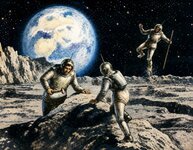
"Вокруг мы видим горы, громады их подчеркнуты и прорисованы тенями. Как описать вам своеобразие лунного пейзажа? Представьте себе картину, нарисованную одной только черной тушью. Сверкающие склоны и черные борозды, режущий глаза свет и кляксы туши. Никаких полутеней, полутонов, расстояния путаются, ближний холм не отличишь от далекой горы. На равнине я вижу обведенные тенью ямки — они тянутся пунктиром до горизонта".(Борис Ляпунов. "Первый час на Луне" (репортаж).
________________________________________________________________________________________________________________
Цит. по: «Полет на Луну» Сборник Составители: Георгий Гуревич, Карл Гильзин
Москва. Издательство Трудрезервиздат, 1955 г.
Серия: Фантастика. Приключения “Around us we see mountains, their immense masses emphasized and outlined by shadows. How can I describe to you the uniqueness of the lunar landscape?
Imagine a picture drawn entirely with black ink. Gleaming slopes and black furrows, a light so bright it hurts the eyes, and blotches of ink-black darkness. There are no half-shadows, no intermediate tones. Distances become confused; it is impossible to distinguish a nearby hill from a distant mountain.
On the plain I see small pits outlined by shadows — they stretch in a dotted line all the way to the horizon.”
(Boris Lyapunov, “The First Hour on the Moon” (A Reportage))
Series: Science Fiction. Adventure “A nuestro alrededor vemos montañas, cuyas enormes masas están resaltadas y delineadas por las sombras. ¿Cómo describirles la singularidad del paisaje lunar?
Imaginen una imagen dibujada únicamente con tinta negra. Laderas resplandecientes y surcos negros, una luz que hiere los ojos y manchas de oscuridad semejantes a tinta derramada. No existen medias sombras ni tonos intermedios. Las distancias se confunden; es imposible distinguir una colina cercana de una montaña lejana.
En la llanura veo pequeños hoyos delineados por las sombras; se extienden en una línea punteada hasta perderse en el horizonte.”
(Borís Liapunov, “La primera hora en la Luna” (Reportaje))
«…Мы на Плутоне. Солнце светит нам в спину, и лёгкая тень от корпуса гигантского корабля лежит на бесконечной сумрачной равнине, как дорога в неизвестное. Здесь границы солнечной системы. За ней, там, дальше, распростёрся бескрайний океан космического пространства. Но и его чёрную бездну пересекут когда-нибудь посланцы Земли, отправившиеся на разведку соседних звёзд» (М. Васильев. "Путешествия в космос")
..........................................................................
Цит.по: Михаил Васильевич Васильев
ПУТЕШЕСТВИЯ В КОСМОС
Второе переработанное и дополненное издание/ Москва/Издательство "Советская Россия"/1958 год На фото: картина художника Н. Кольчицкого "На Плутоне". “…We are on Pluto. The Sun shines behind us, and the faint shadow of the gigantic spacecraft lies across the endless twilight plain like a road into the unknown.
Here are the boundaries of the Solar System.
Beyond them, farther away, stretches the boundless ocean of cosmic space.
But one day even its black abyss will be crossed by envoys of Earth, setting out to explore the neighboring stars.”
Photo: painting by artist N. Kolchitsky “On Pluto”
“…Estamos en Plutón. El Sol brilla a nuestras espaldas, y la tenue sombra de la gigantesca nave espacial se extiende sobre la interminable llanura crepuscular como un camino hacia lo desconocido.
Aquí se encuentran las fronteras del Sistema Solar.
Más allá de ellas, mucho más lejos, se extiende el océano infinito del espacio cósmico.
Pero algún día incluso su negro abismo será atravesado por emisarios de la Tierra, que partirán para explorar las estrellas vecinas.”
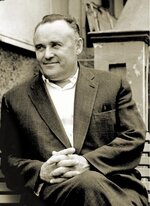
"Во время встреч с Королевым я хорошо представлял себе масштабы этого человека и то место, которое он занимал в советской и мировой космонавтике. Я понимал, что передо мной человек исторический в буквальном смысле этого слова, и не скрывал своего интереса к нему. Несколько раз заводил я разговор о его прошлом, о юношеских годах, но, насколько я помню, он не поддерживал этой темы и всегда старался свернуть с нее куда-нибудь в сторону. Один раз я прямо сказал, что хочу написать о нем большой очерк.
- Как-нибудь в другой раз,— лениво отмахнулся Сергей Павлович.— Мне сейчас некогда этим заниматься... Еще будет время для мемуаров.."
Мог ли кто-нибудь предположить тогда, что этому замечательному человеку, такому энергичному, такому крепкому с виду, осталось меньше года жизни...
При жизни Сергея Павловича я не написал о нем ни строчки, если не считать скрытого за псевдонимом Главного конструктора в «Кузнецах грома». И узнал я о нем больше после его смерти, чем при жизни. Добавить к тому, что уже написано о Сергее Павловиче, трудно: в две-три страницы такой характер не уложишь.
Говорят: Королев устраивал «разносы», выгонял из кабинета, дерзил большому начальству. Рассказывают: был мягок, деликатен, ласков. Снимал напряжение анекдотом, цитировал поэтов, мечтал. Все так, все точно. Эти состояния, которые кажутся несовместимыми, держались всегда на одном прочнейшем каркасе — на увлеченности своей работой. Это было самое главное. Это было сильнее сердечных привязанностей, сильнее физической усталости, сильнее его самого. Он был радостный раб своего труда. Он не мог освободиться от него ни на минуту. Я прочел недавно: Микеланджело неделями не спускался со строительных лесов, когда расписывал потолок Сикстинской капеллы, спал там прямо на досках, капли краски превратили его одежду в заскорузлый панцирь, который потом с него срезали ножом. Я вспомнил Королева. Другое время, другой труд, но дух — тот же!".(Ярослав Голованов. "Дорога на космодром").
...................................................................
Цит.по: Ярослав Кириллович Голованов
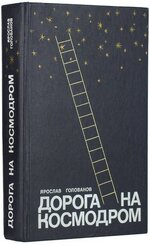
ДОРОГА НА КОСМОДРОМ
Для старшего школьного возраста
Ответственный редактор
Г. А. Иванова
Художественный редактор
Л. Д. Бирюков
Технический редактор В. К. Егорова Корректоры Л. И. Дмитрюк; А. П. Саркисян
Москва/ Издательство «Детская литература» 1988 год
На фото: Обложка книги Ярослава Голованова "Дорога на космодром"; Сершей Павлович Королев. “During my meetings with Korolev, I had a clear understanding of the scale of this man and the place he occupied in Soviet and world cosmonautics. I understood that before me stood a historical figure in the literal sense of the word, and I did not hide my interest in him.
Several times I tried to start a conversation about his past, about his youth, but as far as I remember, he never supported that topic and always tried to steer the conversation elsewhere.
Once I told him directly that I wanted to write a major essay about him.
‘Some other time,’ Sergey Pavlovich waved me off lazily. ‘I don’t have time for that now... There will still be time for memoirs...’
Could anyone have imagined then that this remarkable man, so energetic, so strong-looking, had less than a year left to live...
During Sergey Pavlovich’s lifetime, I did not write a single line about him, except for the Chief Designer hidden behind a pseudonym in “The Forgers of Thunder.” And I learned more about him after his death than during his life.
It is difficult to add anything to what has already been written about Sergey Pavlovich: such a character cannot be contained within two or three pages.
People say: Korolev gave harsh reprimands, threw people out of his office, and spoke boldly even to high-ranking officials.
Others recall that he was gentle, tactful, and kind. He relieved tension with a joke, quoted poets, and dreamed.
All of this is true. All of it is accurate.
These qualities, which seem incompatible, were always supported by one exceptionally strong framework — his passion for his work.
That was the most important thing.
It was stronger than personal attachments, stronger than physical exhaustion, stronger than the man himself.
He was a joyful servant of his labor.
He could not free himself from it even for a single minute.
Recently I read that Michelangelo spent weeks without descending from the scaffolding while painting the ceiling of the Sistine Chapel. He slept there on wooden planks, and drops of paint turned his clothing into a hardened shell that later had to be cut off with a knife.
I remembered Korolev.
A different era, a different kind of work — but the same spirit.”
Photos:
Cover of Yaroslav Golovanov’s book “Road to the Cosmodrome” Sergey Pavlovich Korolev “Durante mis encuentros con Koroliov, comprendía perfectamente la magnitud de este hombre y el lugar que ocupaba en la cosmonáutica soviética y mundial. Entendía que tenía ante mí a una figura histórica en el sentido literal de la palabra, y no ocultaba mi interés por él.
En varias ocasiones intenté hablar de su pasado, de sus años de juventud, pero, hasta donde recuerdo, nunca apoyaba ese tema y siempre procuraba desviar la conversación hacia otra cosa.
Una vez le dije directamente que quería escribir un gran ensayo sobre él.
‘En otra ocasión’, me respondió Sergey Pavlovich con un gesto despreocupado. ‘Ahora no tengo tiempo para ocuparme de eso... Ya habrá tiempo para las memorias...’
¿Quién podría haber imaginado entonces que a este hombre extraordinario, tan enérgico y de apariencia tan fuerte, le quedaba menos de un año de vida?
Mientras Sergey Pavlovich estuvo vivo, no escribí ni una sola línea sobre él, salvo la figura del Diseñador Jefe oculta bajo un seudónimo en “Los Forjadores del Trueno”. Y llegué a conocer más sobre él después de su muerte que durante su vida.
Es difícil añadir algo a lo que ya se ha escrito sobre Sergey Pavlovich: un carácter así no cabe en dos o tres páginas.
Se dice que Koroliov organizaba severas reprimendas, expulsaba a la gente de su despacho y hablaba con firmeza incluso a los altos dirigentes.
Otros recuerdan que era amable, delicado y afectuoso. Aliviaba la tensión con un chiste, citaba a poetas y soñaba.
Todo eso es cierto. Todo es exacto.
Estas cualidades, que parecen incompatibles, se sostenían siempre sobre una estructura extraordinariamente sólida: su pasión por el trabajo.
Eso era lo más importante.
Era más fuerte que los afectos personales, más fuerte que el cansancio físico, más fuerte que él mismo.
Era un alegre servidor de su labor.
No podía liberarse de ella ni un solo minuto.
Hace poco leí que Miguel Ángel pasó semanas sin bajar de los andamios mientras pintaba el techo de la Capilla Sixtina. Dormía allí mismo sobre tablones de madera, y las gotas de pintura convirtieron su ropa en una costra endurecida que después tuvieron que cortarle con un cuchillo.
Entonces recordé a Koroliov.
Otra época, otro trabajo, pero el mismo espíritu.”
"Полет на Луну". Картина художника Ю. Реброва. 1955. "Flight to the Moon." Painting by artist Yu. Rebrov. 1955. "Vuelo a la Luna". Pintura del artista Yu. Rebrov. 1955.
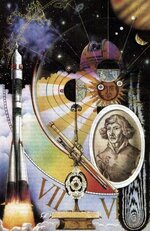
"Прогресс техники позволил сооружать оптические телескопы и радиотелескопы, способные принимать излучение, идущее от небесных тел, удаленных на гигантские расстояния, которые просто невозможно себе представить.
Не все излучение, идущее от небесных светил, можно уловить на обсерваториях. Часть его поглощается в земной атмосфере и просто не доходит до инструментов, расположенных на Земле, даже высоко в горах. На помощь пришла космонавтика.
Именно автоматические искусственные спутники и орбитальные станции с космонавтами на борту позволили вынести астрономические инструменты за пределы Вселенной. Луна стала первым небесным телом, на котором побывал человек".
(Б. А. Воронцов-Вельяминов Член-корреспондент АПН СССР, доктор физико-математических наук. "К нашему читателю").
...................................................................................
Цит.по : ЭНЦИКЛОПЕДИЧЕСКИЙ СЛОВАРЬ ЮНОГО АСТРОНОМА
МОСКВА
"ПЕДАГОГИКА"
1986
Составитель НИКОЛАЙ ПЕТРОВИЧ ЕРПЫЛЕВ
Макет книги художник МАРТЫНЕНКО Ю. П.
Иллюстрации выполнили художники: АРАТОВСКИЙ Ю. М., БЕССОНОВ С. Г., БОРИСОВ И. Г., ВИГАНТ В. Я., ЛОБАЧЕВ В. П., ЛУХИН С. Ф. ................................................................................... “The progress of technology has made it possible to build optical telescopes and radio telescopes capable of receiving radiation coming from celestial bodies located at unimaginably vast distances.
Not all the radiation emitted by celestial objects can be detected from observatories on Earth. Part of it is absorbed by the Earth's atmosphere and simply never reaches instruments located on the ground, even those placed high in the mountains. Astronautics came to the rescue.
It was precisely automatic artificial satellites and orbital stations with cosmonauts on board that made it possible to carry astronomical instruments beyond the Earth's atmosphere. The Moon became the first celestial body on which a human being set foot.”
(B. A. Vorontsov-Velyaminov,
Corresponding Member of the Academy of Pedagogical Sciences of the USSR,
Doctor of Physical and Mathematical Sciences,
“To Our Reader”)
“El progreso de la tecnología hizo posible construir telescopios ópticos y radiotelescopios capaces de recibir la radiación procedente de cuerpos celestes situados a distancias gigantescas, prácticamente imposibles de imaginar.
No toda la radiación emitida por los astros puede ser detectada desde los observatorios terrestres. Una parte es absorbida por la atmósfera de la Tierra y simplemente no llega a los instrumentos instalados en la superficie, incluso a los situados en las altas montañas. La cosmonáutica vino en ayuda de la astronomía.
Fueron precisamente los satélites artificiales automáticos y las estaciones orbitales con cosmonautas a bordo los que hicieron posible llevar los instrumentos astronómicos más allá de la atmósfera terrestre. La Luna se convirtió en el primer cuerpo celeste en el que puso el pie un ser humano.”
(B. A. Vorontsov-Veliamínov,
Miembro Correspondiente de la Academia de Ciencias Pedagógicas de la URSS,
Doctor en Ciencias Físicas y Matemáticas,
“Al lector”)
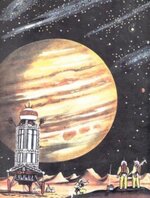
"На Юпитер или на Сатурн высадиться вообще невозможно.
Эти планеты состоят почти из одних облаков.
Планета Юпитер, например, на самом деле не такая уж большая, как кажется. Но она сидит внутри огромного облачного шара, как косточка внутри вишни. Мы видим не самую планету, а этот облачный шар. И говорим: «Какой большой Юпитер!» Большая-то только одёжка.
Но у Юпитера есть целых двенадцать спутников, целых двенадцать лун. И среди них есть очень большие. Две из них равны нашей Луне, а две даже не уступают по величине Меркурию.
Сядем на спутник, который ближе всего к Юпитеру.
Смотрите, какая красота! Юпитер — огромный облачный шар с полнеба величиной.
А как быстро он вращается! За десять часов он успевает повернуться кругом.
Из-за такой огромной скорости облака Юпитера размазаны полосами вдоль экватора. Как струи на поверхности быстрой реки.
Эти струи облаков всё время обгоняют одна другую, клубятся, меняют форму.
В одном месте среди белых полос Юпитера иногда заметно странное красное пятно. Похоже, точно в этом месте, как муть со дна реки, поднимается из глубины красный дым. Багровая туча раздвигает струи белых облаков, клубится, то становится яркой, то бледнеет.
Может быть, там, на дне облачного океана, бушует извержение огромного вулкана, то затухая, то вспыхивая с новой силой?
Когда-нибудь, вы, ребята, разгадаете эту загадку Юпитера".( П. Клушанцев."О чём рассказал телескоп").
........................................................................
Примечание: в книге "О чём рассказал телескоп" автор пишет о 12 спутниках Юпитера. Книга была написана в 1972 году.
Благодаря наземным наблюдениям системы Юпитера к концу 1970-х годов было известно уже 13 спутников. В 1979 году, пролетая мимо Юпитера, космический аппарат «Вояджер-1» обнаружил ещё три спутника.
Начиная с 1999 года с помощью наземных телескопов нового поколения были открыты ещё 49 спутников Юпитера, подавляющее большинство которых имеют диаметр в 2—4 км.
На 2019 год известны 79 спутников Юпитера. Кроме того, у Юпитера есть система колец.
........................................................................
Цит. по: Павел Владимирович Клушанцев
О ЧЕМ РАССКАЗАЛ ТЕЛЕСКОП
Издательство "Детская литература" (Ленинградское отделение), 1972 г.
Тираж: 100000 экз.
Тип обложки: твёрдая
Формат: 60x90/8 (220x290 мм)
Страниц: 68 Иллюстрации художников: Е. Войшвилло, Б. Калаушина, Б. Стародубцева). “It is completely impossible to land on Jupiter or Saturn.
These planets are composed almost entirely of clouds.
Take Jupiter, for example. The planet itself is actually not as large as it appears. It sits inside an enormous sphere of clouds, like the pit inside a cherry. What we see is not the planet itself, but this gigantic cloud envelope. And we say, ‘What a huge Jupiter!’ In reality, only its outer garment is enormous.
Jupiter has as many as twelve satellites—twelve moons. Some of them are very large. Two are about the size of our Moon, while two others are comparable in size to Mercury.
Let us land on the moon that is closest to Jupiter.
Look at this magnificent sight! Jupiter is an enormous sphere of clouds filling half the sky.
And how fast it rotates! It completes one full rotation in just ten hours.
Because of this tremendous speed, Jupiter’s clouds are stretched into bands along the equator, like currents on the surface of a swift river.
These cloud streams constantly overtake one another, swirl together, and change their shapes.
Among the white bands of Jupiter, a strange red spot can sometimes be seen. It looks as though red smoke is rising from the depths, like silt stirred up from the bottom of a river. A crimson cloud pushes aside the white cloud streams, swirling and churning, sometimes glowing brightly, then fading again.
Perhaps, deep beneath the ocean of clouds, a gigantic volcano is erupting, growing quiet and then bursting into life once more.
One day, children, you will solve the mystery of Jupiter.”
(Pavel Klushantsev, “What the Telescope Revealed”)
Note: In the book What the Telescope Revealed, the author states that Jupiter has 12 satellites. The book was written in 1972.
Thanks to ground-based observations, by the end of the 1970s astronomers knew of 13 satellites of Jupiter. In 1979, while flying past Jupiter, the spacecraft Voyager 1 discovered three more moons.
Beginning in 1999, a new generation of ground-based telescopes discovered another 49 satellites of Jupiter, the vast majority of them only 2–4 km in diameter.
As of 2019, 79 moons of Jupiter are known. In addition, Jupiter possesses a system of rings.
Children’s Literature Publishing House (Leningrad Branch), 1972
Print run: 100,000 copies
Hardcover edition
Format: 60×90/8 (220 × 290 mm)
68 pages
Illustrations by:
E. Voyshvillo,
B. Kalaushin, B. Starodubtsev “Es completamente imposible aterrizar en Júpiter o en Saturno.
Estos planetas están compuestos casi por completo de nubes.
Tomemos como ejemplo a Júpiter. El planeta en sí no es tan grande como parece. Se encuentra dentro de una gigantesca esfera de nubes, como el hueso dentro de una cereza. Lo que vemos no es el planeta, sino esa inmensa envoltura de nubes. Y decimos: «¡Qué enorme es Júpiter!». En realidad, lo único enorme es su «vestimenta».
Júpiter posee nada menos que doce satélites, doce lunas. Algunas de ellas son muy grandes. Dos tienen aproximadamente el tamaño de nuestra Luna y otras dos son comparables en tamaño a Mercurio.
Aterricemos en la luna más cercana a Júpiter.
¡Miren qué espectáculo tan maravilloso! Júpiter es una gigantesca esfera de nubes que ocupa medio cielo.
¡Y qué rápido gira! Completa una vuelta sobre sí mismo en apenas diez horas.
Debido a esa enorme velocidad de rotación, las nubes de Júpiter aparecen extendidas en franjas a lo largo del ecuador, como las corrientes de un río caudaloso.
Estas corrientes de nubes se adelantan constantemente unas a otras, se arremolinan y cambian de forma.
Entre las bandas blancas de Júpiter puede verse, a veces, una extraña mancha roja. Parece como si un humo rojizo surgiera desde las profundidades, igual que el lodo que se levanta del fondo de un río. Una nube carmesí aparta las corrientes de nubes blancas, gira y se agita, unas veces brillando intensamente y otras desvaneciéndose.
Tal vez, en el fondo de aquel océano de nubes, esté entrando en erupción un gigantesco volcán que unas veces se calma y otras vuelve a despertar con nueva fuerza.
Algún día, muchachos, ustedes resolverán el misterio de Júpiter.”
Nota: En el libro Lo que reveló el telescopio, el autor escribe que Júpiter tiene 12 satélites. El libro fue escrito en 1972.
Gracias a las observaciones realizadas desde la Tierra, a finales de la década de 1970 ya se conocían 13 satélites de Júpiter. En 1979, durante su sobrevuelo del planeta, la nave espacial Voyager 1 descubrió tres satélites más.
A partir de 1999, una nueva generación de telescopios terrestres descubrió otros 49 satélites de Júpiter, la inmensa mayoría con diámetros de apenas entre 2 y 4 kilómetros.
En 2019 ya se conocían 79 satélites de Júpiter. Además, el planeta posee un sistema de anillos.
"Чтобы познакомить читателя с факторами, действующими на человека в полёте, рассказать о тех опасностях, видимых и замаскированных, которые окружают космонавта в космическом пространстве, целесообразно разделить эти факторы на две основные группы: физические факторы полёта и различного рода психические воздействия, сопровождающие полёт и профессиональную деятельность космонавта. Конечно, деление это условно, мы его используем лишь для простоты изложения. Итак, физические факторы. Их можно сгруппировать с большей степенью детализации. Во-первых, это факторы собственно космического пространства. Во-вторых, физические условия среды обитания в замкнутом пространстве космического корабля. И в-третьих, физические условия,или шумы, связанные с динамикой космического полета.
Основными физическими факторами открытого космического пространства, опасными для организма человека, являются: глубокий вакуум, микрометеориты, ионизирующая радиация, солнечное излучение.
Вакуум - наиболее опасный для человека фактор в открытом космосе, к тому же действующий наиболее быстро. В условиях вакуума человек теряет сознание и через 5 - 7 секунд гибнет от "вскипания" крови и эмболии.
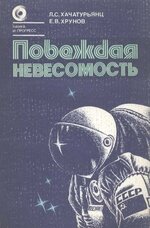
Защита от воздействия вакуума обеспечива-ется с помощью специальных скафандров, в которых создаются необходимые общее давление газа и парциальное давление кислорода. Чтобы избежать декомпрессионных расстройств при переходе космонавта из космического корабля в скафандр, в скафандре поддерживается такая же газовая среда, как и в космическом корабле. При этом предпочтительнее использовать жёсткие скафандры, способные выдержать большое внутреннее давление газа, но не ухудшающие условия двигательной деятельности космонавта".( Л. С. Хачатурьянц; Е. В. Хрунов. "Побеждая невесомость").
........................................................................
Цит.по: ЛЕВОН СУРЕНОВИЧ ХАЧАТУРЬЯНЦ
ЕВГЕНИЙ ВАСИЛЬЕВИЧ ХРУНОВ
ПОБЕЖДАЯ НЕВЕСОМОСТЬ
Серия НАУКА И ПРОГРЕСС
Художник А. Е. Григорьев
Москва/ Издательство "Знание"/ 1985 год .....................................................................
На фото обложка книги "Побеждая невесомость".
“To acquaint the reader with the factors affecting a human being during spaceflight and to describe the visible and hidden dangers surrounding a cosmonaut in outer space, it is useful to divide these factors into two main groups: the physical factors of spaceflight and the various psychological influences accompanying the flight and the professional activities of a cosmonaut. Of course, this division is only conventional and is used here simply for the sake of clarity.
Let us begin with the physical factors. They can be classified in greater detail. First, there are the factors of outer space itself. Second, the physical conditions of the habitat inside the enclosed environment of a spacecraft. Third, the physical conditions—or disturbances—associated with the dynamics of spaceflight.
The principal physical factors of outer space that are dangerous to the human body are: deep vacuum, micrometeoroids, ionizing radiation, and solar radiation.
Vacuum is the most dangerous factor for a human being in open space, and it also acts the fastest. In the vacuum of space, a person loses consciousness and, within five to seven seconds, dies as a result of the “boiling” of body fluids and gas embolism.
Protection against the effects of vacuum is provided by special spacesuits that maintain the necessary total gas pressure and the required partial pressure of oxygen. To prevent decompression disorders when a cosmonaut transfers from the spacecraft into the spacesuit, the suit contains the same gas mixture as the spacecraft. For this purpose, rigid spacesuits are preferable, since they can withstand high internal gas pressure without restricting the cosmonaut’s ability to move.”
(L. S. Khachaturyants; E. V. Khrunov,
“Overcoming Weightlessness”)
Photo: Cover of the book Overcoming Weightlessness. “Para familiarizar al lector con los factores que actúan sobre el ser humano durante un vuelo espacial y explicar los peligros visibles y ocultos que rodean al cosmonauta en el espacio exterior, resulta conveniente dividir estos factores en dos grandes grupos: los factores físicos del vuelo espacial y las distintas influencias psicológicas que acompañan tanto al vuelo como a la actividad profesional del cosmonauta. Naturalmente, esta división es convencional y se utiliza únicamente para facilitar la exposición.
Comencemos, pues, con los factores físicos. Estos pueden clasificarse con mayor detalle. En primer lugar, los factores propios del espacio exterior. En segundo lugar, las condiciones físicas del entorno habitable dentro del espacio cerrado de una nave espacial. Y, en tercer lugar, las condiciones físicas, o perturbaciones, relacionadas con la dinámica del vuelo espacial.
Los principales factores físicos del espacio exterior que representan un peligro para el organismo humano son: el vacío profundo, los micrometeoritos, la radiación ionizante y la radiación solar.
El vacío es el factor más peligroso para el ser humano en el espacio abierto y, además, el que actúa con mayor rapidez. En condiciones de vacío, una persona pierde el conocimiento y, en un plazo de cinco a siete segundos, muere como consecuencia de la “ebullición” de los líquidos corporales y de la embolia gaseosa.
La protección contra los efectos del vacío se consigue mediante trajes espaciales especiales, en los que se mantiene la presión total del gas y la presión parcial de oxígeno necesarias para la vida. Para evitar trastornos por descompresión cuando el cosmonauta pasa de la nave espacial al traje espacial, este contiene la misma atmósfera gaseosa que existe dentro de la nave. En este sentido, son preferibles los trajes espaciales rígidos, capaces de soportar una elevada presión interna del gas sin dificultar los movimientos del cosmonauta.”
(L. S. Jachaturiants; E. V. Jrúnov,
“Venciendo la ingravidez”)
"В первый же день после выхода на орбиту «Союза-13» П. Климук и В. Лебедев включили биолого-техническую систему, именуемую «Оазис-2». Это действительно маленький оазис жизни, который в будущем позволит человеку обжить космическое пространство. На борту «Салюта-1» успешно работал «Оазис-1» с высшими растениями, на котором проверялась возможность создания космических оранжерей и огородов, Теперь эстафету исследований приняли микроорганизмы – водородные бактерии и уробактерии.
Конструктивно «Оазис-2» представляет собой два цилиндрических ферментера, в которых живут и развиваются микроорганизмы, и два шара с питательной средой, Источником энергии для водородных бактерий является водород, а не солнечный свет, как для высших растений. Подключив систему к бортовой электросети, космонавты начали эксперимент. Электроэнергия, разлагая воду на кислород и водород, дала источник жизни водородным бактериям.
Поглощая водород, они размножаются, а в процессе своей жизнедеятельности дышат кислородом. Но используют его не весь. Остаток кислорода идет на дыхание уробактерий во втором ферментере, которые, в свою очередь развиваясь, выделяют углекислый газ. Этот углекислый газ служит пищей для водородных бактерий. Таким образом получается замкнутая система, которая «извне» потребляет практически только электроэнергию. Пока «Оазис-2» совершенно изолирован от атмосферы космического корабля. Но в принципе микроорганизмы с таким же успехом могут потреблять углекислоту и другие отходы жизнедеятельности человека.
Сама биомасса бактерий может служить пищей для человека или каких-то животных «космической фермы». Да и не только космической. Работы, которые ведут ученые, имеют перспективы чисто земных применений. Водородные бактерии очень богаты белком, из которого можно будет со временем приготовлять различные корма и пищу.
«Союз-13» – сегодня маленький оазис жизни в безбрежных просторах космоса. И он несет в себе зародыш будущего. Эксперимент, который проводится сегодня, открывает путь к созданию искусственных планет".("Двое над планетой"; Специальный корреспондент «Известий» Б. КОНОВАЛОВ передает из Центра управления полетом «Союза-13»).
.........................................................................
Цит. по: ЭСТАФЕТА КОСМИЧЕСКИХ СТАРТОВ
Специальный выпуск
Составитель Б. Коновалов Москва. Издательство «Известия», 1974 год.
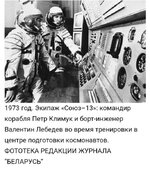
На фото: 1973 год. Экипаж космического корабля "Союз - 13": командир корабля Петр Климук и борт-инженер Валентин Лебедев во время тренировкив центре подготовки космонавтов(фототека редакции журнала "Белорусь"). “On the very first day after reaching orbit aboard Soyuz-13, P. Klimuk and V. Lebedev activated the biological-technical system known as Oasis-2. It was truly a small oasis of life that, in the future, would allow humanity to inhabit outer space. On board Salyut-1, Oasis-1 had successfully operated with higher plants, testing the possibility of creating space greenhouses and vegetable gardens. Now microorganisms—hydrogen bacteria and urobacteria—had taken over the relay of research.
Structurally, Oasis-2 consisted of two cylindrical fermenters in which the microorganisms lived and developed, as well as two spherical containers filled with nutrient medium. The source of energy for the hydrogen bacteria was hydrogen rather than sunlight, as is the case for higher plants. After connecting the system to the spacecraft’s electrical network, the cosmonauts began the experiment. Electrical energy split water into oxygen and hydrogen, thus providing the hydrogen bacteria with their source of life.
As they consumed hydrogen, the bacteria multiplied, and during their life processes they breathed oxygen. However, they did not use all of it. The remaining oxygen was used by the urobacteria in the second fermenter, which, in turn, developed and released carbon dioxide. That carbon dioxide then became food for the hydrogen bacteria. In this way, a closed system was created, requiring from outside almost nothing except electrical energy. At this stage, Oasis-2 was completely isolated from the atmosphere of the spacecraft. In principle, however, the microorganisms could just as well consume carbon dioxide and other waste products generated by humans.
The bacterial biomass itself could serve as food for humans or for animals on a future “space farm.” And not only a space farm. The work being carried out by scientists also has promising applications here on Earth. Hydrogen bacteria are extremely rich in protein, from which various animal feeds and even food for people may eventually be produced.
Today, Soyuz-13 is a small oasis of life in the boundless expanses of space. And within it lies the seed of the future. The experiment being conducted today opens the way toward the creation of artificial planets.”
(“Two Above the Planet”; Special correspondent of Izvestia B. Konovalov reporting from the Mission Control Center of Soyuz-13.)
Photo:
1973. Crew of the Soyuz-13 spacecraft: Commander Pyotr Klimuk and Flight Engineer Valentin Lebedev during training at the Cosmonaut Training Center. (Photo archive of Belarus magazine.) “Ya en el primer día después de alcanzar la órbita, P. Klimuk y V. Lébedev pusieron en funcionamiento el sistema biotecnológico denominado Oasis-2. Era, en efecto, un pequeño oasis de vida que, en el futuro, permitirá al ser humano habitar el espacio cósmico. A bordo de la estación Salyut-1 había funcionado con éxito Oasis-1, utilizando plantas superiores para comprobar la posibilidad de crear invernaderos y huertos espaciales. Ahora el relevo de la investigación lo tomaban los microorganismos: bacterias del hidrógeno y urobacterias.
Desde el punto de vista constructivo, Oasis-2 estaba formado por dos fermentadores cilíndricos donde vivían y se desarrollaban los microorganismos, así como por dos recipientes esféricos con medio nutritivo. La fuente de energía de las bacterias del hidrógeno era el hidrógeno, y no la luz solar, como ocurre con las plantas superiores. Tras conectar el sistema a la red eléctrica de la nave, los cosmonautas iniciaron el experimento. La energía eléctrica descompuso el agua en oxígeno e hidrógeno, proporcionando así la fuente de vida para las bacterias del hidrógeno.
Al consumir hidrógeno, estas bacterias se multiplicaban y, durante su actividad vital, respiraban oxígeno. Sin embargo, no lo utilizaban por completo. El oxígeno restante era empleado por las urobacterias del segundo fermentador, que, al desarrollarse, liberaban dióxido de carbono. Ese dióxido de carbono servía, a su vez, de alimento para las bacterias del hidrógeno. De este modo se obtenía un sistema cerrado que prácticamente solo requería energía eléctrica procedente del exterior. En aquel momento, Oasis-2 permanecía completamente aislado de la atmósfera de la nave espacial. Sin embargo, en principio, estos microorganismos también podrían consumir el dióxido de carbono y otros productos de desecho generados por el ser humano.
La propia biomasa bacteriana podría servir como alimento para las personas o para animales de una futura “granja espacial”. Y no solo espacial. Las investigaciones que realizan los científicos tienen también grandes perspectivas de aplicación en la Tierra. Las bacterias del hidrógeno son extraordinariamente ricas en proteínas, con las que algún día podrán elaborarse diversos alimentos para animales e incluso para las personas.
Hoy, Soyuz-13 es un pequeño oasis de vida en la inmensidad del espacio. Y en él ya está contenido el germen del futuro. El experimento que se lleva a cabo hoy abre el camino hacia la creación de planetas artificiales.”
(“Dos sobre el planeta”; Reportaje del corresponsal especial del periódico Izvestia, B. Konovalov, desde el Centro de Control de Vuelo de Soyuz-13.)
Fotografía:
Año 1973. La tripulación de la nave espacial Soyuz-13: el comandante Piotr Klimuk y el ingeniero de vuelo Valentín Lébedev durante un entrenamiento en el Centro de Preparación de Cosmonautas. (Archivo fotográfico de la revista Belarus.)
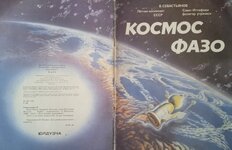
Обложка книги лётчика - космонавта Виталия Севастьянова "Космос" ("Фазо"). На русском и узбекском языках. Для детей дошкольного возраста. Художник Г. Просвиров.
Ташкент/Издательство "Юлдузча"/1988 год. Cover of the book "Space" ("Phazо") by pilot and cosmonaut Vitaly Sevastyanov. In Russian and Uzbek. For preschoolers. Illustrated by G. Prosvirov.
Tashkent/Yulduzcha Publishing House/1988. Portada del libro «Espacio» («Fazо»), del piloto y cosmonauta Vitaly Sevastyanov. En ruso y uzbeko. Para niños en edad preescolar. Ilustrado por G. Prosvirov.
Taskent/Editorial Yulduzcha/1988.
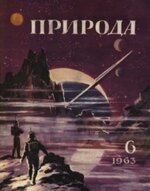
Космические обложки советских журналов. Журнал "Природа" 1963 год; №06. Space-themed covers of Soviet magazines. Priroda magazine, 1963; issue №6. Portadas de revistas soviéticas con temática espacial.
Revista Priroda, 1963; número 6.
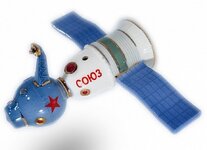
Ёлочная игрушка "Союз". Фарфоровая мастерская Дмитрия Баранова.
По ссылке можно сделать заказ. "Union" Christmas tree ornament. Dmitry Baranov's porcelain workshop.
You can order it by following the link. Adorno navideño «Unión». Taller de porcelana de Dmitry Baranov.
Puedes encargarlo siguiendo este enlace. farfor-spb.ru/products/s...
This site uses cookies to help personalise content, tailor your experience and to keep you logged in if you register.
By continuing to use this site, you are consenting to our use of cookies.