Question General Spaceflight Q&A

How do the astronauts talk to houston during launch and re-entry actually? because I never see any wires or something..
They have headsets. The CDR and PLT have PTT switches on their RHCs.
 
I'm a but emberaced to ask it, but what is a RHS? the ''joystick'' :P

"Rotational Hand Controller", that is the joystick used for rotations, in contrast to the THC, the "Translational Hand Controller", which is used for translational maneuvers (forward/backward, up/down, etc).

There are effectively 4 THC and 4 RHC is the orbiter, 2 in the forward flight deck and two in the aft work station, but one set of RHC+THC is used for controlling the robot arm, instead of piloting the orbiter.
 
okay thanks, but I never see any wires, are they wireless, or is it just me looking wrong? :P
 
okay thanks, but I never see any wires, are they wireless, or is it just me looking wrong? :P

The RHC and THC are firmly screwed to the flight deck structure.

During launch and entry, the headset wires are integrated in the umbilical between pressure suit and orbiter.
 
Does the launch director (and consequently, the launch director's staff) have any formal responsibilities after the hand-off to Houston MCC during a launch (and if so, what are they)?
 
During the beginning of space era there were a lot of tests and training was tough from a physical point of view.

Which one of those tests and training exercises still prevail for real astronauts?
 
During the beginning of space era there were a lot of tests and training was tough from a physical point of view.

Which one of those tests and training exercises still prevail for real astronauts?

Practically all, the training got modernized and some requirements reduced, but the actual tests did not change much. The centrifuge is still part of normal astronaut training, just like zero-g planes.
 
1.During ascent, is the payload bay pressurized? Or will it lose air as it goes up?
2.Is it pressurized during EI?
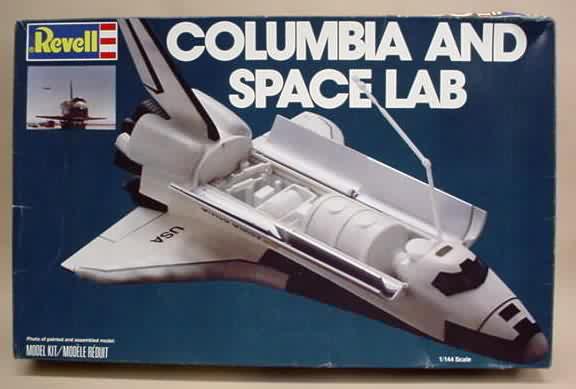
3.I have a scale model of a space shuttle. It has something that looks like a Space Hab inside the payload bay. What should be the best color to paint it? Gloss white? Flat white? Silver? Other?

revell-4717wornbox.JPG
 
Last edited:
1: There's a series vents along the body of the orbiter which is used to equalize the pressure between the orbiter and the outside.
2: See 1. The vents are closed shortly before the de-orbit burn to protect against plasma intrusion. They open again later during the descent.
3: That's Spacelab, an ESA contribution. The Spacelab was covered in white multi-layer insulation(MLI) blankets. For more information, see: http://en.wikipedia.org/wiki/Spacelab
 
1: There's a series vents along the body of the orbiter which is used to equalize the pressure between the orbiter and the outside.
2: See 1. The vents are closed shortly before the de-orbit burn to protect against plasma intrusion. They open again later during the descent.

They are opened or closed, but are they pressurized? I figure out they are. Are they?
 
They are opened or closed, but are they pressurized? I figure out they are. Are they?
As I wrote: the vents are used to equalize the pressure between the outside and various compartments. So on-orbit, the bay is already at vaccum before the doors are opened. Same thing with the aft compartment.
 
How does the (real) shuttle prepare to intercept the ISS? After climbing to orbit, I tried following Tex video tutorial for docking and on orbit synchronization stage, doing so many burns at rendezvous point will get me faster to ISS, but I think it's not very fuel consumption-wise. A much fuel conservative approach seems to be having an orbit like 180 km x 350 km. It will take longer to intercept the ISS, but when less burns (no burns at rendezvous point, just wait to catch the ISS). With this orbit, I get around 2-3 days until interception, which is fairly accurate, comparing to a real flight plan. Also, having an orbit lower then 150km will experience atmospheric dragging, which I try to avoid.
Which approach would be the most realistic one? Also, when is the burn for orbit inclination correction made?

 
I have a question on the STS: were there any missions during which a satellite was captured by a Space Shuttle in orbit and delivered back to Earth?
Yup: STS-51A. Two deploys(TELESAT-H and LEASAT-1), two retrievals(PALAPA-B2 and WESTAR-VI).
 
LDEF is a good example, It was one of the first post Challenger missions and had to be actioned quickly because LDEF was about to fall out of orbit.

Bonnie Dunbar had the distinction of putting LDEF into the payload bay.
 
As I wrote: the vents are used to equalize the pressure between the outside and various compartments. So on-orbit, the bay is already at vaccum before the doors are opened. Same thing with the aft compartment.

That brings another question.
Are ascent calculations considering the loss of air inside the cargo bay?

If air is inside during ascent, it means more mass needs to be pushed by the engines. Since aerodynamic airflow implies lower pressures, does it complicate calculations?
 
That brings another question.
Are ascent calculations considering the loss of air inside the cargo bay?

If air is inside during ascent, it means more mass needs to be pushed by the engines. Since aerodynamic airflow implies lower pressures, does it complicate calculations?
No. The vents are commanded to the full open position shortly before launch. During launch the air inside the various compartments is vented overboard through the vents to equalize the pressure.
 
ok, this is really a noob question, but I just can't remember it anymore.. what means STS? Servicing To Space? Shuttle To Space?
 
Back
Top