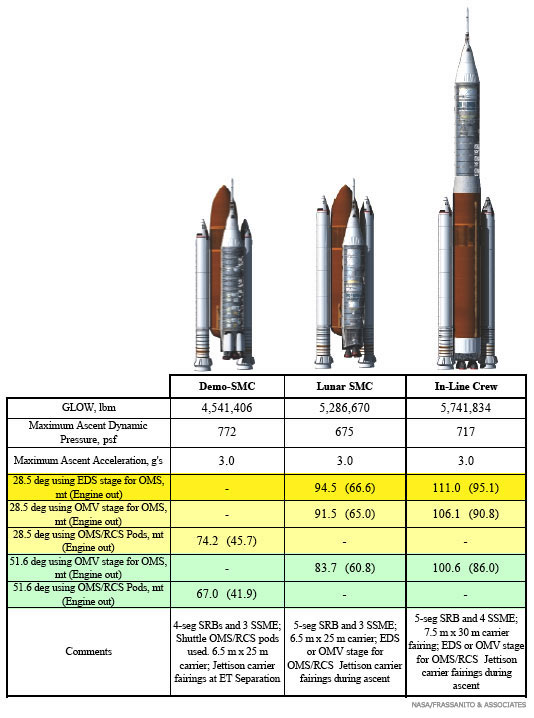
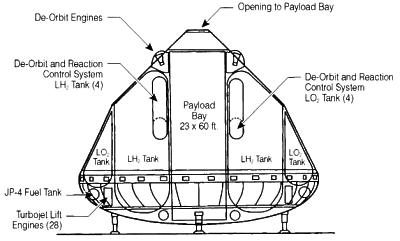
Of course the Shuttle program management was unsafe: STS was such an accident waiting to happen that it never would have flown under safe management. But given equal management, the capsule will still be safer, not because capsules are heroically safe, but because STS was such a monumentally stupid and reckless idea.
Monumentally stupid and reckless like leaving the safe ground behind at all?

Also, just to crash some fairy tale again: Every real system with less than 100% reliability is waiting for an accident. That's plain math. Even a perfectly safe system with a perfect management can have deadly accidents - but instead of one accident every 60 flights, we might be talking about one every 120 flights. And call that great in reality.
Bad management might man-rate a seriously flawed capsule, or try something stupid with a good design, but good management would never man-rate an STS-type system built with current or plausible near-future technology.
Wrong. We had it this discussion often before and again, you are just talking about things that you perceive as "That can't work", without even knowing it. Obviously the STS did work. And it was not even extremely unsafe, if you look at the pure number of LOCV events. Of course, you have a different statistic if you compare the number of deaths caused by a 777 and a C172 - even if both would be crashing equally seldom.
Just look at Apollo: Even if you ignore Apollo 1 as ground testing accident, would the Apollo 13 event happened on Apollo 8, the crew would have been dead as well, the LM as available lifeboat and a lot of excellent management saved the day. Was Apollo inherently safe? Of course not. It had been a very lucky program with luckily a small number of flights, that is insanely glorified by todays NASA managers and spaceflight fanboys without brain. The biographies of Gene Krantz or John Young tell you a much different story there from their own perspective. Same with Soyuz. Orion will maybe be safer because of the experience.
It's not so much "capsules are inherently safe" as "STS-type systems are inherently dangerous".
Is it? Do you even know what "inherently dangerous" means, aside of just saying it, because it sounds impressive?
But we're not talking Saturn V, we're talking Saturn IB, and we're talking refinements for routine LEO operations rather than just continuing with unmodified moonshot hardware.
Sorry, wrong. First of all, the Saturn IB was a much different launcher, in performance as well as in necessary complexity. And still, the Saturn IB had the same long check-out times as the Saturn V, because it was based on the same process technology. Only because you are only flying in LEO with a Shuttle, that does not mean that Apollo with a Saturn IB could have done the same job.
And if we would go back to the beginning of my post: The Shuttle had statistically one deadly accident every 60 flights. Apollo CSM had just 19 flights and already 2 failures, one of it deadly. There had been just 6 LEO missions with the Apollo CSM (because it was way more expensive to operate than the Space Shuttle. Yes, today you would not believe it), two of it had been near deadly accidents (Skylab 3 almost needed a rescue mission and ASTP had only not killed the crew by plain luck again). Apollo was rated with a 1 deadly accident in 18 flights statistic in a NASA report after STS-107, the Shuttle with a 1 in 55 - the CEV (and thus the new Orion capsule) was expected to reach a 1 in 120 statistic on a SRB stick in the same report.

woman was a Canadian, and I was the American visiting Canada for the first time. The experience with Air Canada was freaking awesome, they took great care of me flying out and coming home. Great first impression of Canada.