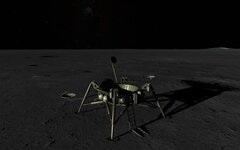
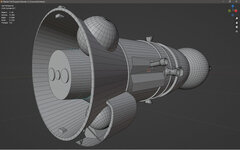
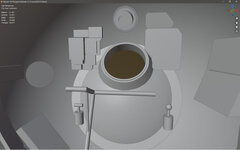
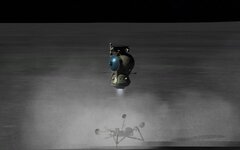
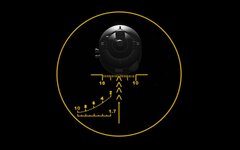
Project N1 Lunar

Yes, N2O4/UDMH

It's a pretty "interesting" (complicated/difficult) flight plan from beginning to end! Also looking forward to (although further down the line as far as project planning goes) the "skip reentry" on return!

Thats also what I meant with no reserves. In Apollo, you still have a pretty performance margin (especially for the first landings) that allows compensating for some errors during the missions or less optimal trajectories. For the N1-LK/LOK flight profile, you have almost none. Thats also why I prefer the N1F. At least some margins, at least some more freedom for choosing your landing sites.
 
Thats also what I meant with no reserves. In Apollo, you still have a pretty performance margin (especially for the first landings) that allows compensating for some errors during the missions or less optimal trajectories. For the N1-LK/LOK flight profile, you have almost none.
For hardened space cowboys/girls only;)
Thats also why I prefer the N1F. At least some margins, at least some more freedom for choosing your landing sites.
Still so much to do but I hope there will be a N1F variant too.
0744.jpg
Adjusted the ladder to look a bit more sane!
 
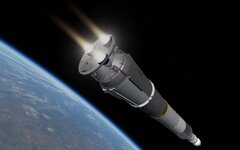
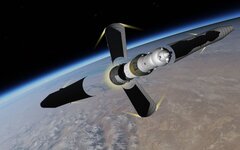
Added pyro to the SLS/LES. Not sure if the larger ones fire too, or only in an abort- under load?
Will do the payload and engine fairings as well.
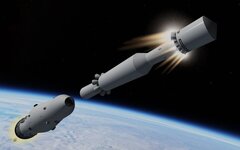
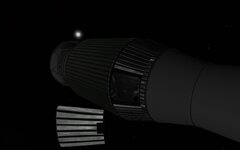
Interesting perspective viewing from the LES as the N1 shoots past shedding the fairings!
0745.jpg
 
I mapped the wrong exhaust textures in the two screenshots above, have replaced with a better texture.
 
Do you use a overexpanded texture there?
Not really, my attempts have proved not so fruitful so far. Maybe a little bit but mostly more yellow and less transparent.
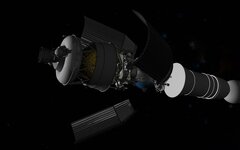
Currently working on the "notorious" LK Fairing, I've cut a hatch which looks like it could work. Still unsure what to do on jettisson, havn't found any information on this and the only pics don't really show anything, Apollo style would be the "nicest" way to do it but for simplicity until the stack is operational I'll just leave it as a "sleeve".
 
"Engine Out" Been flying with 1% failure probability, looks like it works. Still made it to orbit (no functional LES anyway- only option is up!), there's enough reserves to cover it.
0747.jpg
LK fairing with detachable hatch.
0749.jpg
And tri-seperation of the fairing. Didn't feel right otherwise!
0748.jpg
 
Calling all Soviet techperts!
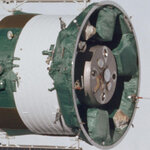
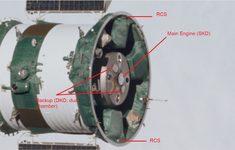
Here's a pic of the business end of a Soyuz 7K-OK.
soyuz7OK.jpg
It has 2 main engines and 2 backups, so the 4 nozzles in the centre circle. But what are the 3 covered portals in the middle, service hatches? Sometimes they seem to be depicted as engines, confused?
Trying to figure out the LOK engines, Astronautix states it has 2 big engines and 2 smaller 7K-OK similar engines.
And meanwhile BrianJ has been working his magic making it do all kinds of incredible stuff I could only dream of! :)
Including adding the Payload pyros!
0755.jpg
 
Calling all Soviet techperts!
Here's a pic of the business end of a Soyuz 7K-OK.

It has 2 main engines and 2 backups, so the 4 nozzles in the centre circle. But what are the 3 covered portals in the middle, service hatches? Sometimes they seem to be depicted as engines, confused?
Trying to figure out the LOK engines, Astronautix states it has 2 big engines and 2 smaller 7K-OK similar engines.
1761625022049.png

KTDU-35: 1 main (S5.60), 1 backup (S5.35), but the backup has two combustion chambers, to maintain symmetry. The 4 encircling angled nozzles I have been wondering about for a while but the likeliest from what I have found is turbopump burner exhaust. Juicy stuff here.
In any case they were used as vernier thrusters. They're the "special thrusters" mentioned in this section of an ASTP doc (APSYZ-descharac3, here: https://www.ibiblio.org/apollo/Documents/):
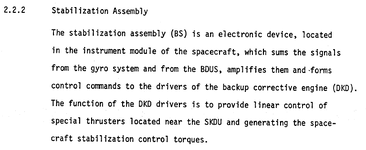
1761625493830.png

They were only used with the DKD for stab during burns, the main used the RCS during burns, so I would imagine they relate only to DKD operation. Where the equivalent pump exhaust for the SKD was I still haven't figured out since to my understanding both were open cycle (suppose it could be in with the main chamber exhaust, not up to speed on state of the art there) (I'll be using this source in the next bit).

Bit of a tangent, find it interesting both engines are still covered at this point during Apollo-Soyuz, unless I've missed deployable covers as with later Soyuz, it would suggest Soyuz-19 hadn't used them at that point. But I don't know how that aligns with the known flight profile beyond Apollo doing the harder work for rendezvous.

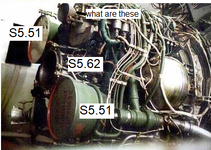
Anyway just having a quick look down the rabbit hole but LOK seems a bit different (no main/backup functionality per se) and Astronautix has me a bit confused vs other sources. S5.51 crosschecks as part of KTDU-51 and being the engine used for TEI, high thrust at 3388 kgf, listed as dual chamber. This checks out with Astronautix nicely. Omitted though is S5.62, also listed elsewhere as part of KTDU-51 with one chamber and a much lower thrust of 417 kgf and 296 s ISP. Looking at this, it seems to make sense, with a similar inline layout as 7K but different functions.

But then Astronautix mentions a two nozzle S5.53 for other burns, which would be part of the (single engine) KTDU-53 used with L1, but it's listed elsewhere as single chamber and slightly lower ISP (280 s vs 296 s), same thrust of 417 kgf. Can't quite tell from the one crappy pic what else was there but it kinda seems there's two smaller thrusters in a perpendicular line to the S5.51, but this seems unrelated.

My immediate thoughts, with the assumption the KTDU-51 info is correct, are:

A) S5.62 is very similar to the S5.53 used on L1, and the ISP given on Astronautix matches with S5.62, it's likely it essentially was the L1 engine but retuned and redesignated for LOK, and Astronautix misattributes it to being the L1 engine, but in short, LOK would have only two engines: S5.51 and S5.62, former for TEI, the latter for the rest;

B) If there were more than two engines (but not more than 3), I think the S5.53 (as described) could be ruled out given the conflict of position (off-axis single chamber), and the fact it seems known that the L1 engine was single chamber. Leaves the question of what else then, but no other possibilities are documented in either source.

I'm thinking it's A, but could be missing more info of course. Also assuming there weren't shenannigans with hardware changing over time and multiple configs being built. Missing from all this as far as what's visible above are the 4 vernier thrusters present on 7K (including L1), but I don't know how LOK maintained attitude during burns so it's possible they weren't needed. But if present, I'd expect them associated with the 417 kgf engine.

1761631956960.png
 
Last edited:
@diogom Thank you so much for your detailed reply!:)

So my first mistake was misinterpreting the Vernier thrusters, the LK has a similar arrangement but I found no reference to them for the LOK or OK! This clears my biggest confusion. Do you have an idea what the thrust and ISP for the verniers would be? Or is it diverted exhaust and "subtracted" from the main engine?
And thanks for pointing out were the RCS is, I was wondering about that.
Next was engine bell/chambers, so you can have 2 engines using one chamber and 1 engine using 2 chambers?
Bit of a tangent, find it interesting both engines are still covered at this point during Apollo-Soyuz, unless I've missed deployable covers as with later Soyuz, it would suggest Soyuz-19 hadn't used them at that point. But I don't know how that aligns with the known flight profile beyond Apollo doing the harder work for rendezvous.
So they are engine covers, that they were still closed through me off!
Anyway just having a quick look down the rabbit hole but LOK seems a bit different (no main/backup functionality per se) and Astronautix has me a bit confused vs other sources. S5.51 crosschecks as part of KTDU-51 and being the engine used for TEI, high thrust at 3388 kgf, listed as dual chamber. This checks out with Astronautix nicely. Omitted though is S5.62, also listed elsewhere as part of KTDU-51 with one chamber and a much lower thrust of 417 kgf and 296 s ISP. Looking at this, it seems to make sense, with a similar inline layout as 7K but different functions.
Thanks for the verification.
A) S5.62 is very similar to the S5.53 used on L1, and the ISP given on Astronautix matches with S5.62, it's likely it essentially was the L1 engine but retuned and redesignated for LOK, and Astronautix misattributes it to being the L1 engine, but in short, LOK would have only two engines: S5.51 and S5.62, former for TEI, the latter for the rest;
From my understanding I would conclude this too.
I'm thinking it's A, but could be missing more info of course. Also assuming there weren't shenannigans with hardware changing over time and multiple configs being built. Missing from all this as far as what's visible above are the 4 vernier thrusters present on 7K (including L1), but I don't know how LOK maintained attitude during burns so it's possible they weren't needed. But if present, I'd expect them associated with the 417 kgf engine.
During Dev. I've had several "options" due to the countless redesigns and sketchy info on the final itteration. From TEI on apparently it only uses the rear RCS for orientation.
And thanks for the engine pic, I'd forgotten about that. I think that's the best source to model it from. It looks like there are 2 "what are these" vernier thrusters? Would just 2 make sense?

Really helpful, thanks again!:)
 
According to Astronautix the 2 "what are these" are the 2 chambers of a S5.52 or S5.53, both are stated seperately in the same document? This might be a typo?
The 2 larger chambers are the S5.51.
But no mention of a S5.62! And in all sources no reference to any more than 2 engines. But in that picture (also on the Astronautix page but without text) that central piece also looks very much like an engine?
I'm tending toward modelling the shematic as in the picture, have 4 chambers for the 2 engines and leave the central one covered?
 
Do you have an idea what the thrust and ISP for the verniers would be? Or is it diverted exhaust and "subtracted" from the main engine?
Not sure, if it is the turbopump exhaust it would be very low thrust and specific impulse, just evidently strong enough to counter torque from centre of mass offsets. But technically separate from the engine exhaust, they'd just be reusing the gas generator exhaust which is created anyway they use it. As far as Soyuz, I've been assuming whenever the backup ran, nominally all 4 valves were open and it momentarily shut off whichever it needed to counter torque. The RCS engines the main engine used to the same effect were 10 kgf, though their placement was a bit different, but something in that ballpark would seem reasonable at a glance, for Soyuz at least.

It looks like there are 2 "what are these" vernier thrusters? Would just 2 make sense?
Assuming the "what are these" are verniers and are static, it would mean it could correct only in one axis, which doesn't seem ideal. It's possible LOK could make do with just the RCS during burns especially with the extra set of thrusters at the front (as I understand it). Dunno what to make of these 2 nozzles if they are indeed nozzles, the way they're seemingly angled is suspiciously in a "through centre of mass" way, which would be the opposite of the way the verniers on Soyuz were and less efficient at that job. But they also don't really resemble any of the other "proper", pump-fed engines.

Next was engine bell/chambers, so you can have 2 engines using one chamber and 1 engine using 2 chambers?
Soviets liked their multi-chamber engines overall, getting around combustion instability in larger engines I think it was, though in this case it seems like just a solution to having two separate engines both giving symmetrical thrust. So per engine you'd have shared turbopumps, but then propellant splits to different chambers, each with their own nozzle. Simpler than having two independent engines, at some efficiency/thrust cost I'm sure. Not sure I got what you meant with the "2 engines using one chamber" bit but it wouldn't work the other way around.

During Dev. I've had several "options" due to the countless redesigns and sketchy info on the final itteration.
To me this is both the charm and main frustration of researching the soviet spacecraft. You're scrounging for scraps of information, trying to piece things together and reverse engineering grainy photos, and deciding whether contradictory sources mean one of them is wrong, or there were just two versions of something.
 
Not sure, if it is the turbopump exhaust it would be very low thrust and specific impulse, just evidently strong enough to counter torque from centre of mass offsets. But technically separate from the engine exhaust, they'd just be reusing the gas generator exhaust which is created anyway they use it. As far as Soyuz, I've been assuming whenever the backup ran, nominally all 4 valves were open and it momentarily shut off whichever it needed to counter torque. The RCS engines the main engine used to the same effect were 10 kgf, though their placement was a bit different, but something in that ballpark would seem reasonable at a glance, for Soyuz at least.
10 kgf as a ballpark is a good starting point, thanks.
Assuming the "what are these" are verniers and are static, it would mean it could correct only in one axis, which doesn't seem ideal. It's possible LOK could make do with just the RCS during burns especially with the extra set of thrusters at the front (as I understand it). Dunno what to make of these 2 nozzles if they are indeed nozzles, the way they're seemingly angled is suspiciously in a "through centre of mass" way, which would be the opposite of the way the verniers on Soyuz were and less efficient at that job. But they also don't really resemble any of the other "proper", pump-fed engines.
I think these are the backup engines?
Soviets liked their multi-chamber engines overall, getting around combustion instability in larger engines I think it was, though in this case it seems like just a solution to having two separate engines both giving symmetrical thrust. So per engine you'd have shared turbopumps, but then propellant splits to different chambers, each with their own nozzle. Simpler than having two independent engines, at some efficiency/thrust cost I'm sure. Not sure I got what you meant with the "2 engines using one chamber" bit but it wouldn't work the other way around.
Good to know, learning a little knowledge on the engineering along the way certainly helps.:)
To me this is both the charm and main frustration of researching the soviet spacecraft. You're scrounging for scraps of information, trying to piece things together and reverse engineering grainy photos, and deciding whether contradictory sources mean one of them is wrong, or there were just two versions of something.
No Kidding! Like you said, many rabbit holes to get lost in, but part of the fun, at least at the end when it all comes together! (:love:Orbiter!).
Thanks again:)
 
According to Astronautix the 2 "what are these" are the 2 chambers of a S5.52 or S5.53, both are stated seperately in the same document? This might be a typo?
The 2 larger chambers are the S5.51.
But no mention of a S5.62! And in all sources no reference to any more than 2 engines. But in that picture (also on the Astronautix page but without text) that central piece also looks very much like an engine?
I'm tending toward modelling the shematic as in the picture, have 4 chambers for the 2 engines and leave the central one covered?
Yeah looking at that S5.52 mention. It's listed as "Проект для Е-7, E-8", with no chamber amount specified and about half the thrust of the big ones at 1600 kgf. E-7/E-8 aren't ringing a bell or turning up searches. Dunno what to make of it. Hard to get a sense of scale, but that central engine does visually match what was on Soyuz and L1, also with 417 kgf.

Honestly, without a deeper dive, I'm still thinking dual chamber high thrust .51, central single chamber lower thrust .62 or .53, whichever it is, and would use that as my base. The other two aren't really making sense to me that they would be any of what astronautix claims they were, but could very well be an additional dual chamber engine, or 2 independent ones for all I know. Also worth considering the propulsion assembly pictured could be incomplete. Again I don't have a high degree of confidence here but unfortunately contradictory sources aren't rare. For example Astronautix contradicts itself on the KTDU-53 page by implying the S5.53 is a single chamber engine, derivative of the Soyuz 7K unit without the backup engine, vs what it says on the LOK page that it's dual chamber. Or the Hall and Shayler Soyuz book, it is a bit of a bible, but it does for example misidentify the thermal sensors as ion sensors, which direct NASA documentation for Soyuz-TM contradicts.

[Edit: and this is of course all resting on my assumption that there was indeed a 417 kgf engine present and trusting the KTDU-51 source]
No Kidding! Like you said, many rabbit holes to get lost in, but part of the fun, at least at the end when it all comes together!
Yep, the little Eureka moments throughout make it worth it.
 
Yeah looking at that S5.52 mention. It's listed as "Проект для Е-7, E-8", with no chamber amount specified and about half the thrust of the big ones at 1600 kgf. E-7/E-8 aren't ringing a bell or turning up searches. Dunno what to make of it. Hard to get a sense of scale, but that central engine does visually match what was on Soyuz and L1, also with 417 kgf.

Honestly, without a deeper dive, I'm still thinking dual chamber high thrust .51, central single chamber lower thrust .62 or .53, whichever it is, and would use that as my base. The other two aren't really making sense to me that they would be any of what astronautix claims they were, but could very well be an additional dual chamber engine, or 2 independent ones for all I know. Also worth considering the propulsion assembly pictured could be incomplete. Again I don't have a high degree of confidence here but unfortunately contradictory sources aren't rare. For example Astronautix contradicts itself on the KTDU-53 page by implying the S5.53 is a single chamber engine, derivative of the Soyuz 7K unit without the backup engine, vs what it says on the LOK page that it's dual chamber. Or the Hall and Shayler Soyuz book, it is a bit of a bible, but it does for example misidentify the thermal sensors as ion sensors, which direct NASA documentation for Soyuz-TM contradicts.
It's really hard to know what's up or down, but it's really helpful to have a second more knowledgeable eye on it.:)
If the backup is most likely single chamber then the only position would be central. Is also more in line with similar vessels. I'll go with that. Still no idea what the extra 2 in that picture are, I don't think there verniers, maybe a 3 engine mock-up? Main thing the thrust stats are close to accurate!

On the LOK RCS interestingly the front RCS pod is jettisoned before TEI, and even the BO if neccessary!
 
Last edited:
There's been a lot going on and LK is working so well I've decided to prioritize the cockpit.
But further ergonomic dilemas, really not sure where the control devices should be? This is where most mockups have them.
LKcpit.jpg
 
Back
Top