
I have this book in . The book is in Russian.Do we have any interest in the first mathematician who developed Lunar Orbit Rendezvous, used in the Apollo Missions, Yuri Kondratyuk ???
I'm still looking for his book Conquest of Interplanetary Space, 1929 on PDF... ???

-
ORBITER-FORUM will be temporarily closed at 2026-07-23 18:00 UTC while we complete some OF maintenance tasks. The amount of downtime is expected to take up to one hour, but probably less.
You are using an out of date browser. It may not display this or other websites correctly.
You should upgrade or use an alternative browser.
You should upgrade or use an alternative browser.
Discussion History of Soviet cosmonautics
- Thread starter Alex1973
- Start date
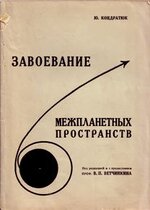
Кондратюк Юрий Васильевич.
"Завоевание межпланетных пространств"
Книгу на русском языке можно скачать по ссылке нижеYuri Vasilyevich Kondratyuk.
"The Conquest of Interplanetary Space"
The book in Russian can be downloaded from the link below.
Yuri Vasilievich Kondratyuk.
«La conquista del espacio interplanetario»
El libro en ruso se puede descargar desde el siguiente enlace.
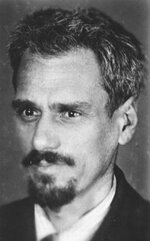
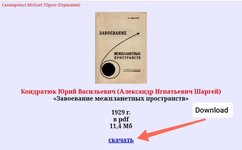
Кондратюк Юрий Васильевич.
"Завоевание межпланетных пространств"
По ссылке ниже сайт с текстом книги на русском языке.Yuri Vasilyevich Kondratyuk.
"The Conquest of Interplanetary Space"
The link below contains the text of the book in Russian.
Yuri Vasilievich Kondratyuk.
«La conquista del espacio interplanetario»
El siguiente enlace contiene el texto del libro en ruso.
Last edited:
Космическая живопись СССР.
Юрий Кондратюк. Полотно, масло. 173 × 84. 1977 год.
Художник: Задорожный Иван-Валентин Феодосиевич.
.....................................................................
Примечание: Иван-Валентин Феодосиевич Задоро́жный (1921—1988) — советский художник-монументалист, живописец, график.
Родился 7 июля 1921 года в Ржищеве (ныне Киевская область, Украина). Учился в Киевском Государственном художественном институте (1945—1951). Преподаватели К. Елева, А. Петрицкий, С. Григорьев.
Умер в 1988 году в Киеве. Похоронен в Ржищеве. Премии и награды :
Премия Совета Министров СССР — за монументально-декоративное оформление поселка Калита Киевской области.
Государственная премия Украины имени Т. Г. Шевченко (1995; — посмертно) — за серию работ (1964—1988).
Заслуженный деятель искусств Украинской Советской Социалистической Республики (1960).
Орден Отечественной войны II степени (6.4.1985).
Space Painting of the USSR.
Yuri Kondratyuk. Oil on canvas. 173 x 84 cm. 1977.
Artist: Ivan-Valentin Feodosievich Zadorozhny.
.....................................................................
Note: Ivan-Valentin Feodosievich Zadorozhny (1921–1988) was a Soviet muralist, painter, and graphic artist.
Born July 7, 1921, in Rzhyshchiv (now Kyiv Oblast, Ukraine). Studied at the Kyiv State Art Institute (1945–1951). Teachers: K. Eleva, A. Petritsky, and S. Grigoriev.
He died in 1988 in Kyiv. Buried in Rzhyshchiv. Prizes and awards:
Prize of the Council of Ministers of the USSR for the monumental and decorative design of the village of Kalita, Kyiv Oblast.
T. G. Shevchenko State Prize of Ukraine (1995; posthumously) for a series of works (1964-1988).
Honored Artist of the Ukrainian Soviet Socialist Republic (1960).
Order of the Patriotic War, 2nd class (April 6, 1985).
Pintura espacial de la URSS.
Yuri Kondratyuk. Óleo sobre lienzo. 173 x 84 cm. 1977.
Artista: Ivan-Valentin Feodosievich Zadorozhny.
...................................................................
Nota: Ivan-Valentin Feodosievich Zadorozhny (1921-1988) fue un muralista, pintor y artista gráfico soviético.
Nació el 7 de julio de 1921 en Rzhyshchiv (actualmente Óblast de Kiev, Ucrania). Estudió en el Instituto Estatal de Arte de Kiev (1945-1951). Sus profesores fueron K. Eleva, A. Petritsky y S. Grigoriev.
Falleció en 1988 en Kiev. Está enterrado en Rzhyshchiv. Premios y reconocimientos:
Premio del Consejo de Ministros de la URSS por el diseño monumental y decorativo del pueblo de Kalita, Óblast de Kiev.
Premio Estatal T. G. Shevchenko de Ucrania (1995; a título póstumo) por una serie de obras (1964-1988).
Artista de Honor de la República Socialista Soviética de Ucrania (1960).
Orden de la Guerra Patriótica, 2.ª clase (6 de abril de 1985).

Юрий Кондратюк. Полотно, масло. 173 × 84. 1977 год.
Художник: Задорожный Иван-Валентин Феодосиевич.
.....................................................................
Примечание: Иван-Валентин Феодосиевич Задоро́жный (1921—1988) — советский художник-монументалист, живописец, график.
Родился 7 июля 1921 года в Ржищеве (ныне Киевская область, Украина). Учился в Киевском Государственном художественном институте (1945—1951). Преподаватели К. Елева, А. Петрицкий, С. Григорьев.
Умер в 1988 году в Киеве. Похоронен в Ржищеве. Премии и награды :
Премия Совета Министров СССР — за монументально-декоративное оформление поселка Калита Киевской области.
Государственная премия Украины имени Т. Г. Шевченко (1995; — посмертно) — за серию работ (1964—1988).
Заслуженный деятель искусств Украинской Советской Социалистической Республики (1960).
Орден Отечественной войны II степени (6.4.1985).
Space Painting of the USSR.
Yuri Kondratyuk. Oil on canvas. 173 x 84 cm. 1977.
Artist: Ivan-Valentin Feodosievich Zadorozhny.
.....................................................................
Note: Ivan-Valentin Feodosievich Zadorozhny (1921–1988) was a Soviet muralist, painter, and graphic artist.
Born July 7, 1921, in Rzhyshchiv (now Kyiv Oblast, Ukraine). Studied at the Kyiv State Art Institute (1945–1951). Teachers: K. Eleva, A. Petritsky, and S. Grigoriev.
He died in 1988 in Kyiv. Buried in Rzhyshchiv. Prizes and awards:
Prize of the Council of Ministers of the USSR for the monumental and decorative design of the village of Kalita, Kyiv Oblast.
T. G. Shevchenko State Prize of Ukraine (1995; posthumously) for a series of works (1964-1988).
Honored Artist of the Ukrainian Soviet Socialist Republic (1960).
Order of the Patriotic War, 2nd class (April 6, 1985).
Pintura espacial de la URSS.
Yuri Kondratyuk. Óleo sobre lienzo. 173 x 84 cm. 1977.
Artista: Ivan-Valentin Feodosievich Zadorozhny.
...................................................................
Nota: Ivan-Valentin Feodosievich Zadorozhny (1921-1988) fue un muralista, pintor y artista gráfico soviético.
Nació el 7 de julio de 1921 en Rzhyshchiv (actualmente Óblast de Kiev, Ucrania). Estudió en el Instituto Estatal de Arte de Kiev (1945-1951). Sus profesores fueron K. Eleva, A. Petritsky y S. Grigoriev.
Falleció en 1988 en Kiev. Está enterrado en Rzhyshchiv. Premios y reconocimientos:
Premio del Consejo de Ministros de la URSS por el diseño monumental y decorativo del pueblo de Kalita, Óblast de Kiev.
Premio Estatal T. G. Shevchenko de Ucrania (1995; a título póstumo) por una serie de obras (1964-1988).
Artista de Honor de la República Socialista Soviética de Ucrania (1960).
Orden de la Guerra Patriótica, 2.ª clase (6 de abril de 1985).
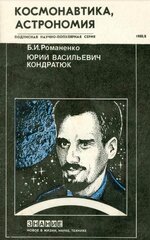
"В 1980 г. Свердловская киностудия создала по сценарию А. Г. Раппопорта документальный кинофильм «Хлеб и Луна» о Ю. В. Кондратюке. Где в интервью академик В. П. Глушко, в частности, сказал: «Если поставить перед собой задачу найти место, которое занимает Ю. В. Кондратюк в ряду первых исследователей космонавтики, то в моем представлении он бесспорно занимает следующее место после К. Э. Циолковского. Его труды (т. е. Ю. В. Кондратюка. – Б. Р.) изобилуют интереснейшими полезными идеями и предложениями, которые используются ныне и будут еще долгое время использоваться в будущем... он в то же время заключил, что, выйдя в космос, человек станет, как он выразился, подлинным хозяином Земли».(Б. И. Романенко. "Юрий Васильевич Кондратюк").
................................................................
Цит. по: Романенко Борис Иванович
ЮРИЙ ВАСИЛЬЕВИЧ КОНДРАТЮК
Обложка художника А. А. Астрецова. Худож. редактор Т. С. Егорова.
НОВОЕ В ЖИЗНИ, НАУКЕ, ТЕХНИКЕ
ПОДПИСНАЯ НАУЧНО-ПОПУЛЯРНАЯ СЕРИЯ
КОСМОНАВТИКА, АСТРОНОМИЯ
8/1988
Москва /Издательство «Знание»/ 1988
На фото обложка журнала с портретом Юрия Кондратюка.
"In 1980, the Sverdlovsk Film Studio produced the documentary film Bread and the Moon based on a script by A. G. Rappoport, dedicated to Yuri V. Kondratyuk. In the film, Academician V. P. Glushko stated, among other things:
“If one sets out to determine the place occupied by Yuri V. Kondratyuk among the early pioneers of astronautics, then, in my view, he unquestionably ranks immediately after K. E. Tsiolkovsky. His works (that is, the works of Yuri V. Kondratyuk — B. R.) are filled with extremely interesting and valuable ideas and proposals that are being used today and will continue to be used for a long time in the future... At the same time, he concluded that once humanity enters outer space, man will become, as he put it, the true master of the Earth.”
(B. I. Romanenko, Yuri Vasilyevich Kondratyuk).
................................................................
Quoted from:
Romanenko, Boris Ivanovich
YURI VASILYEVICH KONDRATYUK
Cover designed by artist A. A. Astretsov. Art editor: T. S. Egorova.
NEW IN LIFE, SCIENCE, AND TECHNOLOGY
Subscription Popular Science Series
COSMONAUTICS, ASTRONOMY
No. 8 / 1988
Moscow / Knowledge Publishing House / 1988
The photograph shows the cover of the magazine featuring a portrait of Yuri Kondratyuk.
"En 1980, el Estudio Cinematográfico de Sverdlovsk produjo el documental Pan y la Luna, basado en un guion de A. G. Rappoport y dedicado a Yuri V. Kondratiuk. En la película, el académico V. P. Glushkó declaró, entre otras cosas:
“Si nos proponemos determinar el lugar que ocupa Yuri V. Kondratiuk entre los primeros investigadores de la cosmonáutica, en mi opinión ocupa indiscutiblemente el puesto inmediatamente posterior al de K. E. Tsiolkovski. Sus trabajos (es decir, los trabajos de Yuri V. Kondratiuk — B. R.) están llenos de ideas y propuestas extraordinariamente interesantes y útiles, que se utilizan hoy en día y seguirán utilizándose durante mucho tiempo en el futuro... Al mismo tiempo, llegó a la conclusión de que, al salir al espacio, el ser humano se convertirá, como él mismo expresó, en el verdadero dueño de la Tierra.”
(B. I. Romanenko, Yuri Vasílievich Kondratiuk).
................................................................
Citado de:
Romanenko, Borís Ivánovich
YURI VASÍLIEVICH KONDRATIUK
Portada realizada por el artista A. A. Astretsov. Editor artístico: T. S. Egórova.
NOVEDADES EN LA VIDA, LA CIENCIA Y LA TECNOLOGÍA
Serie de divulgación científica por suscripción
COSMONÁUTICA, ASTRONOMÍA
N.º 8 / 1988
Moscú / Editorial Znanie (Conocimiento) / 1988
En la fotografía aparece la portada de la revista con el retrato de Yuri Kondratiuk.
................................................................
Цит. по: Романенко Борис Иванович
ЮРИЙ ВАСИЛЬЕВИЧ КОНДРАТЮК
Обложка художника А. А. Астрецова. Худож. редактор Т. С. Егорова.
НОВОЕ В ЖИЗНИ, НАУКЕ, ТЕХНИКЕ
ПОДПИСНАЯ НАУЧНО-ПОПУЛЯРНАЯ СЕРИЯ
КОСМОНАВТИКА, АСТРОНОМИЯ
8/1988
Москва /Издательство «Знание»/ 1988
На фото обложка журнала с портретом Юрия Кондратюка.
"In 1980, the Sverdlovsk Film Studio produced the documentary film Bread and the Moon based on a script by A. G. Rappoport, dedicated to Yuri V. Kondratyuk. In the film, Academician V. P. Glushko stated, among other things:
“If one sets out to determine the place occupied by Yuri V. Kondratyuk among the early pioneers of astronautics, then, in my view, he unquestionably ranks immediately after K. E. Tsiolkovsky. His works (that is, the works of Yuri V. Kondratyuk — B. R.) are filled with extremely interesting and valuable ideas and proposals that are being used today and will continue to be used for a long time in the future... At the same time, he concluded that once humanity enters outer space, man will become, as he put it, the true master of the Earth.”
(B. I. Romanenko, Yuri Vasilyevich Kondratyuk).
................................................................
Quoted from:
Romanenko, Boris Ivanovich
YURI VASILYEVICH KONDRATYUK
Cover designed by artist A. A. Astretsov. Art editor: T. S. Egorova.
NEW IN LIFE, SCIENCE, AND TECHNOLOGY
Subscription Popular Science Series
COSMONAUTICS, ASTRONOMY
No. 8 / 1988
Moscow / Knowledge Publishing House / 1988
The photograph shows the cover of the magazine featuring a portrait of Yuri Kondratyuk.
"En 1980, el Estudio Cinematográfico de Sverdlovsk produjo el documental Pan y la Luna, basado en un guion de A. G. Rappoport y dedicado a Yuri V. Kondratiuk. En la película, el académico V. P. Glushkó declaró, entre otras cosas:
“Si nos proponemos determinar el lugar que ocupa Yuri V. Kondratiuk entre los primeros investigadores de la cosmonáutica, en mi opinión ocupa indiscutiblemente el puesto inmediatamente posterior al de K. E. Tsiolkovski. Sus trabajos (es decir, los trabajos de Yuri V. Kondratiuk — B. R.) están llenos de ideas y propuestas extraordinariamente interesantes y útiles, que se utilizan hoy en día y seguirán utilizándose durante mucho tiempo en el futuro... Al mismo tiempo, llegó a la conclusión de que, al salir al espacio, el ser humano se convertirá, como él mismo expresó, en el verdadero dueño de la Tierra.”
(B. I. Romanenko, Yuri Vasílievich Kondratiuk).
................................................................
Citado de:
Romanenko, Borís Ivánovich
YURI VASÍLIEVICH KONDRATIUK
Portada realizada por el artista A. A. Astretsov. Editor artístico: T. S. Egórova.
NOVEDADES EN LA VIDA, LA CIENCIA Y LA TECNOLOGÍA
Serie de divulgación científica por suscripción
COSMONÁUTICA, ASTRONOMÍA
N.º 8 / 1988
Moscú / Editorial Znanie (Conocimiento) / 1988
En la fotografía aparece la portada de la revista con el retrato de Yuri Kondratiuk.
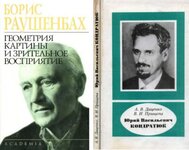
"Никто из классиков, советских и зарубежных, того времени не представлял себе так четко, как он, начало космической эры. В чем отличие Кондратюка от других? Он первым связал воедино два вопроса: торможение в атмосфере и тепловую защиту экипажа. У других этого нет. Он показал, что надо иметь не весь закрытый аппарат, а некий щит впередистоящий, мощный в тепловом отношении... Он первый сообразил, что в этих условиях нельзя управлять так, как всеми самолетами, — не рулями высоты, а по крену, поворачивая аппарат то "вверх ногами", то "лбом"... Как он до этого дошел, додумался, меня поражает до сих пор: и до него, и после все думали по-другому. Он объяснил процесс: условия теплозащиты требуют, чтобы угол атаки не менялся... Что поражает: именно так сделан "Союз" и другие — американские и советские — космические аппараты.".(Борис Раушенбах).
На фото слева - обложка книги Бориса Раушенбаха "Геометрия картины и зрительное восприятие" с протретом Раушенбаха. На фото справа - обложка книги "Юрий Васильевич Кондратюк" (авторы А.В.Даценко; В.И. Прищепа) с фотографией Кондратюка.
"None of the classic pioneers, Soviet or foreign, of that era envisioned the beginning of the Space Age as clearly as he did. What distinguished Kondratyuk from the others? He was the first to unite two issues into a single concept: atmospheric braking and thermal protection of the crew. The others did not have this. He demonstrated that one should not rely on the entire enclosed vehicle, but instead use a kind of forward heat shield with great thermal resistance.
He was also the first to realize that under such conditions a spacecraft could not be controlled in the same way as airplanes — not by elevator control surfaces, but by roll, turning the vehicle alternately "upside down" and then "face forward." How he arrived at this idea, how he reasoned it out, still amazes me today: before him and after him, everyone thought differently. He explained the process: thermal protection requirements demand that the angle of attack remain constant.
What is truly astonishing is that this is exactly how the Soyuz spacecraft and other American and Soviet spacecraft were designed."
(Boris Rauschenbach)
In the photograph on the left is the cover of Boris Rauschenbach's book Geometry of the Picture and Visual Perception, featuring a portrait of Rauschenbach. In the photograph on the right is the cover of the book Yuri Vasilyevich Kondratyuk (authors A. V. Datsenko and V. I. Prishchepa), featuring a photograph of Kondratyuk.
"Ninguno de los pioneros clásicos, soviéticos o extranjeros, de aquella época imaginó el comienzo de la Era Espacial con tanta claridad como él. ¿En qué se diferenciaba Kondratiuk de los demás? Fue el primero en vincular dos cuestiones en un solo concepto: el frenado en la atmósfera y la protección térmica de la tripulación. Los demás no lo tenían. Demostró que no era necesario confiar en todo el aparato cerrado, sino utilizar una especie de escudo térmico situado delante, con gran resistencia al calor.
También fue el primero en comprender que, en tales condiciones, una nave espacial no podía controlarse como un avión, es decir, mediante timones de profundidad, sino mediante el alabeo, girando la nave alternativamente "boca abajo" y luego "de frente". Cómo llegó a esta idea, cómo logró razonarla, sigue asombrándome hasta hoy: antes de él y después de él, todos pensaban de otra manera. Explicó el proceso: las exigencias de la protección térmica requieren que el ángulo de ataque permanezca constante.
Lo más sorprendente es que precisamente así están construidas la nave Soyuz y otras naves espaciales estadounidenses y soviéticas."
(Borís Raushenbaj)
En la fotografía de la izquierda aparece la portada del libro de Borís Raushenbaj Geometría de la imagen y percepción visual, con un retrato del autor. En la fotografía de la derecha aparece la portada del libro Yuri Vasílievich Kondratiuk (autores A. V. Datsenko y V. I. Prishchepa), con una fotografía de Kondratiuk.
На фото слева - обложка книги Бориса Раушенбаха "Геометрия картины и зрительное восприятие" с протретом Раушенбаха. На фото справа - обложка книги "Юрий Васильевич Кондратюк" (авторы А.В.Даценко; В.И. Прищепа) с фотографией Кондратюка.
"None of the classic pioneers, Soviet or foreign, of that era envisioned the beginning of the Space Age as clearly as he did. What distinguished Kondratyuk from the others? He was the first to unite two issues into a single concept: atmospheric braking and thermal protection of the crew. The others did not have this. He demonstrated that one should not rely on the entire enclosed vehicle, but instead use a kind of forward heat shield with great thermal resistance.
He was also the first to realize that under such conditions a spacecraft could not be controlled in the same way as airplanes — not by elevator control surfaces, but by roll, turning the vehicle alternately "upside down" and then "face forward." How he arrived at this idea, how he reasoned it out, still amazes me today: before him and after him, everyone thought differently. He explained the process: thermal protection requirements demand that the angle of attack remain constant.
What is truly astonishing is that this is exactly how the Soyuz spacecraft and other American and Soviet spacecraft were designed."
(Boris Rauschenbach)
In the photograph on the left is the cover of Boris Rauschenbach's book Geometry of the Picture and Visual Perception, featuring a portrait of Rauschenbach. In the photograph on the right is the cover of the book Yuri Vasilyevich Kondratyuk (authors A. V. Datsenko and V. I. Prishchepa), featuring a photograph of Kondratyuk.
"Ninguno de los pioneros clásicos, soviéticos o extranjeros, de aquella época imaginó el comienzo de la Era Espacial con tanta claridad como él. ¿En qué se diferenciaba Kondratiuk de los demás? Fue el primero en vincular dos cuestiones en un solo concepto: el frenado en la atmósfera y la protección térmica de la tripulación. Los demás no lo tenían. Demostró que no era necesario confiar en todo el aparato cerrado, sino utilizar una especie de escudo térmico situado delante, con gran resistencia al calor.
También fue el primero en comprender que, en tales condiciones, una nave espacial no podía controlarse como un avión, es decir, mediante timones de profundidad, sino mediante el alabeo, girando la nave alternativamente "boca abajo" y luego "de frente". Cómo llegó a esta idea, cómo logró razonarla, sigue asombrándome hasta hoy: antes de él y después de él, todos pensaban de otra manera. Explicó el proceso: las exigencias de la protección térmica requieren que el ángulo de ataque permanezca constante.
Lo más sorprendente es que precisamente así están construidas la nave Soyuz y otras naves espaciales estadounidenses y soviéticas."
(Borís Raushenbaj)
En la fotografía de la izquierda aparece la portada del libro de Borís Raushenbaj Geometría de la imagen y percepción visual, con un retrato del autor. En la fotografía de la derecha aparece la portada del libro Yuri Vasílievich Kondratiuk (autores A. V. Datsenko y V. I. Prishchepa), con una fotografía de Kondratiuk.
"Хлеб и Луна"
Год выпуска: 1980
Страна: СССР
Жанр: Документальный
Продолжительность: 00:18:48
Язык : русский. (можно в настройках перевести субтитры).
Режиссер: Л.Ефимов
Описание: Фильм рассказывает о жизни и творчестве одного из выдающихся советских основоположников космонавтики - Юрии Васильевиче Кондратюке, реально разработавшем во всех деталях проект полёта людей на Луну ещё в 20-е годы.
"Bread and the Moon"
Year of release: 1980
Country: USSR
Genre: Documentary
Duration: 00:18:48
Language: Russian. (You can translate subtitles in the settings).
Director: L. Efimov
Description: The film tells the story of the life and work of one of the outstanding Soviet cosmonauts, Yuri Vasilyevich Kondratyuk, who actually developed the detailed plan for a manned mission to the Moon back in the 1920s.
"El pan y la Luna"
Año de estreno: 1980
País: URSS
Género: Documental
Duración: 00:18:48
Idioma: Ruso. (Puedes traducir los subtítulos en la configuración).
Director: L. Efimov
Sinopsis: La película narra la vida y obra de Yuri Vasilievich Kondratyuk, uno de los cosmonautas soviéticos más destacados, quien desarrolló el plan detallado para una misión tripulada a la Luna en la década de 1920.
Год выпуска: 1980
Страна: СССР
Жанр: Документальный
Продолжительность: 00:18:48
Язык : русский. (можно в настройках перевести субтитры).
Режиссер: Л.Ефимов
Описание: Фильм рассказывает о жизни и творчестве одного из выдающихся советских основоположников космонавтики - Юрии Васильевиче Кондратюке, реально разработавшем во всех деталях проект полёта людей на Луну ещё в 20-е годы.
"Bread and the Moon"
Year of release: 1980
Country: USSR
Genre: Documentary
Duration: 00:18:48
Language: Russian. (You can translate subtitles in the settings).
Director: L. Efimov
Description: The film tells the story of the life and work of one of the outstanding Soviet cosmonauts, Yuri Vasilyevich Kondratyuk, who actually developed the detailed plan for a manned mission to the Moon back in the 1920s.
"El pan y la Luna"
Año de estreno: 1980
País: URSS
Género: Documental
Duración: 00:18:48
Idioma: Ruso. (Puedes traducir los subtítulos en la configuración).
Director: L. Efimov
Sinopsis: La película narra la vida y obra de Yuri Vasilievich Kondratyuk, uno de los cosmonautas soviéticos más destacados, quien desarrolló el plan detallado para una misión tripulada a la Luna en la década de 1920.
Сайт посвященный Юрию Кондратюку.
A website dedicated to Yuri Kondratyuk.
Un sitio web dedicado a Yuri Kondratyuk.
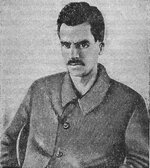

 kondratjuk.m-nsk.ru
A website dedicated to Yuri Kondratyuk.
Un sitio web dedicado a Yuri Kondratyuk.
Юрий Васильевич Кондратюк
Сайт посвящён Юрию Васильевичу Кондратюку - пионеру космонавтики
kondratjuk.m-nsk.ru
Last edited:
Сайт посвященный Юрию Кондратюку.
A website dedicated to Yuri Kondratyuk.
Un sitio web dedicado a Yuri Kondratyuk.

 юкондратюк.рф
Quote Reply
Report Edit Delete
A website dedicated to Yuri Kondratyuk.
Un sitio web dedicado a Yuri Kondratyuk.
Сетевой дом Кондратюка
Проект «Сетевой Дом Кондратюка» создан для популяризации имени и наследия выдающегося советского учёного Юрия Васильевича Кондратюка.
Quote Reply
Report Edit Delete
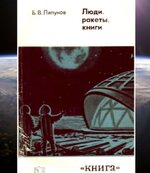
"Идет время, и мы становимся свидетелями все более грандиозных успехов той новой области техники, без которой теперь уже немыслимо представить себе нашу жизнь. Эта область — космонавтика. С нею связаны такие достижения в изучении и покорении мира вне Земли, о каких еще недавно нельзя было и мечтать.
Родилась космонавтика задолго до того, как взлетел в небо первый, советский искусственный спутник, она родилась почти одновременно с авиацией, на рубеже двух веков — прошлого и нынешнего. Ее историю, ее первые шаги можно проследить, перелистав страницы многих книг, сохранивших для нас память о тех днях, когда закладывался теоретический фундамент ракетно-космической техники и начиналась работа по претворению на практике идей пионеров космонавтики — Циолковского, Цандера, Кондратюка и других. Книги рассказывают нам о мечтах и чаяниях этих энтузиастов, которые сумели, говоря словами Циолковского, зажечь неугасимый огонь, предугадали будущее, наметили путь освоения человеком космоса.
У них были предшественники. Н. И. Кибальчич разработал еще в 1881 г. проект первого в мире ракетного летательного аппарата. К сожалению, люди узнали об этом проекте лишь спустя 37 лет... А. П. Федоров выпустил в 1896 г. небольшую книжечку — «Новый способ воздухоплавания, исключающий атмосферу как опорную среду».
Циолковский выписал книгу Федорова и, поскольку расчетов в ней никаких не было дано, принялся за вычисления самостоятельно. «Вот начало моих теоретических изысканий о возможности применения реактивных приборов к космическим путешествиям», — вспоминал он. Эта книжка «толкнула меня к серьезным работам, как упавшее яблоко к открытию Ньютоном тяготения...»
В 1897 г. И. В. Мещерский выпустил труд «Динамика точки переменной массы».
В 1903 г. Константин Эдуардович опубликовал классическое «Исследование мировых пространств реактивными приборами», ставшее краеугольным камнем космонавтики.
Впоследствии появилась ракетодинамика, теория реактивного движения, огромный вклад в развитие которой продолжал и далее вносить Циолковский.
Трудно переоценить роль целой плеяды русских и иностранных ученых и инженеров, взявшихся еще в 20-е и 30-е гг. за реализацию едва ли не самой смелой программы, которая когда-либо выдвигалась человеком, — программы изучения и освоения космического пространства и соседних небесных тел.
Вспоминая сейчас о книгах и статьях, принадлежащих перу основоположников космонавтики и ставших уже библиографической редкостью, мы тем самым отдаем должное уму, энергии и страстному увлечению тех, кто готовил удивительные победы человеческого разума над силами природы". (Б. Ляпунов. "Люди, ракеты, книги").
............................................................................
Цит.по:Ляпунов Борис Валерьянович
ЛЮДИ, РАКЕТЫ, КНИГИ
Редактор И. В. Кириенко
Художественный редактор В. В. Рождественский
Технический редактор А. М. Панченко
Корректор Н. И. Балакирева
Издательство «Книга»/Москва /1972 год
На фотографии обложка книги "Люди, ракеты, книги".
Time passes, and we are witnessing ever more magnificent achievements in that new field of technology without which it is now impossible to imagine our lives. That field is astronautics. It is connected with such accomplishments in the exploration and conquest of the world beyond Earth that until recently one could hardly even dream of them.
Astronautics was born long before the first Soviet artificial satellite rose into the sky. It was born almost simultaneously with aviation, at the turn of the nineteenth and twentieth centuries. Its history, its first steps, can be traced by turning the pages of many books that have preserved for us the memory of those days when the theoretical foundations of rocket and space technology were being laid and when work began on putting into practice the ideas of the pioneers of astronautics—Tsiolkovsky, Zander, Kondratyuk, and others. These books tell us about the dreams and aspirations of those enthusiasts who, in Tsiolkovsky’s words, managed to kindle an inextinguishable flame, foresaw the future, and charted humanity’s path into space.
They had predecessors. Nikolai I. Kibalchich developed the world’s first design for a rocket-powered flying vehicle as early as 1881. Unfortunately, people learned about this project only 37 years later. A. P. Fyodorov published a small booklet in 1896 entitled A New Method of Aeronautics Independent of the Atmosphere as a Supporting Medium.
Tsiolkovsky obtained Fyodorov’s book and, finding that it contained no calculations, began working them out himself.
“This was the beginning of my theoretical investigations into the possibility of using reactive devices for space travel,” he later recalled. That booklet “pushed me toward serious work just as the falling apple led Newton to discover gravity.”
In 1897, I. V. Meshchersky published his work Dynamics of a Point of Variable Mass.
In 1903, Konstantin Eduardovich published the classic Exploration of Outer Space by Means of Reactive Devices, which became one of the cornerstones of astronautics.
Later came rocket dynamics—the theory of reactive motion—to whose development Tsiolkovsky continued to make an enormous contribution.
It is difficult to overestimate the role of the whole constellation of Russian and foreign scientists and engineers who, already in the 1920s and 1930s, undertook the realization of perhaps the boldest program ever proposed by humankind: the program of exploring and mastering outer space and neighboring celestial bodies.
By recalling today the books and articles written by the founders of astronautics—works that have now become bibliographic rarities—we pay tribute to the intellect, energy, and passionate dedication of those who prepared the astonishing victories of the human mind over the forces of nature.
(B. Lyapunov, People, Rockets, Books).
............................................................................
Source:
Boris Valeryanovich Lyapunov
PEOPLE, ROCKETS, BOOKS
Editor: I. V. Kiriyenko
Art Editor: V. V. Rozhdestvensky
Technical Editor: A. M. Panchenko
Proofreader: N. I. Balakireva
Book Publishing House
Moscow, 1972
The photograph shows the cover of the book People, Rockets, Books.
Pasa el tiempo y somos testigos de logros cada vez más grandiosos en ese nuevo campo de la tecnología sin el cual ya resulta imposible imaginar nuestra vida. Ese campo es la cosmonáutica. Está relacionado con avances en la exploración y conquista del mundo más allá de la Tierra que hasta hace poco parecían imposibles incluso de imaginar.
La cosmonáutica nació mucho antes de que el primer satélite artificial soviético se elevara al cielo. Nació casi al mismo tiempo que la aviación, en la transición entre los siglos XIX y XX. Su historia y sus primeros pasos pueden seguirse al pasar las páginas de numerosos libros que han conservado para nosotros el recuerdo de aquellos días en que se sentaban las bases teóricas de la tecnología espacial y de cohetes, y comenzaba el trabajo para llevar a la práctica las ideas de los pioneros de la cosmonáutica: Tsiolkovski, Zander, Kondratiuk y otros. Estos libros nos hablan de los sueños y aspiraciones de aquellos entusiastas que, utilizando las palabras de Tsiolkovski, lograron encender una llama inextinguible, prever el futuro y señalar el camino de la humanidad hacia el espacio.
Ellos tuvieron precursores. Nikolái I. Kibalchich elaboró en 1881 el primer proyecto del mundo de un vehículo volador impulsado por cohetes. Lamentablemente, la humanidad conoció este proyecto solamente 37 años después. En 1896, A. P. Fiódorov publicó un pequeño folleto titulado Un nuevo método de aeronavegación que no utiliza la atmósfera como medio de sustentación.
Tsiolkovski consiguió el libro de Fiódorov y, al comprobar que no contenía cálculos, comenzó a realizarlos por su cuenta.
“Aquí comenzó mi investigación teórica sobre la posibilidad de utilizar dispositivos reactivos para los viajes espaciales”, recordaría más tarde. Ese folleto “me impulsó hacia trabajos serios de la misma manera que la manzana que cayó impulsó a Newton al descubrimiento de la gravedad”.
En 1897, I. V. Meshcherski publicó su obra Dinámica de un punto de masa variable.
En 1903, Konstantín Eduardovich publicó su clásico La exploración de los espacios cósmicos mediante aparatos reactivos, que se convirtió en una de las piedras angulares de la cosmonáutica.
Posteriormente surgió la dinámica de cohetes, la teoría del movimiento reactivo, a cuyo desarrollo Tsiolkovski siguió aportando una contribución enorme.
Es difícil sobreestimar el papel de toda una generación de científicos e ingenieros rusos y extranjeros que ya en las décadas de 1920 y 1930 emprendieron la realización de quizás el programa más audaz jamás propuesto por la humanidad: el programa de exploración y conquista del espacio cósmico y de los cuerpos celestes vecinos.
Al recordar hoy los libros y artículos escritos por los fundadores de la cosmonáutica, que se han convertido ya en rarezas bibliográficas, rendimos homenaje a la inteligencia, la energía y la apasionada dedicación de quienes prepararon las asombrosas victorias de la mente humana sobre las fuerzas de la naturaleza.
(B. Liapunov, Personas, cohetes y libros).
............................................................................
Fuente:
Borís Valerianovich Liapunov
PERSONAS, COHETES Y LIBROS
Editor: I. V. Kiriyenko
Editor artístico: V. V. Rozhdéstvenski
Editor técnico: A. M. Panchenko
Correctora: N. I. Balakireva
Editorial Kniga
Moscú, 1972
La fotografía muestra la portada del libro Personas, cohetes y libros.
Родилась космонавтика задолго до того, как взлетел в небо первый, советский искусственный спутник, она родилась почти одновременно с авиацией, на рубеже двух веков — прошлого и нынешнего. Ее историю, ее первые шаги можно проследить, перелистав страницы многих книг, сохранивших для нас память о тех днях, когда закладывался теоретический фундамент ракетно-космической техники и начиналась работа по претворению на практике идей пионеров космонавтики — Циолковского, Цандера, Кондратюка и других. Книги рассказывают нам о мечтах и чаяниях этих энтузиастов, которые сумели, говоря словами Циолковского, зажечь неугасимый огонь, предугадали будущее, наметили путь освоения человеком космоса.
У них были предшественники. Н. И. Кибальчич разработал еще в 1881 г. проект первого в мире ракетного летательного аппарата. К сожалению, люди узнали об этом проекте лишь спустя 37 лет... А. П. Федоров выпустил в 1896 г. небольшую книжечку — «Новый способ воздухоплавания, исключающий атмосферу как опорную среду».
Циолковский выписал книгу Федорова и, поскольку расчетов в ней никаких не было дано, принялся за вычисления самостоятельно. «Вот начало моих теоретических изысканий о возможности применения реактивных приборов к космическим путешествиям», — вспоминал он. Эта книжка «толкнула меня к серьезным работам, как упавшее яблоко к открытию Ньютоном тяготения...»
В 1897 г. И. В. Мещерский выпустил труд «Динамика точки переменной массы».
В 1903 г. Константин Эдуардович опубликовал классическое «Исследование мировых пространств реактивными приборами», ставшее краеугольным камнем космонавтики.
Впоследствии появилась ракетодинамика, теория реактивного движения, огромный вклад в развитие которой продолжал и далее вносить Циолковский.
Трудно переоценить роль целой плеяды русских и иностранных ученых и инженеров, взявшихся еще в 20-е и 30-е гг. за реализацию едва ли не самой смелой программы, которая когда-либо выдвигалась человеком, — программы изучения и освоения космического пространства и соседних небесных тел.
Вспоминая сейчас о книгах и статьях, принадлежащих перу основоположников космонавтики и ставших уже библиографической редкостью, мы тем самым отдаем должное уму, энергии и страстному увлечению тех, кто готовил удивительные победы человеческого разума над силами природы". (Б. Ляпунов. "Люди, ракеты, книги").
............................................................................
Цит.по:Ляпунов Борис Валерьянович
ЛЮДИ, РАКЕТЫ, КНИГИ
Редактор И. В. Кириенко
Художественный редактор В. В. Рождественский
Технический редактор А. М. Панченко
Корректор Н. И. Балакирева
Издательство «Книга»/Москва /1972 год
На фотографии обложка книги "Люди, ракеты, книги".
Time passes, and we are witnessing ever more magnificent achievements in that new field of technology without which it is now impossible to imagine our lives. That field is astronautics. It is connected with such accomplishments in the exploration and conquest of the world beyond Earth that until recently one could hardly even dream of them.
Astronautics was born long before the first Soviet artificial satellite rose into the sky. It was born almost simultaneously with aviation, at the turn of the nineteenth and twentieth centuries. Its history, its first steps, can be traced by turning the pages of many books that have preserved for us the memory of those days when the theoretical foundations of rocket and space technology were being laid and when work began on putting into practice the ideas of the pioneers of astronautics—Tsiolkovsky, Zander, Kondratyuk, and others. These books tell us about the dreams and aspirations of those enthusiasts who, in Tsiolkovsky’s words, managed to kindle an inextinguishable flame, foresaw the future, and charted humanity’s path into space.
They had predecessors. Nikolai I. Kibalchich developed the world’s first design for a rocket-powered flying vehicle as early as 1881. Unfortunately, people learned about this project only 37 years later. A. P. Fyodorov published a small booklet in 1896 entitled A New Method of Aeronautics Independent of the Atmosphere as a Supporting Medium.
Tsiolkovsky obtained Fyodorov’s book and, finding that it contained no calculations, began working them out himself.
“This was the beginning of my theoretical investigations into the possibility of using reactive devices for space travel,” he later recalled. That booklet “pushed me toward serious work just as the falling apple led Newton to discover gravity.”
In 1897, I. V. Meshchersky published his work Dynamics of a Point of Variable Mass.
In 1903, Konstantin Eduardovich published the classic Exploration of Outer Space by Means of Reactive Devices, which became one of the cornerstones of astronautics.
Later came rocket dynamics—the theory of reactive motion—to whose development Tsiolkovsky continued to make an enormous contribution.
It is difficult to overestimate the role of the whole constellation of Russian and foreign scientists and engineers who, already in the 1920s and 1930s, undertook the realization of perhaps the boldest program ever proposed by humankind: the program of exploring and mastering outer space and neighboring celestial bodies.
By recalling today the books and articles written by the founders of astronautics—works that have now become bibliographic rarities—we pay tribute to the intellect, energy, and passionate dedication of those who prepared the astonishing victories of the human mind over the forces of nature.
(B. Lyapunov, People, Rockets, Books).
............................................................................
Source:
Boris Valeryanovich Lyapunov
PEOPLE, ROCKETS, BOOKS
Editor: I. V. Kiriyenko
Art Editor: V. V. Rozhdestvensky
Technical Editor: A. M. Panchenko
Proofreader: N. I. Balakireva
Book Publishing House
Moscow, 1972
The photograph shows the cover of the book People, Rockets, Books.
Pasa el tiempo y somos testigos de logros cada vez más grandiosos en ese nuevo campo de la tecnología sin el cual ya resulta imposible imaginar nuestra vida. Ese campo es la cosmonáutica. Está relacionado con avances en la exploración y conquista del mundo más allá de la Tierra que hasta hace poco parecían imposibles incluso de imaginar.
La cosmonáutica nació mucho antes de que el primer satélite artificial soviético se elevara al cielo. Nació casi al mismo tiempo que la aviación, en la transición entre los siglos XIX y XX. Su historia y sus primeros pasos pueden seguirse al pasar las páginas de numerosos libros que han conservado para nosotros el recuerdo de aquellos días en que se sentaban las bases teóricas de la tecnología espacial y de cohetes, y comenzaba el trabajo para llevar a la práctica las ideas de los pioneros de la cosmonáutica: Tsiolkovski, Zander, Kondratiuk y otros. Estos libros nos hablan de los sueños y aspiraciones de aquellos entusiastas que, utilizando las palabras de Tsiolkovski, lograron encender una llama inextinguible, prever el futuro y señalar el camino de la humanidad hacia el espacio.
Ellos tuvieron precursores. Nikolái I. Kibalchich elaboró en 1881 el primer proyecto del mundo de un vehículo volador impulsado por cohetes. Lamentablemente, la humanidad conoció este proyecto solamente 37 años después. En 1896, A. P. Fiódorov publicó un pequeño folleto titulado Un nuevo método de aeronavegación que no utiliza la atmósfera como medio de sustentación.
Tsiolkovski consiguió el libro de Fiódorov y, al comprobar que no contenía cálculos, comenzó a realizarlos por su cuenta.
“Aquí comenzó mi investigación teórica sobre la posibilidad de utilizar dispositivos reactivos para los viajes espaciales”, recordaría más tarde. Ese folleto “me impulsó hacia trabajos serios de la misma manera que la manzana que cayó impulsó a Newton al descubrimiento de la gravedad”.
En 1897, I. V. Meshcherski publicó su obra Dinámica de un punto de masa variable.
En 1903, Konstantín Eduardovich publicó su clásico La exploración de los espacios cósmicos mediante aparatos reactivos, que se convirtió en una de las piedras angulares de la cosmonáutica.
Posteriormente surgió la dinámica de cohetes, la teoría del movimiento reactivo, a cuyo desarrollo Tsiolkovski siguió aportando una contribución enorme.
Es difícil sobreestimar el papel de toda una generación de científicos e ingenieros rusos y extranjeros que ya en las décadas de 1920 y 1930 emprendieron la realización de quizás el programa más audaz jamás propuesto por la humanidad: el programa de exploración y conquista del espacio cósmico y de los cuerpos celestes vecinos.
Al recordar hoy los libros y artículos escritos por los fundadores de la cosmonáutica, que se han convertido ya en rarezas bibliográficas, rendimos homenaje a la inteligencia, la energía y la apasionada dedicación de quienes prepararon las asombrosas victorias de la mente humana sobre las fuerzas de la naturaleza.
(B. Liapunov, Personas, cohetes y libros).
............................................................................
Fuente:
Borís Valerianovich Liapunov
PERSONAS, COHETES Y LIBROS
Editor: I. V. Kiriyenko
Editor artístico: V. V. Rozhdéstvenski
Editor técnico: A. M. Panchenko
Correctora: N. I. Balakireva
Editorial Kniga
Moscú, 1972
La fotografía muestra la portada del libro Personas, cohetes y libros.
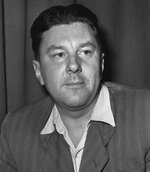
Бори́с Валериа́нович Ляпуно́в (1921 — 1972) — советский писатель-фантаст, публицист, сценарист, библиограф, журналист. Популяризатор ракетной техники, космонавтики, океанологии, химии и других наук. Неоднократно обращался к жанру научно-фантастического очерка. Один из первых советских историков и исследователей научной фантастики. Сценарист фильма «Дорога к звёздам» (1957, совместно с Василием Соловьёвым) и др.
Окончил Московский авиационный институт, работал в научной журналистике.
Автор научно-художественных книг о науке и технике, Ляпунов одним из первых в нашей стране обратил серьёзное внимание на научную фантастику, в которой выделял, в основном, популяризаторский момент. Ещё в 1946 г. он составил капитальный аннотированный библиографический указатель «Научная фантастика», охватывающий русскую и мировую литературу с конца XIX века по 1945 г. (расширенный и переработанный вариант датирован 1958 годом), однако эта уникальная работа так и не была издана. Ляпунову принадлежат и первые в СССР библиографические и критические исследования русской дореволюционной и советской довоенной фантастики. Главным итогом библиографической деятельности Ляпунова стал историко-критический обзор «В мире мечты» (1970; испр. и доп. 1975 — «В мире фантастики»), в компактном виде знакомящий с историей развития фантастики в русской и советской литературе с дореволюционных лет до начала 1970-х гг., дана характеристика нескольких сотен произведений; составной частью книги является обстоятельная библиография изданий фантастики 1950-1970-х гг. Благодаря активной деятельности Ляпунова, в послевоенные годы было фактически возвращено из небытия имя Александря Беляева, которому посвящён критико-биографический очерк «Александр Беляев» (1967), а также многочисленные статьи в антологиях и периодике. При деятельном участии Ляпунова были подготовлены и выпущены первые собрания сочинений писателя.В 1955—1957 годах работал над сценарием научно-фантастического фильма «Дорога к звёздам» (1957, режиссёр Павел Клушанцев), названного по заключительной части его книги «Открытие мира» (1954). Позднее были написаны сценарии и для ряда научно-популярных фильмов.
Boris Valerianovich Lyapunov (1921–1972) was a Soviet science-fiction writer, publicist, screenwriter, bibliographer, and journalist. He was a popularizer of rocket technology, cosmonautics, oceanography, chemistry, and other sciences. He frequently turned to the genre of the scientific-fantastic essay and became one of the first Soviet historians and researchers of science fiction. He was a co-author of the screenplay for the film Road to the Stars (1957), together with Vasily Solovyov, among other works.
He graduated from the Moscow Aviation Institute and worked in science journalism.
As the author of science-oriented literary works about science and technology, Lyapunov was among the first in the Soviet Union to pay serious attention to science fiction, in which he primarily valued its educational and popularizing role. As early as 1946, he compiled the major annotated bibliographic index Science Fiction, covering Russian and world literature from the late nineteenth century through 1945. A revised and expanded version was completed in 1958, but this unique work was never published. Lyapunov also produced some of the first Soviet bibliographical and critical studies devoted to pre-revolutionary Russian and Soviet pre-war science fiction.
The principal result of his bibliographical work was the historical and critical survey In the World of Dreams (1970), revised and expanded in 1975 as In the World of Science Fiction. In a compact form, it introduced readers to the development of science fiction in Russian and Soviet literature from pre-revolutionary times through the early 1970s and provided descriptions of several hundred works. An important part of the book was an extensive bibliography of science-fiction publications from the 1950s through the 1970s.
Thanks to Lyapunov’s active efforts, the name of Alexander Belyaev was effectively restored to public memory in the post-war years. Lyapunov devoted to him the critical-biographical essay Alexander Belyaev (1967), as well as numerous articles in anthologies and periodicals. With Lyapunov’s direct participation, the first collected editions of Belyaev’s works were prepared and published.
Between 1955 and 1957, Lyapunov worked on the screenplay of the science-fiction film Road to the Stars (1957), directed by Pavel Klushantsev. The film was named after the final section of Lyapunov’s book The Discovery of the World (1954). Later, he wrote screenplays for a number of popular-science films as well.
Borís Valeriánovich Liapunov (1921–1972) fue un escritor soviético de ciencia ficción, publicista, guionista, bibliógrafo y periodista. Fue un destacado divulgador de la tecnología de cohetes, la cosmonáutica, la oceanografía, la química y otras ciencias. Recurrió con frecuencia al género del ensayo científico-fantástico y fue uno de los primeros historiadores e investigadores soviéticos de la ciencia ficción. Fue coautor del guion de la película Camino a las estrellas (1957), junto con Vasili Soloviov, entre otras obras.
Se graduó en el Instituto de Aviación de Moscú y trabajó en el periodismo científico.
Como autor de libros científico-literarios sobre ciencia y tecnología, Liapunov fue uno de los primeros en la Unión Soviética en prestar una atención seria a la ciencia ficción, valorando principalmente su función divulgativa y educativa. Ya en 1946 compiló el importante índice bibliográfico anotado Ciencia ficción, que abarcaba la literatura rusa y mundial desde finales del siglo XIX hasta 1945. Una versión ampliada y revisada fue completada en 1958, pero esta obra única nunca llegó a publicarse. Liapunov también realizó algunos de los primeros estudios bibliográficos y críticos soviéticos sobre la ciencia ficción rusa prerrevolucionaria y la ciencia ficción soviética de antes de la guerra.
El resultado principal de su labor bibliográfica fue el estudio histórico-crítico En el mundo de los sueños (1970), revisado y ampliado en 1975 bajo el título En el mundo de la ciencia ficción. De forma concisa, esta obra presentaba la evolución de la ciencia ficción en la literatura rusa y soviética desde los tiempos prerrevolucionarios hasta comienzos de la década de 1970, e incluía comentarios sobre varios cientos de obras. Una parte importante del libro era una amplia bibliografía de publicaciones de ciencia ficción de las décadas de 1950 a 1970.
Gracias a la activa labor de Liapunov, el nombre de Aleksandr Beliáev fue prácticamente rescatado del olvido en los años de posguerra. Liapunov le dedicó el ensayo crítico-biográfico Aleksandr Beliáev (1967), así como numerosos artículos en antologías y publicaciones periódicas. Con su participación directa se prepararon y publicaron las primeras ediciones completas de las obras de Beliáev.
Entre 1955 y 1957 trabajó en el guion de la película de ciencia ficción Camino a las estrellas (1957), dirigida por Pavel Klushántsev. La película tomó su nombre de la parte final del libro de Liapunov El descubrimiento del mundo (1954). Más tarde escribió guiones para varias películas de divulgación científica.
Окончил Московский авиационный институт, работал в научной журналистике.
Автор научно-художественных книг о науке и технике, Ляпунов одним из первых в нашей стране обратил серьёзное внимание на научную фантастику, в которой выделял, в основном, популяризаторский момент. Ещё в 1946 г. он составил капитальный аннотированный библиографический указатель «Научная фантастика», охватывающий русскую и мировую литературу с конца XIX века по 1945 г. (расширенный и переработанный вариант датирован 1958 годом), однако эта уникальная работа так и не была издана. Ляпунову принадлежат и первые в СССР библиографические и критические исследования русской дореволюционной и советской довоенной фантастики. Главным итогом библиографической деятельности Ляпунова стал историко-критический обзор «В мире мечты» (1970; испр. и доп. 1975 — «В мире фантастики»), в компактном виде знакомящий с историей развития фантастики в русской и советской литературе с дореволюционных лет до начала 1970-х гг., дана характеристика нескольких сотен произведений; составной частью книги является обстоятельная библиография изданий фантастики 1950-1970-х гг. Благодаря активной деятельности Ляпунова, в послевоенные годы было фактически возвращено из небытия имя Александря Беляева, которому посвящён критико-биографический очерк «Александр Беляев» (1967), а также многочисленные статьи в антологиях и периодике. При деятельном участии Ляпунова были подготовлены и выпущены первые собрания сочинений писателя.В 1955—1957 годах работал над сценарием научно-фантастического фильма «Дорога к звёздам» (1957, режиссёр Павел Клушанцев), названного по заключительной части его книги «Открытие мира» (1954). Позднее были написаны сценарии и для ряда научно-популярных фильмов.
Boris Valerianovich Lyapunov (1921–1972) was a Soviet science-fiction writer, publicist, screenwriter, bibliographer, and journalist. He was a popularizer of rocket technology, cosmonautics, oceanography, chemistry, and other sciences. He frequently turned to the genre of the scientific-fantastic essay and became one of the first Soviet historians and researchers of science fiction. He was a co-author of the screenplay for the film Road to the Stars (1957), together with Vasily Solovyov, among other works.
He graduated from the Moscow Aviation Institute and worked in science journalism.
As the author of science-oriented literary works about science and technology, Lyapunov was among the first in the Soviet Union to pay serious attention to science fiction, in which he primarily valued its educational and popularizing role. As early as 1946, he compiled the major annotated bibliographic index Science Fiction, covering Russian and world literature from the late nineteenth century through 1945. A revised and expanded version was completed in 1958, but this unique work was never published. Lyapunov also produced some of the first Soviet bibliographical and critical studies devoted to pre-revolutionary Russian and Soviet pre-war science fiction.
The principal result of his bibliographical work was the historical and critical survey In the World of Dreams (1970), revised and expanded in 1975 as In the World of Science Fiction. In a compact form, it introduced readers to the development of science fiction in Russian and Soviet literature from pre-revolutionary times through the early 1970s and provided descriptions of several hundred works. An important part of the book was an extensive bibliography of science-fiction publications from the 1950s through the 1970s.
Thanks to Lyapunov’s active efforts, the name of Alexander Belyaev was effectively restored to public memory in the post-war years. Lyapunov devoted to him the critical-biographical essay Alexander Belyaev (1967), as well as numerous articles in anthologies and periodicals. With Lyapunov’s direct participation, the first collected editions of Belyaev’s works were prepared and published.
Between 1955 and 1957, Lyapunov worked on the screenplay of the science-fiction film Road to the Stars (1957), directed by Pavel Klushantsev. The film was named after the final section of Lyapunov’s book The Discovery of the World (1954). Later, he wrote screenplays for a number of popular-science films as well.
Borís Valeriánovich Liapunov (1921–1972) fue un escritor soviético de ciencia ficción, publicista, guionista, bibliógrafo y periodista. Fue un destacado divulgador de la tecnología de cohetes, la cosmonáutica, la oceanografía, la química y otras ciencias. Recurrió con frecuencia al género del ensayo científico-fantástico y fue uno de los primeros historiadores e investigadores soviéticos de la ciencia ficción. Fue coautor del guion de la película Camino a las estrellas (1957), junto con Vasili Soloviov, entre otras obras.
Se graduó en el Instituto de Aviación de Moscú y trabajó en el periodismo científico.
Como autor de libros científico-literarios sobre ciencia y tecnología, Liapunov fue uno de los primeros en la Unión Soviética en prestar una atención seria a la ciencia ficción, valorando principalmente su función divulgativa y educativa. Ya en 1946 compiló el importante índice bibliográfico anotado Ciencia ficción, que abarcaba la literatura rusa y mundial desde finales del siglo XIX hasta 1945. Una versión ampliada y revisada fue completada en 1958, pero esta obra única nunca llegó a publicarse. Liapunov también realizó algunos de los primeros estudios bibliográficos y críticos soviéticos sobre la ciencia ficción rusa prerrevolucionaria y la ciencia ficción soviética de antes de la guerra.
El resultado principal de su labor bibliográfica fue el estudio histórico-crítico En el mundo de los sueños (1970), revisado y ampliado en 1975 bajo el título En el mundo de la ciencia ficción. De forma concisa, esta obra presentaba la evolución de la ciencia ficción en la literatura rusa y soviética desde los tiempos prerrevolucionarios hasta comienzos de la década de 1970, e incluía comentarios sobre varios cientos de obras. Una parte importante del libro era una amplia bibliografía de publicaciones de ciencia ficción de las décadas de 1950 a 1970.
Gracias a la activa labor de Liapunov, el nombre de Aleksandr Beliáev fue prácticamente rescatado del olvido en los años de posguerra. Liapunov le dedicó el ensayo crítico-biográfico Aleksandr Beliáev (1967), así como numerosos artículos en antologías y publicaciones periódicas. Con su participación directa se prepararon y publicaron las primeras ediciones completas de las obras de Beliáev.
Entre 1955 y 1957 trabajó en el guion de la película de ciencia ficción Camino a las estrellas (1957), dirigida por Pavel Klushántsev. La película tomó su nombre de la parte final del libro de Liapunov El descubrimiento del mundo (1954). Más tarde escribió guiones para varias películas de divulgación científica.
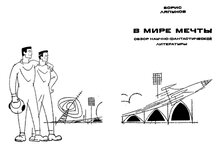
Борис Ляпунов
В мире мечты: Обзор научно-фантастической литературы
авторская книга, первое издание
Москва. Издательство « Книга», 1970 г.
Тираж: 20000 экз.
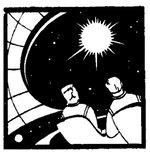
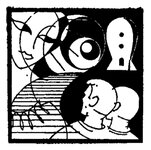
Иллюстрация на обложке и внутренние иллюстрации Э.С. Филимонова.
Книга Б. Ляпунова «В мире мечты» явилась результатом многолетней работы автора над составлением библиографии фантастической литературы.
Это — первый сравнительно полный, хорошо продуманный и оригинально построенный путеводитель, помогающий ориентироваться в обширной отрасли литературы, составить достаточно четкое представление о ее историческом развитии и состоянии в СССР и во всем мире (насколько это отражено в русских переводах и критике).
На фотографиях обложка, титульный лист и иллюстрации книги Бориса Ляпунова "В мире мечты".
Boris Lyapunov
In the World of Dreams: A Review of Science Fiction
Author's book, first edition
Moscow. Kniga Publishing House, 1970
Circulation: 20,000 copies
Cover and interior illustrations by E.S. Filimonov.
B. Lyapunov's book "In the World of Dreams" was the result of many years of work devoted to compiling a bibliography of science fiction literature.
It is the first relatively comprehensive, carefully thought-out, and originally structured guide that helps readers navigate the vast field of science fiction literature and gain a clear understanding of its historical development and its state in the USSR and throughout the world (as reflected in Russian translations and literary criticism).
The photographs show the cover, title page and illustrations of Boris Lyapunov's book "In the World of Dreams".
Boris Lyapunov
En el mundo de los sueños: Un análisis de la ciencia ficción
Libro del autor, primera edición
Moscú. Editorial Kniga, 1970
Tirada: 20 000 ejemplares
Ilustraciones de portada e interiores: E.S. Filimonov.
El libro de B. Liapunov "En el mundo de los sueños" fue el resultado de muchos años de trabajo dedicados a la elaboración de una bibliografía de la literatura de ciencia ficción.
Es la primera guía relativamente completa, cuidadosamente elaborada y construida de manera original, que ayuda a los lectores a orientarse en el vasto campo de la literatura de ciencia ficción y a formarse una idea clara de su desarrollo histórico y de su estado en la URSS y en todo el mundo (tal como se refleja en las traducciones al ruso y en la crítica literaria).
Las fotografías muestran la portada, la página del título y las ilustraciones del libro de Boris Lyapunov "En el mundo de los sueños".





В мире мечты: Обзор научно-фантастической литературы
авторская книга, первое издание
Москва. Издательство « Книга», 1970 г.
Тираж: 20000 экз.
Иллюстрация на обложке и внутренние иллюстрации Э.С. Филимонова.
Книга Б. Ляпунова «В мире мечты» явилась результатом многолетней работы автора над составлением библиографии фантастической литературы.
Это — первый сравнительно полный, хорошо продуманный и оригинально построенный путеводитель, помогающий ориентироваться в обширной отрасли литературы, составить достаточно четкое представление о ее историческом развитии и состоянии в СССР и во всем мире (насколько это отражено в русских переводах и критике).
На фотографиях обложка, титульный лист и иллюстрации книги Бориса Ляпунова "В мире мечты".
Boris Lyapunov
In the World of Dreams: A Review of Science Fiction
Author's book, first edition
Moscow. Kniga Publishing House, 1970
Circulation: 20,000 copies
Cover and interior illustrations by E.S. Filimonov.
B. Lyapunov's book "In the World of Dreams" was the result of many years of work devoted to compiling a bibliography of science fiction literature.
It is the first relatively comprehensive, carefully thought-out, and originally structured guide that helps readers navigate the vast field of science fiction literature and gain a clear understanding of its historical development and its state in the USSR and throughout the world (as reflected in Russian translations and literary criticism).
The photographs show the cover, title page and illustrations of Boris Lyapunov's book "In the World of Dreams".
Boris Lyapunov
En el mundo de los sueños: Un análisis de la ciencia ficción
Libro del autor, primera edición
Moscú. Editorial Kniga, 1970
Tirada: 20 000 ejemplares
Ilustraciones de portada e interiores: E.S. Filimonov.
El libro de B. Liapunov "En el mundo de los sueños" fue el resultado de muchos años de trabajo dedicados a la elaboración de una bibliografía de la literatura de ciencia ficción.
Es la primera guía relativamente completa, cuidadosamente elaborada y construida de manera original, que ayuda a los lectores a orientarse en el vasto campo de la literatura de ciencia ficción y a formarse una idea clara de su desarrollo histórico y de su estado en la URSS y en todo el mundo (tal como se refleja en las traducciones al ruso y en la crítica literaria).
Las fotografías muestran la portada, la página del título y las ilustraciones del libro de Boris Lyapunov "En el mundo de los sueños".
Борис Ляпунов
В мире фантастики: Обзор научно-фантастической литературы
Издание 2-е, дополненное и переработанное. Первое издание выходило под заглавием: «В мире мечты: Обзор научно-фантастической литературы» в 1970 году.
Москва. Издательство « Книга», 1975 г.
Тираж: 33000 экз.
Книга «В мире фантастики» — критико-библиографическое исследование, обращенное к широкому кругу читателей. Любители научной фантастики, педагоги и библиотечные работники, пропагандирующие художественную литературу, оценили по достоинству этот библиографический труд ранее изданный под названием"В мире мечты".
К сожалению, автору не суждено было увидеть второе издание. Книга «В мире фантастики» оказалась одной из его последних работ. Борис Валерьянович Ляпунов преждевременно скончался 27 мая 1972 г., немного не дожив до пятидесяти одного года. За четверть века удивительно плодотворной деятельности он написал тридцать четыре книги, множество статей и очерков и несколько киносценариев, по которым поставлены такие широкоизвестные научно-популярные фильмы, как «Дорога к звездам», «Планета Океан» и др.
Всех, кому посчастливилось знать этого человека, поражала его феноменальная работоспособность, его ревностное служение делу, которому он отдавал себя без остатка. Круг литературно-научных интересов Б. В. Ляпунова был исключительно широк, но главная тема, определившая его писательское призвание, — освоение космического пространства с помощью ракетной техники — владела им с юных лет. Подростком Борис Ляпунов отправил из родного города Вятки письмо К. Э. Циолковскому и в ответ получил книги ученого с его автографами.
О большой эрудиции и широте диапазона Ляпунова-писателя говорят названия его книг: «Открытие мира», «Человек выходит в космос», «О большом и малом», «Из глубины веков», «Борьба за скорость», «По следам Жюля Верна», «Впереди — Океан», «Химия всюду», «Химия завтра», «Рекорды техники», «Вижу Землю», «Неоткрытая планета», «Мечте навстречу», «Сквозь тернии к звездам»... Во всех своих книгах Ляпунов пишет не только о реальных достижениях науки и техники, но и о том, что предстоит совершить в ближайшие годы, десятилетия и даже столетия. При таком полете мысли писатель просто не мог обойтись без научной фантастики, которой посвятил немало специальных работ.
Из последних книг Б. Ляпунова, увидевших свет при жизни писателя, следует упомянуть библиографические очерки «Люди, ракеты, книги» (М. «Книга», 1972) — о пионерах советской ракетной техники и энтузиастах межпланетных сообщений от К. Э. Циолковского до С. П. Королева.
Начатая автором подготовка второго издания «В мире мечты» (под названием "В мире фантастики") продолжена и завершена И. А. Ляпуновой.
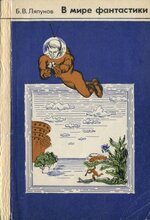
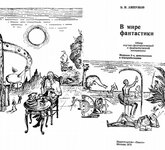
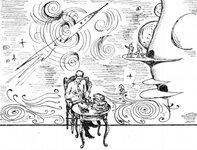
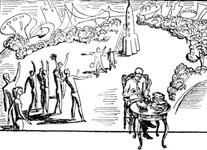
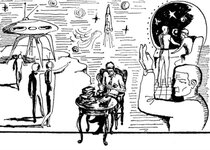
На фото: Обложка и внутренние иллюстрации книги " В мире фантастики". Художник Б.Лошак.
Boris Lyapunov
In the World of Science Fiction: A Survey of Science Fiction Literature
Second edition, expanded and revised. The first edition was published in 1970 under the title: In the World of Dreams: A Survey of Science Fiction Literature.
Moscow. Publishing House “Kniga”, 1975.
Print run: 33,000 copies.
The book In the World of Science Fiction is a critical and bibliographic study addressed to a wide range of readers. Science fiction enthusiasts, educators, and librarians engaged in promoting literature highly appreciated this bibliographic work, previously published under the title In the World of Dreams.
Unfortunately, the author did not live to see the second edition. In the World of Science Fiction became one of his last works. Boris Valerianovich Lyapunov passed away prematurely on May 27, 1972, just short of his fifty-first birthday. During a quarter-century of remarkably productive activity, he wrote thirty-four books, numerous articles and essays, and several film scripts that became the basis for such well-known popular science films as Road to the Stars, Planet Ocean, and others.
Everyone fortunate enough to know this man was struck by his phenomenal capacity for work and his devoted dedication to the cause to which he gave himself completely. The range of Lyapunov’s literary and scientific interests was exceptionally broad, but the main theme that defined his vocation as a writer—the exploration of outer space through rocket technology—captivated him from an early age. As a teenager, Boris Lyapunov sent a letter from his hometown of Vyatka to Konstantin E. Tsiolkovsky and, in return, received books signed by the scientist himself.
The breadth of Lyapunov’s erudition and literary range can be seen from the titles of his books: The Discovery of the World, Man Goes into Space, Of Great and Small Things, From the Depths of the Ages, The Struggle for Speed, Following in the Footsteps of Jules Verne, Ahead Lies the Ocean, Chemistry Everywhere, Chemistry Tomorrow, Records of Technology, I See the Earth, The Undiscovered Planet, Toward a Dream, Through Thorns to the Stars... In all of his books, Lyapunov wrote not only about the real achievements of science and technology, but also about what humanity would accomplish in the coming years, decades, and even centuries. With such flights of imagination, the writer could hardly avoid science fiction, to which he devoted many specialized works.
Among Lyapunov’s last books published during his lifetime, special mention should be made of the bibliographic essays People, Rockets, Books (Moscow, Kniga Publishing House, 1972), devoted to the pioneers of Soviet rocketry and enthusiasts of interplanetary travel—from Konstantin E. Tsiolkovsky to Sergey P. Korolev.
The preparation of the second edition of In the World of Dreams (published under the title In the World of Science Fiction), begun by the author, was continued and completed by I. A. Lyapunova.
Photos: Cover and interior illustrations from the book In the World of Science Fiction. Artist: B. Loshak.
Borís Liapunov
En el mundo de la ciencia ficción: Panorama de la literatura de ciencia ficción
Segunda edición, ampliada y revisada. La primera edición fue publicada en 1970 con el título: En el mundo de los sueños: Panorama de la literatura de ciencia ficción.
Moscú. Editorial «Kniga», 1975.
Tirada: 33.000 ejemplares.
El libro En el mundo de la ciencia ficción es un estudio crítico y bibliográfico dirigido a un amplio círculo de lectores. Los aficionados a la ciencia ficción, los educadores y los bibliotecarios dedicados a la promoción de la literatura valoraron altamente esta obra bibliográfica, publicada anteriormente con el título En el mundo de los sueños.
Lamentablemente, el autor no llegó a ver la segunda edición. En el mundo de la ciencia ficción resultó ser una de sus últimas obras. Borís Valerianovich Liapunov falleció prematuramente el 27 de mayo de 1972, poco antes de cumplir cincuenta y un años. Durante un cuarto de siglo de actividad extraordinariamente fructífera escribió treinta y cuatro libros, numerosos artículos y ensayos, así como varios guiones cinematográficos que sirvieron de base para conocidas películas de divulgación científica como Camino hacia las estrellas, Planeta Océano y otras.
Todos los que tuvieron la suerte de conocer a este hombre quedaron impresionados por su extraordinaria capacidad de trabajo y por su entrega apasionada a la causa a la que dedicó toda su vida. El ámbito de los intereses literarios y científicos de Liapunov era excepcionalmente amplio, pero el tema principal que definió su vocación de escritor —la exploración del espacio cósmico mediante la tecnología de cohetes— lo cautivó desde su juventud. Siendo adolescente, Borís Liapunov envió una carta desde su ciudad natal de Viatka a Konstantín E. Tsiolkovski y recibió como respuesta libros del científico con dedicatorias autógrafas.
La amplitud de la erudición y del talento literario de Liapunov puede apreciarse en los títulos de sus libros: El descubrimiento del mundo, El hombre sale al espacio, De lo grande y lo pequeño, Desde las profundidades de los siglos, La lucha por la velocidad, Tras las huellas de Julio Verne, Delante está el océano, La química en todas partes, La química del mañana, Récords de la tecnología, Veo la Tierra, El planeta desconocido, Hacia el encuentro del sueño, A través de espinas hacia las estrellas... En todas sus obras, Liapunov escribió no solo sobre los logros reales de la ciencia y la tecnología, sino también sobre lo que la humanidad lograría en los próximos años, décadas e incluso siglos. Con semejante vuelo de pensamiento, el escritor no podía prescindir de la ciencia ficción, a la que dedicó numerosas obras especializadas.
Entre los últimos libros de Liapunov publicados durante su vida, merece una mención especial el ensayo bibliográfico Personas, cohetes, libros (Moscú, Editorial Kniga, 1972), dedicado a los pioneros de la tecnología soviética de cohetes y a los entusiastas de los viajes interplanetarios, desde Konstantín E. Tsiolkovski hasta Serguéi P. Koroliov.
La preparación de la segunda edición de En el mundo de los sueños (publicada con el título En el mundo de la ciencia ficción), iniciada por el autor, fue continuada y completada por I. A. Liapunova.
Fotografías: Portada e ilustraciones interiores del libro En el mundo de la ciencia ficción. Artista: B. Loshak.
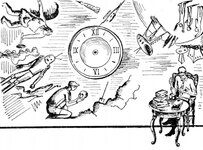
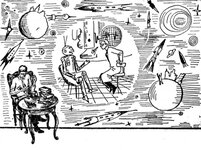
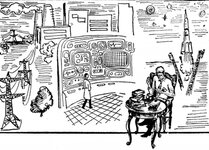
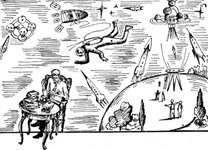
В мире фантастики: Обзор научно-фантастической литературы
Издание 2-е, дополненное и переработанное. Первое издание выходило под заглавием: «В мире мечты: Обзор научно-фантастической литературы» в 1970 году.
Москва. Издательство « Книга», 1975 г.
Тираж: 33000 экз.
Книга «В мире фантастики» — критико-библиографическое исследование, обращенное к широкому кругу читателей. Любители научной фантастики, педагоги и библиотечные работники, пропагандирующие художественную литературу, оценили по достоинству этот библиографический труд ранее изданный под названием"В мире мечты".
К сожалению, автору не суждено было увидеть второе издание. Книга «В мире фантастики» оказалась одной из его последних работ. Борис Валерьянович Ляпунов преждевременно скончался 27 мая 1972 г., немного не дожив до пятидесяти одного года. За четверть века удивительно плодотворной деятельности он написал тридцать четыре книги, множество статей и очерков и несколько киносценариев, по которым поставлены такие широкоизвестные научно-популярные фильмы, как «Дорога к звездам», «Планета Океан» и др.
Всех, кому посчастливилось знать этого человека, поражала его феноменальная работоспособность, его ревностное служение делу, которому он отдавал себя без остатка. Круг литературно-научных интересов Б. В. Ляпунова был исключительно широк, но главная тема, определившая его писательское призвание, — освоение космического пространства с помощью ракетной техники — владела им с юных лет. Подростком Борис Ляпунов отправил из родного города Вятки письмо К. Э. Циолковскому и в ответ получил книги ученого с его автографами.
О большой эрудиции и широте диапазона Ляпунова-писателя говорят названия его книг: «Открытие мира», «Человек выходит в космос», «О большом и малом», «Из глубины веков», «Борьба за скорость», «По следам Жюля Верна», «Впереди — Океан», «Химия всюду», «Химия завтра», «Рекорды техники», «Вижу Землю», «Неоткрытая планета», «Мечте навстречу», «Сквозь тернии к звездам»... Во всех своих книгах Ляпунов пишет не только о реальных достижениях науки и техники, но и о том, что предстоит совершить в ближайшие годы, десятилетия и даже столетия. При таком полете мысли писатель просто не мог обойтись без научной фантастики, которой посвятил немало специальных работ.
Из последних книг Б. Ляпунова, увидевших свет при жизни писателя, следует упомянуть библиографические очерки «Люди, ракеты, книги» (М. «Книга», 1972) — о пионерах советской ракетной техники и энтузиастах межпланетных сообщений от К. Э. Циолковского до С. П. Королева.
Начатая автором подготовка второго издания «В мире мечты» (под названием "В мире фантастики") продолжена и завершена И. А. Ляпуновой.
На фото: Обложка и внутренние иллюстрации книги " В мире фантастики". Художник Б.Лошак.
Boris Lyapunov
In the World of Science Fiction: A Survey of Science Fiction Literature
Second edition, expanded and revised. The first edition was published in 1970 under the title: In the World of Dreams: A Survey of Science Fiction Literature.
Moscow. Publishing House “Kniga”, 1975.
Print run: 33,000 copies.
The book In the World of Science Fiction is a critical and bibliographic study addressed to a wide range of readers. Science fiction enthusiasts, educators, and librarians engaged in promoting literature highly appreciated this bibliographic work, previously published under the title In the World of Dreams.
Unfortunately, the author did not live to see the second edition. In the World of Science Fiction became one of his last works. Boris Valerianovich Lyapunov passed away prematurely on May 27, 1972, just short of his fifty-first birthday. During a quarter-century of remarkably productive activity, he wrote thirty-four books, numerous articles and essays, and several film scripts that became the basis for such well-known popular science films as Road to the Stars, Planet Ocean, and others.
Everyone fortunate enough to know this man was struck by his phenomenal capacity for work and his devoted dedication to the cause to which he gave himself completely. The range of Lyapunov’s literary and scientific interests was exceptionally broad, but the main theme that defined his vocation as a writer—the exploration of outer space through rocket technology—captivated him from an early age. As a teenager, Boris Lyapunov sent a letter from his hometown of Vyatka to Konstantin E. Tsiolkovsky and, in return, received books signed by the scientist himself.
The breadth of Lyapunov’s erudition and literary range can be seen from the titles of his books: The Discovery of the World, Man Goes into Space, Of Great and Small Things, From the Depths of the Ages, The Struggle for Speed, Following in the Footsteps of Jules Verne, Ahead Lies the Ocean, Chemistry Everywhere, Chemistry Tomorrow, Records of Technology, I See the Earth, The Undiscovered Planet, Toward a Dream, Through Thorns to the Stars... In all of his books, Lyapunov wrote not only about the real achievements of science and technology, but also about what humanity would accomplish in the coming years, decades, and even centuries. With such flights of imagination, the writer could hardly avoid science fiction, to which he devoted many specialized works.
Among Lyapunov’s last books published during his lifetime, special mention should be made of the bibliographic essays People, Rockets, Books (Moscow, Kniga Publishing House, 1972), devoted to the pioneers of Soviet rocketry and enthusiasts of interplanetary travel—from Konstantin E. Tsiolkovsky to Sergey P. Korolev.
The preparation of the second edition of In the World of Dreams (published under the title In the World of Science Fiction), begun by the author, was continued and completed by I. A. Lyapunova.
Photos: Cover and interior illustrations from the book In the World of Science Fiction. Artist: B. Loshak.
Borís Liapunov
En el mundo de la ciencia ficción: Panorama de la literatura de ciencia ficción
Segunda edición, ampliada y revisada. La primera edición fue publicada en 1970 con el título: En el mundo de los sueños: Panorama de la literatura de ciencia ficción.
Moscú. Editorial «Kniga», 1975.
Tirada: 33.000 ejemplares.
El libro En el mundo de la ciencia ficción es un estudio crítico y bibliográfico dirigido a un amplio círculo de lectores. Los aficionados a la ciencia ficción, los educadores y los bibliotecarios dedicados a la promoción de la literatura valoraron altamente esta obra bibliográfica, publicada anteriormente con el título En el mundo de los sueños.
Lamentablemente, el autor no llegó a ver la segunda edición. En el mundo de la ciencia ficción resultó ser una de sus últimas obras. Borís Valerianovich Liapunov falleció prematuramente el 27 de mayo de 1972, poco antes de cumplir cincuenta y un años. Durante un cuarto de siglo de actividad extraordinariamente fructífera escribió treinta y cuatro libros, numerosos artículos y ensayos, así como varios guiones cinematográficos que sirvieron de base para conocidas películas de divulgación científica como Camino hacia las estrellas, Planeta Océano y otras.
Todos los que tuvieron la suerte de conocer a este hombre quedaron impresionados por su extraordinaria capacidad de trabajo y por su entrega apasionada a la causa a la que dedicó toda su vida. El ámbito de los intereses literarios y científicos de Liapunov era excepcionalmente amplio, pero el tema principal que definió su vocación de escritor —la exploración del espacio cósmico mediante la tecnología de cohetes— lo cautivó desde su juventud. Siendo adolescente, Borís Liapunov envió una carta desde su ciudad natal de Viatka a Konstantín E. Tsiolkovski y recibió como respuesta libros del científico con dedicatorias autógrafas.
La amplitud de la erudición y del talento literario de Liapunov puede apreciarse en los títulos de sus libros: El descubrimiento del mundo, El hombre sale al espacio, De lo grande y lo pequeño, Desde las profundidades de los siglos, La lucha por la velocidad, Tras las huellas de Julio Verne, Delante está el océano, La química en todas partes, La química del mañana, Récords de la tecnología, Veo la Tierra, El planeta desconocido, Hacia el encuentro del sueño, A través de espinas hacia las estrellas... En todas sus obras, Liapunov escribió no solo sobre los logros reales de la ciencia y la tecnología, sino también sobre lo que la humanidad lograría en los próximos años, décadas e incluso siglos. Con semejante vuelo de pensamiento, el escritor no podía prescindir de la ciencia ficción, a la que dedicó numerosas obras especializadas.
Entre los últimos libros de Liapunov publicados durante su vida, merece una mención especial el ensayo bibliográfico Personas, cohetes, libros (Moscú, Editorial Kniga, 1972), dedicado a los pioneros de la tecnología soviética de cohetes y a los entusiastas de los viajes interplanetarios, desde Konstantín E. Tsiolkovski hasta Serguéi P. Koroliov.
La preparación de la segunda edición de En el mundo de los sueños (publicada con el título En el mundo de la ciencia ficción), iniciada por el autor, fue continuada y completada por I. A. Liapunova.
Fotografías: Portada e ilustraciones interiores del libro En el mundo de la ciencia ficción. Artista: B. Loshak.
Александр Беляев. Критико-биографический очерк. Москва. Издательство "Советский писатель". 1967.
Александр Беляев… Любителям фантастики о многом говорит это имя.
Оно напоминает об удивительной истории человека-амфибии, первого человека среди рыб и первой рыбы среди людей, существа удивительного, с удивительной судьбой. С ним связана другая романтическая история — человека-птицы. Богатым воображением Беляева создано много интереснейших произведений, порой трагических, порой комических, но всегда увлекающих необычностью вымысла, острыми поворотами событий, романтикой неизведанного.
Борис Ляпунов показывает Беляева — романиста, рассказчика, очеркиста, сценариста; Беляева — борца за нашу фантастику; Беляева, утверждавшего всем своим творчеством веру в победу разума и прогресса. В книге рассказано не только о самых популярных произведениях писателя, но и о менее известных и не потерявших значения сейчас, о творческих связях Беляева и Циолковского, о роли Беляева в развитии советской научной фантастики.
Книга рассчитана на широкий круг читателей.
На фото: Обложка, портрет Александра Беляева и титульный лист книги.
Alexander Belyaev. A Critical and Biographical Essay. Moscow. Soviet Writer Publishing House. 1967.
Alexander Belyaev… For science fiction enthusiasts, this name speaks volumes.
It recalls the amazing story of the amphibian man, the first human among fish and the first fish among humans, a unique being with an extraordinary destiny. Another romantic story is associated with him as well — the story of the bird-man. Through Belyaev’s rich imagination came many fascinating creations, sometimes tragic, sometimes humorous, but always captivating through the originality of their concepts, the dramatic twists of their plots, and the romance of the unknown.
Boris Lyapunov presents Belyaev as a novelist, storyteller, essayist, and screenwriter; Belyaev as a defender of Soviet science fiction; Belyaev as a writer who, through all his works, affirmed faith in the triumph of reason and progress.
The book discusses not only the writer’s most popular works, but also lesser-known ones that have not lost their significance today. It explores the creative connections between Belyaev and Tsiolkovsky, as well as Belyaev’s role in the development of Soviet science fiction.
The book is intended for a wide readership.
Photos: The book cover, a portrait of Alexander Belyaev, and the title page of the book.
Aleksandr Beliáyev. Ensayo crítico y biográfico. Moscú. Editorial Escritor Soviético. 1967.
Aleksandr Beliáyev… Para los aficionados a la ciencia ficción, este nombre dice mucho.
Evoca la asombrosa historia del hombre anfibio, el primer ser humano entre los peces y el primer pez entre los seres humanos, una criatura singular con un destino extraordinario. También se asocia con él otra historia romántica: la del hombre pájaro. Gracias a la rica imaginación de Beliáyev surgieron numerosas creaciones fascinantes, a veces trágicas, a veces humorísticas, pero siempre cautivadoras por la originalidad de sus ideas, los giros inesperados de los acontecimientos y el romanticismo de lo desconocido.
Borís Liapunov presenta a Beliáyev como novelista, narrador, ensayista y guionista; a Beliáyev como defensor de la ciencia ficción soviética; a Beliáyev como un escritor que, a través de toda su obra, afirmó la fe en el triunfo de la razón y el progreso.
El libro habla no solo de las obras más populares del escritor, sino también de aquellas menos conocidas que no han perdido su importancia en la actualidad. Examina los vínculos creativos entre Beliáyev y Tsiolkovski, así como el papel de Beliáyev en el desarrollo de la ciencia ficción soviética.
El libro está destinado a un amplio círculo de lectores.
Fotografías: La portada del libro, un retrato de Aleksandr Beliáyev y la página de título de la obra.
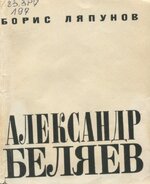
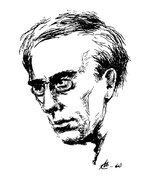

Александр Беляев… Любителям фантастики о многом говорит это имя.
Оно напоминает об удивительной истории человека-амфибии, первого человека среди рыб и первой рыбы среди людей, существа удивительного, с удивительной судьбой. С ним связана другая романтическая история — человека-птицы. Богатым воображением Беляева создано много интереснейших произведений, порой трагических, порой комических, но всегда увлекающих необычностью вымысла, острыми поворотами событий, романтикой неизведанного.
Борис Ляпунов показывает Беляева — романиста, рассказчика, очеркиста, сценариста; Беляева — борца за нашу фантастику; Беляева, утверждавшего всем своим творчеством веру в победу разума и прогресса. В книге рассказано не только о самых популярных произведениях писателя, но и о менее известных и не потерявших значения сейчас, о творческих связях Беляева и Циолковского, о роли Беляева в развитии советской научной фантастики.
Книга рассчитана на широкий круг читателей.
На фото: Обложка, портрет Александра Беляева и титульный лист книги.
Alexander Belyaev. A Critical and Biographical Essay. Moscow. Soviet Writer Publishing House. 1967.
Alexander Belyaev… For science fiction enthusiasts, this name speaks volumes.
It recalls the amazing story of the amphibian man, the first human among fish and the first fish among humans, a unique being with an extraordinary destiny. Another romantic story is associated with him as well — the story of the bird-man. Through Belyaev’s rich imagination came many fascinating creations, sometimes tragic, sometimes humorous, but always captivating through the originality of their concepts, the dramatic twists of their plots, and the romance of the unknown.
Boris Lyapunov presents Belyaev as a novelist, storyteller, essayist, and screenwriter; Belyaev as a defender of Soviet science fiction; Belyaev as a writer who, through all his works, affirmed faith in the triumph of reason and progress.
The book discusses not only the writer’s most popular works, but also lesser-known ones that have not lost their significance today. It explores the creative connections between Belyaev and Tsiolkovsky, as well as Belyaev’s role in the development of Soviet science fiction.
The book is intended for a wide readership.
Photos: The book cover, a portrait of Alexander Belyaev, and the title page of the book.
Aleksandr Beliáyev. Ensayo crítico y biográfico. Moscú. Editorial Escritor Soviético. 1967.
Aleksandr Beliáyev… Para los aficionados a la ciencia ficción, este nombre dice mucho.
Evoca la asombrosa historia del hombre anfibio, el primer ser humano entre los peces y el primer pez entre los seres humanos, una criatura singular con un destino extraordinario. También se asocia con él otra historia romántica: la del hombre pájaro. Gracias a la rica imaginación de Beliáyev surgieron numerosas creaciones fascinantes, a veces trágicas, a veces humorísticas, pero siempre cautivadoras por la originalidad de sus ideas, los giros inesperados de los acontecimientos y el romanticismo de lo desconocido.
Borís Liapunov presenta a Beliáyev como novelista, narrador, ensayista y guionista; a Beliáyev como defensor de la ciencia ficción soviética; a Beliáyev como un escritor que, a través de toda su obra, afirmó la fe en el triunfo de la razón y el progreso.
El libro habla no solo de las obras más populares del escritor, sino también de aquellas menos conocidas que no han perdido su importancia en la actualidad. Examina los vínculos creativos entre Beliáyev y Tsiolkovski, así como el papel de Beliáyev en el desarrollo de la ciencia ficción soviética.
El libro está destinado a un amplio círculo de lectores.
Fotografías: La portada del libro, un retrato de Aleksandr Beliáyev y la página de título de la obra.
Б. Ляпунов
«Ракета»
Москва-Ленинград.Издательство «Детгиз», 1950 г.
Серия: Школьная библиотека
Тираж: 100000 экз.
Тип обложки: твёрдая
Формат: 84x108/32 (130x200 мм)
Страниц: 160
Содержание:
Борис Ляпунов. Ракета (научно-популярная книга)
Предисловие, стр. 3-4
Глава 1. Ракета, стр. 5-11
Глава 2. Из истории ракеты, стр. 12-27
Глава 3. Творцы ракетной техники, стр. 28-39
Глава 4. Рождение новой ракеты, стр. 40-54
Глава 5. Ракета-снаряд, стр. 55-75
Глава 6. Новые авиационные двигатели, стр. 76-101
Глава 7. Тысяча километров в час, стр. 102-122
Глава 8. Завоевание высот, стр. 123-138
Глава 9. Завоевание межпланетных пространств, стр. 139-156
Заключение, стр. 157-158
На фото: Иллюстрация на обложкехудожника Н. Кольчицкого
B. Lyapunov
"Rocket"
Moscow-Leningrad. Detgiz Publishing House, 1950
Series: School Library
Circulation: 100,000 copies
Cover type: hardback
Format: 84x108/32 (130x200 mm)
Pages: 160
Contents:
Boris Lyapunov The Rocket (a popular science book)
Preface, pp. 3-4
Chapter 1. The Rocket, pp. 5-11
Chapter 2. From the History of the Rocket, pp. 12-27
Chapter 3. The Creators of Rocket Technology, pp. 28-39
Chapter 4. The Birth of a New Rocket, pp. 40-54
Chapter 5. The Rocket-Projectile, pp. 55-75
Chapter 6. New Aircraft Engines, pp. 76-101
Chapter 7. A Thousand Kilometers per Hour, pp. 102-122
Chapter 8. Conquering Heights, pp. 123-138
Chapter 9. Conquering Interplanetary Space, pp. 139-156
Conclusion, pp. 157-158
In the photo: Illustration on cover by artist N. Kolchitsky
B. Lyapunov
"Cohete"
Moscú-Leningrado. Editorial Detgiz, 1950
Serie: Biblioteca Escolar
Tirada: 100 000 ejemplares
Tapa dura
Formato: 84 x 108/32 pulgadas (130 x 200 mm)
Páginas: 160
Contenido:
Boris Lyapunov, El Cohete (un libro de divulgación científica)
Prefacio, págs. 3-4
Capítulo 1. El Cohete, págs. 5-11
Capítulo 2. Historia del Cohete, págs. 12-27
Capítulo 3. Los creadores de la tecnología de cohetes, págs. 28-39
Capítulo 4. El nacimiento de un nuevo cohete, págs. 40-54
Capítulo 5. El cohete-proyectil, págs. 55-75
Capítulo 6. Nuevos motores de aeronaves, págs. 76-101
Capítulo 7. Mil Kilómetros por hora, págs. 102-122
Capítulo 8. Conquistando las alturas, págs. 123-138
Capítulo 9. Conquistando el espacio interplanetario, págs. 139-156
Conclusión, págs. 157-158
En la foto: Ilustración de la portada del artista N. Kolchitsky
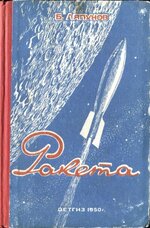
«Ракета»
Москва-Ленинград.Издательство «Детгиз», 1950 г.
Серия: Школьная библиотека
Тираж: 100000 экз.
Тип обложки: твёрдая
Формат: 84x108/32 (130x200 мм)
Страниц: 160
Содержание:
Борис Ляпунов. Ракета (научно-популярная книга)
Предисловие, стр. 3-4
Глава 1. Ракета, стр. 5-11
Глава 2. Из истории ракеты, стр. 12-27
Глава 3. Творцы ракетной техники, стр. 28-39
Глава 4. Рождение новой ракеты, стр. 40-54
Глава 5. Ракета-снаряд, стр. 55-75
Глава 6. Новые авиационные двигатели, стр. 76-101
Глава 7. Тысяча километров в час, стр. 102-122
Глава 8. Завоевание высот, стр. 123-138
Глава 9. Завоевание межпланетных пространств, стр. 139-156
Заключение, стр. 157-158
На фото: Иллюстрация на обложкехудожника Н. Кольчицкого
B. Lyapunov
"Rocket"
Moscow-Leningrad. Detgiz Publishing House, 1950
Series: School Library
Circulation: 100,000 copies
Cover type: hardback
Format: 84x108/32 (130x200 mm)
Pages: 160
Contents:
Boris Lyapunov The Rocket (a popular science book)
Preface, pp. 3-4
Chapter 1. The Rocket, pp. 5-11
Chapter 2. From the History of the Rocket, pp. 12-27
Chapter 3. The Creators of Rocket Technology, pp. 28-39
Chapter 4. The Birth of a New Rocket, pp. 40-54
Chapter 5. The Rocket-Projectile, pp. 55-75
Chapter 6. New Aircraft Engines, pp. 76-101
Chapter 7. A Thousand Kilometers per Hour, pp. 102-122
Chapter 8. Conquering Heights, pp. 123-138
Chapter 9. Conquering Interplanetary Space, pp. 139-156
Conclusion, pp. 157-158
In the photo: Illustration on cover by artist N. Kolchitsky
B. Lyapunov
"Cohete"
Moscú-Leningrado. Editorial Detgiz, 1950
Serie: Biblioteca Escolar
Tirada: 100 000 ejemplares
Tapa dura
Formato: 84 x 108/32 pulgadas (130 x 200 mm)
Páginas: 160
Contenido:
Boris Lyapunov, El Cohete (un libro de divulgación científica)
Prefacio, págs. 3-4
Capítulo 1. El Cohete, págs. 5-11
Capítulo 2. Historia del Cohete, págs. 12-27
Capítulo 3. Los creadores de la tecnología de cohetes, págs. 28-39
Capítulo 4. El nacimiento de un nuevo cohete, págs. 40-54
Capítulo 5. El cohete-proyectil, págs. 55-75
Capítulo 6. Nuevos motores de aeronaves, págs. 76-101
Capítulo 7. Mil Kilómetros por hora, págs. 102-122
Capítulo 8. Conquistando las alturas, págs. 123-138
Capítulo 9. Conquistando el espacio interplanetario, págs. 139-156
Conclusión, págs. 157-158
En la foto: Ilustración de la portada del artista N. Kolchitsky
В. Ляпунов
«Ракета»
Москва. Военное издательство Министерства обороны СССР, 1954 г.
Серия: Научно-популярная библиотека солдата и матроса
Тип обложки: мягкая
Формат: 84x108/32 (130x200 мм)
Страниц: 128
На фото: Обложка с иллюстрацией художника С. А. Митрофанова; иллюстрации из книги (автор внутренних иллюстраций не указан).
V. Lyapunov
"Rocket"
Moscow. Military Publishing House of the USSR Ministry of Defense, 1954
Series: Popular Science Library of the Soldier and Sailor
Cover type: softcover
Format: 84x108/32 (130x200 mm)
Pages: 128
Photo: Cover with illustration by S. A. Mitrofanov; illustrations from the book (the author of the interior illustrations is not indicated).
V. Lyapunov
«Cohete»
Moscú. Editorial Militar del Ministerio de Defensa de la URSS, 1954
Serie: Biblioteca de Divulgación Científica del Soldado y del Marinero
Tipo de cubierta: rústica
Formato: 84 x 108 x 32 pulgadas (130 x 200 mm)
Páginas: 128
Foto: Portada con ilustración de S. A. Mitrofanov; ilustraciones del libro (no se indica el autor de las ilustraciones interiores).
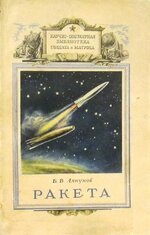
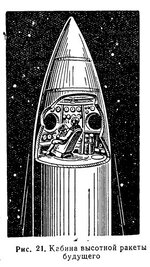
Рисунок 21. Кабина высотной ракеты будущего.
Figure 21. Cabin of the high-altitude rocket of the future.
Figura 21. Cabina del cohete de gran altitud del futuro.
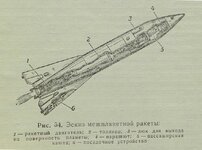
Рисунок 34. Эскиз межпланетной ракеты: 1 - ракетный двигатель; 2 - топливо; 3 - люк для выхода на поверхность планеты; 4 - парашют; 5 - пассажирская каюта; 6 - посадочное устройство.
Figure 34. Sketch of an interplanetary rocket: 1 - rocket engine; 2 - fuel; 3 - hatch for exiting to the planet's surface; 4 - parachute; 5 - passenger cabin; 6 - landing gear.
Figura 34. Esquema de un cohete interplanetario: 1 - motor del cohete; 2 - combustible; 3 - escotilla para salir a la superficie del planeta; 4 - paracaídas; 5 - cabina de pasajeros; 6 - tren de aterrizaje.
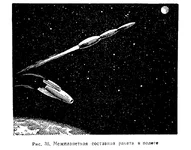
Рисунок 35. Межпланетная составная ракета в полете.
Figure 35. Interplanetary composite rocket in flight.
Figura 35. Cohete compuesto interplanetario en vuelo.
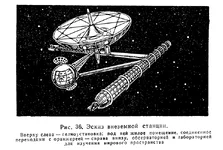
Рисунок 36. Эскиз внеземной станции. Вверху слева - гелиоустановка; под ней жилое помещение, соединенное переходами с оранжереей - справа внизу, обсерваторией и лабораторией для изучения мирового пространства.
Figure 36. Sketch of an extraterrestrial station. At the top left is a solar power plant; below it is a living space, connected by passages to a greenhouse—at the bottom right, an observatory, and a laboratory for studying outer space.
Figura 36. Esquema de una estación extraterrestre. En la parte superior izquierda se encuentra una planta de energía solar; debajo, un espacio habitable conectado mediante pasillos a un invernadero; en la parte inferior derecha, un observatorio y un laboratorio para el estudio del espacio exterior.
«Ракета»
Москва. Военное издательство Министерства обороны СССР, 1954 г.
Серия: Научно-популярная библиотека солдата и матроса
Тип обложки: мягкая
Формат: 84x108/32 (130x200 мм)
Страниц: 128
На фото: Обложка с иллюстрацией художника С. А. Митрофанова; иллюстрации из книги (автор внутренних иллюстраций не указан).
V. Lyapunov
"Rocket"
Moscow. Military Publishing House of the USSR Ministry of Defense, 1954
Series: Popular Science Library of the Soldier and Sailor
Cover type: softcover
Format: 84x108/32 (130x200 mm)
Pages: 128
Photo: Cover with illustration by S. A. Mitrofanov; illustrations from the book (the author of the interior illustrations is not indicated).
V. Lyapunov
«Cohete»
Moscú. Editorial Militar del Ministerio de Defensa de la URSS, 1954
Serie: Biblioteca de Divulgación Científica del Soldado y del Marinero
Tipo de cubierta: rústica
Formato: 84 x 108 x 32 pulgadas (130 x 200 mm)
Páginas: 128
Foto: Portada con ilustración de S. A. Mitrofanov; ilustraciones del libro (no se indica el autor de las ilustraciones interiores).
Рисунок 21. Кабина высотной ракеты будущего.
Figure 21. Cabin of the high-altitude rocket of the future.
Figura 21. Cabina del cohete de gran altitud del futuro.
Рисунок 34. Эскиз межпланетной ракеты: 1 - ракетный двигатель; 2 - топливо; 3 - люк для выхода на поверхность планеты; 4 - парашют; 5 - пассажирская каюта; 6 - посадочное устройство.
Figure 34. Sketch of an interplanetary rocket: 1 - rocket engine; 2 - fuel; 3 - hatch for exiting to the planet's surface; 4 - parachute; 5 - passenger cabin; 6 - landing gear.
Figura 34. Esquema de un cohete interplanetario: 1 - motor del cohete; 2 - combustible; 3 - escotilla para salir a la superficie del planeta; 4 - paracaídas; 5 - cabina de pasajeros; 6 - tren de aterrizaje.
Рисунок 35. Межпланетная составная ракета в полете.
Figure 35. Interplanetary composite rocket in flight.
Figura 35. Cohete compuesto interplanetario en vuelo.
Рисунок 36. Эскиз внеземной станции. Вверху слева - гелиоустановка; под ней жилое помещение, соединенное переходами с оранжереей - справа внизу, обсерваторией и лабораторией для изучения мирового пространства.
Figure 36. Sketch of an extraterrestrial station. At the top left is a solar power plant; below it is a living space, connected by passages to a greenhouse—at the bottom right, an observatory, and a laboratory for studying outer space.
Figura 36. Esquema de una estación extraterrestre. En la parte superior izquierda se encuentra una planta de energía solar; debajo, un espacio habitable conectado mediante pasillos a un invernadero; en la parte inferior derecha, un observatorio y un laboratorio para el estudio del espacio exterior.

