Follow along with the video below to see how to install our site as a web app on your home screen.
Note: This feature may not be available in some browsers.
ORBITER-FORUM will be temporarily closed at 2026-07-23 18:00 UTC while we complete some OF maintenance tasks. The amount of downtime is expected to take up to one hour, but probably less.
17 июня 1975 г. Суббота, 15 - е сутки полёта.
"...Земля нам сегодня сказала, что мы пролетели что - то около 9 миллионов километров. Много! Но это очень мало, если, например, летишь на Марс.
Пройдёт время, и кто - нибудь вот так же, как мы, пойдёт на космическом корабле к Марсу. Земля также с напряжением будет следить за полётом, помогать, управлять.
Но в полёте они будут одни, будут оторваны от Земли и медленно - медленно (сутки за сутками) с громадной, по земным понятиям, скоростью будут лететь к Марсу.
Мне, вероятно, уже не придётся участвовать в этом полёте. Состарюсь...Но...Вот бы потопать по Марсу!".(Виталий Севастьянов. "Дневник над облаками ").
..............................................................
Цит.по: СЕВАСТЬЯНОВ ВИТАЛИЙ ИВАНОВИЧ Дневник над облаками Библиотека "Огонек" № 37/1977 год
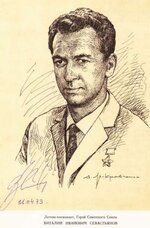
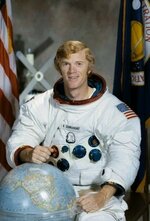
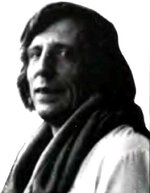
На фото: портрет космонавта Виталия Севастьянова с его автографом.
June 17, 1975
Saturday, the 15th day of the flight
"...Today, Earth informed us that we have traveled about 9 million kilometers. A lot! But it is very little if, for example, you are flying to Mars.
Time will pass, and someone, just like us, will set out on a spacecraft bound for Mars. Earth will follow the flight with the same tension and excitement, helping, guiding, and controlling it.
But during the journey they will be alone, separated from Earth, and day after day, moving at a tremendous speed by earthly standards, they will slowly make their way toward Mars.
I will probably never take part in such a flight. I will grow old...
But...
How wonderful it would be to walk on Mars!"
(Vitaly Sevastyanov, "Diary Above the Clouds")
Quoted from:
VITALY IVANOVICH SEVASTYANOV
Diary Above the Clouds
Series: Library of the Magazine "Ogonyok", No. 37, 1977.
In the photo: a portrait of cosmonaut Vitaly Sevastyanov with his autograph. 17 de junio de 1975
Sábado, 15.º día de vuelo
"...Hoy la Tierra nos comunicó que hemos recorrido unos 9 millones de kilómetros. ¡Mucho! Pero es muy poco si, por ejemplo, se vuela hacia Marte.
Pasará el tiempo, y alguien, igual que nosotros, partirá en una nave espacial rumbo a Marte. La Tierra seguirá ese vuelo con la misma tensión y emoción, ayudando, guiando y controlando la misión.
Pero durante el viaje estarán solos, separados de la Tierra, y día tras día, avanzando a una velocidad enorme según los criterios terrestres, se dirigirán lentamente hacia Marte.
Probablemente yo ya no podré participar en un vuelo así. Envejeceré...
Pero...
¡Qué maravilloso sería caminar sobre Marte!"
(Vitali Sevastiánov, "Diario sobre las nubes")
Citado de:
VITALI IVÁNOVICH SEVASTIÁNOV
Diario sobre las nubes
Serie: Biblioteca de la revista «Ogonyok», n.º 37, año 1977.
En la foto: un retrato del cosmonauta Vitaly Sevastyanov con su autógrafo.
ПО СТРАНИЦАМ СОВЕТСКОГО ЖУРНАЛА "ЗЕМЛЯ И ВСЕЛЕННАЯ". "Торжественно отмечается в пионерском лагере "Орлёнок" День космонавтики. В программе праздника "Мы рождены, чтоб сказку сделать былью", посвященного дню космонавтики, - беседы по астрономии и "прогулки по звёздному небу", встречи с учёными и космонавтами - гостями лагеря, диспуты, викторины, олимпиады, выставки картин художников-фантастов.
У обсерватории пионерского лагеря "Орлёнок" много друзей. Доктор технических наук И. В. Стражева поделилась с ребятами впечатлениями от личных встреч с космонавтами и конструкторами космических кораблей. С кандидатом физико-математических наук Л. М. Гиндилисом ребята обсуждали проблему существования внеземных цивилизаций и пути их поиска. О достижениях радиоастрономии рассказывал ребятам кандидат физико-математических наук А. М. Финкельштейн, об исследовании Солнца - кандидат физико-математических наук Э. В. Кононович. Гостями пионерского лагеря "Орлёнок" были доктор физико-математических наук Л. М. Мухин, доктор физико-математических наук А. М. Черепащук.
Много сил и энергии отдают пионерам сотрудники обсерватории пионерского лагеря "Орлёнок" - В. А. Костицын, Л. Н. Филиппова, Г. В. Орлова. Их знания, любовь к детям обеспечивают успешную деятельность обсерватории по пропаганде достижений астрономии, космонавтики и вовлечению школьников в любительскую астрономию". (Заведующий астрономической обсерваторией пионерского лагеря "Орлёнок" С. С. Войнов. "У самого Черного моря").
....................................................................
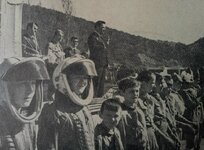
Примечание: на фотографии празднование Дня космонавтики в пионерском лагере "Орлёнок" в 1977 году. Выступает дважды Герой Советского Союза лётчик-космонавт СССР Г. М. Гречко. Фото В. Грязева.
.....................................................................
Цит.по: журнал "Земля и Вселенная"
Март, апрель 1982 год
Художественный редактор: Шимкина Л. Я.
Корректоры:Ермолаева В. А.,
Морозова Т. Н. Москва/ Издательство "Наука"/1982 год THROUGH THE PAGES OF THE SOVIET MAGAZINE "EARTH AND THE UNIVERSE"
"The Day of Cosmonautics is celebrated with great solemnity at the Orlyonok Pioneer Camp. The program of the celebration, entitled 'We Were Born to Make Fairy Tales Come True', dedicated to Cosmonautics Day, includes astronomy talks and 'journeys through the starry sky,' meetings with scientists and cosmonauts visiting the camp, debates, quizzes, competitions, and exhibitions of paintings by science-fiction artists.
The observatory of the Orlyonok Pioneer Camp has many friends. Doctor of Technical Sciences I. V. Strazheva shared with the children her impressions from personal meetings with cosmonauts and spacecraft designers. Together with Candidate of Physical and Mathematical Sciences L. M. Gindilis, the children discussed the problem of the existence of extraterrestrial civilizations and methods of searching for them. Candidate of Physical and Mathematical Sciences A. M. Finkelstein spoke to the children about the achievements of radio astronomy, while Candidate of Physical and Mathematical Sciences E. V. Kononovich talked about solar research. Guests of the Orlyonok Pioneer Camp also included Doctor of Physical and Mathematical Sciences L. M. Mukhin and Doctor of Physical and Mathematical Sciences A. M. Cherepashchuk.
The staff members of the Orlyonok Pioneer Camp Observatory — V. A. Kostitsyn, L. N. Filippova, and G. V. Orlova — devote much effort and energy to working with the young pioneers. Their knowledge and love for children ensure the successful work of the observatory in promoting the achievements of astronomy and cosmonautics and in involving schoolchildren in amateur astronomy."
(S. S. Voynov, Head of the Astronomical Observatory of the Orlyonok Pioneer Camp, "By the Black Sea")
Note: In the photograph, Cosmonautics Day is being celebrated at the Orlyonok Pioneer Camp in 1977. Speaking is twice Hero of the Soviet Union, pilot-cosmonaut of the USSR, G. M. Grechko. Photograph by V. Gryazev.
Quoted from the magazine "Earth and the Universe"
March–April 1982
Art Editor: L. Ya. Shimkina
Proofreaders: V. A. Yermolaeva, T. N. Morozova
Moscow, Publishing House "Nauka", 1982. A TRAVÉS DE LAS PÁGINAS DE LA REVISTA SOVIÉTICA "LA TIERRA Y EL UNIVERSO"
"El Día de la Cosmonáutica se celebra solemnemente en el campamento pionero Orlyonok. El programa de la festividad, titulado «Nacimos para hacer realidad los cuentos», dedicado al Día de la Cosmonáutica, incluye charlas de astronomía y «paseos por el cielo estrellado», encuentros con científicos y cosmonautas invitados al campamento, debates, concursos, olimpíadas y exposiciones de pinturas de artistas de ciencia ficción.
El observatorio del campamento pionero Orlyonok tiene muchos amigos. La doctora en ciencias técnicas I. V. Strazheva compartió con los niños sus impresiones de encuentros personales con cosmonautas y diseñadores de naves espaciales. Junto con el candidato en ciencias físico-matemáticas L. M. Gindilis, los niños debatieron el problema de la existencia de civilizaciones extraterrestres y los métodos para buscarlas. El candidato en ciencias físico-matemáticas A. M. Finkelstein habló a los niños sobre los logros de la radioastronomía, mientras que el candidato en ciencias físico-matemáticas E. V. Kononovich les explicó las investigaciones sobre el Sol. Entre los invitados del campamento pionero Orlyonok se encontraban también el doctor en ciencias físico-matemáticas L. M. Mujin y el doctor en ciencias físico-matemáticas A. M. Cherepashchuk.
Los empleados del observatorio del campamento pionero Orlyonok — V. A. Kostitsyn, L. N. Filíppova y G. V. Orlova — dedican gran parte de su esfuerzo y energía a trabajar con los pioneros. Sus conocimientos y su amor por los niños garantizan el éxito de las actividades del observatorio en la divulgación de los logros de la astronomía y la cosmonáutica, así como en la incorporación de los escolares a la astronomía amateur."
(S. S. Voinov, director del Observatorio Astronómico del campamento pionero Orlyonok, «Junto al mar Negro»)
Nota: En la fotografía se muestra la celebración del Día de la Cosmonáutica en el campamento pionero Orlyonok en 1977. Está interviniendo el dos veces Héroe de la Unión Soviética y cosmonauta soviético G. M. Grechko. Fotografía de V. Gryazev.
"Мне хочется поделиться мыслями своими со всеми, кто спрашивал о космонавтике, о том, как стать космонавтом.
«...Уже много лет я упорно стремлюсь к своей цели, настойчиво ищу пути к ней. Мне приходится трудно, но я все равно не отступлюсь. Мечта о полете в космос еще в детские годы завладела мной. Она с каждым годом все прочнее овладевает моим сердцем. Теперь я абсолютно уверен - это мое призвание».
Это слова из письма инженера Бойцова. Он подробно рассказывает, как готовится к полету в космос. Бойцов - моряк, работает на судах дальнего плавания, все свободное время посвящает тренировкам.
«Я знаю, - пишет он, - что в космосе нужны физически крепкие, выносливые люди. Поэтому я большое внимание уделяю физической подготовке и спорту. С детства стал закаляться, обливаюсь по утрам холодной водой или обтираюсь снегом. Сейчас я купаюсь в проруби в любые морозы, постоянно бегаю на десять, двадцать, а иногда и более километров».
Бойцов разработал программу своей подготовки. Она включает тренировку вестибулярного аппарата, тренировку на невесомость, перегрузку, управление своим телом, испытание в барокамере, на одиночество.
«Уже четыре года я плаваю на судах дальнего плавания, - сообщает он. - Ежегодно я беру летом отпуск, к которому прибавляются еще выходные и праздничные дни, проведенные в море, и приезжаю в Краснодар, в аэроклуб, где летаю и прыгаю с парашютом. Два года назад в соревнованиях по высшему пилотажу я выполнил норматив мастера спорта. В парашютном спорте выступаю по программе кандидатов в мастера».
«Хочу стать космонавтом», «Моя мечта - побывать в космосе» - эти слова встречаются во многих письмах, адресованных в Звездный городок, на почту летчиков-космонавтов СССР. Их пишут люди разных возрастов и разных профессий. В один день я получил письма от десятиклассника, студента медицинского института и инженера. Все они содержат один вопрос: «Как стать космонавтом?»
На первый взгляд, кажется, что нет ничего сложного ответить: одинаковый вопрос - одинаковый ответ. Но вопрос одинаковый, а люди-то разные.
Помню, несколько лет назад произошел такой случай. Ученик десятого класса из города Николаева прислал мне письмо с просьбой принять его в отряд космонавтов. Он писал, что учится отлично, что здоровье у него отменное и что имеет он около десятка разрядов по различным видам спорта.
Я ответил тогда, что ему надо сначала закончить среднюю школу, а после можно будет поговорить и о дальнейшей судьбе. Написал ему и, откровенно говоря, забыл о нем, так как почта велика, а просьб, подобных этой, тоже немало!
Прошло время. Сижу я однажды вечером дома, готовлюсь к занятиям. Заходит ко мне молодой человек и говорит: «Здравствуйте, я приехал!» - и показывает мое письмо ему. Сели мы, поговорили. Он рассказал, что успешно закончил школу и вот теперь может целиком посвятить себя космонавтике. Юноша произвел на меня хорошее впечатление своей увлеченностью, убежденностью.
Но когда я спросил его, как он представляет себе работу космонавта в полете, что он думает делать, находясь на борту космического корабля, то вразумительного ответа я не услышал. Оказывается, он еще не успел подумать об этом.
Эту историю я привожу для того, чтобы показать, что кроме крепкого здоровья человек, решивший стать космонавтом, должен обладать знаниями, быть специалистом в той или иной области и четко представлять себе космический полет, характер и объем работы. Без этого мечты о полете так и останутся мечтами".
(Герман Титов. "Голубая моя планета").
....................................................................
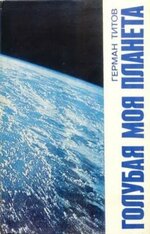
Цит.по: ГЕРМАН СТЕПАНОВИЧ ТИТОВ
ГОЛУБАЯ МОЯ ПЛАНЕТА
Редактор М. И. Ильин
Художник В. А. Шорц
Художественный редактор Т. А. Тихомирова
Технический редактор Л. С. Афанасьева
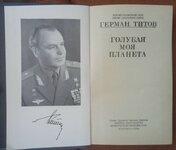
Корректор Н. М. Опрышко Москва/ Ордена Трудового Красного Знамени Военное издательство Министерства обороны СССР/ 1982 год. На фото титульный лист книги космонавта Германа Титова с его фотографией. "I would like to share my thoughts with everyone who has asked about cosmonautics and about how to become a cosmonaut.
'...For many years I have persistently pursued my goal, tirelessly searching for ways to achieve it. It is difficult for me, but I will not give up. The dream of flying into space captured me in childhood. With every passing year it has taken an even firmer hold on my heart. Now I am absolutely certain—it is my calling.'
These are the words from a letter written by engineer Boytsov. He describes in detail how he is preparing for a flight into space. Boytsov is a sailor, working on long-distance ships, and devotes all of his free time to training.
'I know,' he writes, 'that physically strong and resilient people are needed in space. Therefore, I pay great attention to physical training and sports. Since childhood I have hardened myself, pouring cold water over myself in the mornings or rubbing myself with snow. Now I swim in ice holes even during severe frosts and regularly run ten, twenty, or sometimes even more kilometers.'
Boytsov developed his own training program. It includes training of the vestibular system, adaptation to weightlessness, resistance to overloads, control of his body, tests in a pressure chamber, and training for isolation.
'For four years now I have been sailing on long-distance ships,' he reports. 'Every summer I take my vacation, adding to it weekends and holidays spent at sea, and travel to Krasnodar, to the flying club, where I fly aircraft and parachute. Two years ago, in an aerobatics competition, I fulfilled the requirements for the title of Master of Sport. In parachuting, I compete at the Candidate Master of Sport level.'
'I want to become a cosmonaut,' 'My dream is to travel into space'—these words appear in many letters addressed to Star City and to the mail of the cosmonauts of the USSR. They are written by people of different ages and professions. One day I received letters from a tenth-grade student, a medical institute student, and an engineer. All of them contained the same question: 'How can I become a cosmonaut?'
At first glance, it seems simple to answer: the same question should receive the same answer. But while the question is the same, the people asking it are different.
I remember an incident that occurred several years ago. A tenth-grade student from the city of Nikolaev sent me a letter asking to be accepted into the cosmonaut corps. He wrote that he was an excellent student, enjoyed excellent health, and had around ten sports classifications in various disciplines.
At that time, I replied that he should first finish secondary school, and only afterward could we discuss his future. I wrote back and, frankly speaking, forgot about him, because the mail was plentiful and there were many similar requests.
Time passed. One evening I was sitting at home preparing for classes. A young man entered and said, 'Hello, I've arrived!' Then he showed me the letter I had sent him. We sat down and talked. He told me that he had successfully finished school and could now devote himself entirely to cosmonautics. The young man made a good impression on me with his enthusiasm and determination.
But when I asked him how he imagined the work of a cosmonaut during a mission, what he thought he would actually do aboard a spacecraft, I received no clear answer. It turned out that he had not yet thought about it.
I tell this story to demonstrate that, in addition to good health, a person who decides to become a cosmonaut must possess knowledge, be a specialist in one field or another, and have a clear understanding of spaceflight, its nature, and the scope of the work involved. Without this, dreams of flying into space will remain only dreams."
(Herman Titov, My Blue Planet)
Quoted from:
HERMAN STEPANOVICH TITOV
My Blue Planet
Editor: M. I. Ilyin
Artist: V. A. Shorts
Art Editor: T. A. Tikhomirova
Technical Editor: L. S. Afanasyeva
Proofreader: N. M. Opryshko
Moscow, Military Publishing House of the Ministry of Defense of the USSR, 1982.
The photo shows the title page of the book by cosmonaut German Titov with his photograph. "Quisiera compartir mis pensamientos con todos aquellos que me han preguntado sobre la cosmonáutica y sobre cómo convertirse en cosmonauta.
'...Desde hace muchos años persigo obstinadamente mi objetivo y busco con perseverancia el camino hacia él. Me resulta difícil, pero no renunciaré. El sueño de volar al espacio se apoderó de mí cuando era niño. Con cada año que pasa domina aún más profundamente mi corazón. Ahora estoy absolutamente seguro: es mi vocación.'
Estas son las palabras de una carta escrita por el ingeniero Boytsov. En ella relata detalladamente cómo se prepara para un vuelo espacial. Boytsov es marino, trabaja en barcos de larga navegación y dedica todo su tiempo libre al entrenamiento.
'Sé', escribe, 'que en el espacio se necesitan personas físicamente fuertes y resistentes. Por eso presto mucha atención a la preparación física y al deporte. Desde niño me he endurecido físicamente, vertiéndome agua fría por las mañanas o frotándome con nieve. Ahora me baño en agujeros abiertos en el hielo incluso durante las heladas más intensas y corro regularmente diez, veinte y a veces más kilómetros.'
Boytsov elaboró su propio programa de preparación. Incluye el entrenamiento del aparato vestibular, la adaptación a la ingravidez, la resistencia a las sobrecargas, el control del propio cuerpo, pruebas en una cámara de presión y entrenamiento para la soledad.
'Hace ya cuatro años que navego en barcos de larga travesía', informa. 'Cada verano tomo mis vacaciones, a las que añado los fines de semana y festivos pasados en el mar, y viajo a Krasnodar, al aeroclub, donde vuelo aviones y salto en paracaídas. Hace dos años cumplí la norma para obtener el título de Maestro del Deporte en una competición de acrobacia aérea. En paracaidismo compito en la categoría de Candidato a Maestro del Deporte.'
'Quiero ser cosmonauta', 'Mi sueño es viajar al espacio'... Estas palabras aparecen en muchas cartas dirigidas a la Ciudad de las Estrellas y al correo de los cosmonautas de la URSS. Las escriben personas de diferentes edades y profesiones. Un día recibí cartas de un estudiante de décimo grado, de un estudiante de medicina y de un ingeniero. Todas contenían la misma pregunta: '¿Cómo puedo convertirme en cosmonauta?'
A primera vista parece sencillo responder: la misma pregunta merece la misma respuesta. Pero aunque la pregunta sea la misma, las personas son diferentes.
Recuerdo un caso ocurrido hace varios años. Un estudiante de décimo grado de la ciudad de Nikolaev me envió una carta pidiéndome que lo aceptara en el cuerpo de cosmonautas. Escribía que estudiaba excelentemente, que gozaba de una salud magnífica y que poseía alrededor de diez categorías deportivas en diferentes disciplinas.
Entonces le respondí que primero debía terminar la escuela secundaria y que después podríamos hablar de su futuro. Le escribí y, francamente, me olvidé de él, porque recibía mucho correo y había muchas solicitudes parecidas.
Pasó el tiempo. Una noche estaba sentado en casa preparándome para unas clases cuando entró un joven y me dijo: '¡Hola, he llegado!' Luego me mostró la carta que yo le había enviado. Nos sentamos a conversar. Me contó que había terminado con éxito la escuela y que ahora podía dedicarse por completo a la cosmonáutica. Me causó una muy buena impresión por su entusiasmo y convicción.
Pero cuando le pregunté cómo imaginaba el trabajo de un cosmonauta durante un vuelo espacial, qué creía que haría a bordo de una nave espacial, no obtuve una respuesta clara. Resultó que ni siquiera lo había pensado.
Cuento esta historia para demostrar que, además de gozar de buena salud, una persona que decide convertirse en cosmonauta debe poseer conocimientos, ser especialista en algún campo y comprender claramente el vuelo espacial, su naturaleza y el volumen de trabajo que implica. Sin ello, los sueños de volar al espacio seguirán siendo solo sueños."
(Herman Titov, Mi planeta azul)
Citado de:
HERMAN STEPÁNOVICH TITOV
Mi planeta azul
Editor: M. I. Ilyin
Ilustrador: V. A. Shorts
Editora artística: T. A. Tijomírova
Editor técnico: L. S. Afanásieva
Correctora: N. M. Opryshko
Moscú, Editorial Militar del Ministerio de Defensa de la URSS, 1982.
La foto muestra la portada del libro del cosmonauta German Titov con su fotografía.
"Наша планета мала, она песчинка по сравнению со звёздами, галактиками. Но человек, который живёт на этой песчинке, способен мыслить, и его мысль шагнула далеко за пределы Земли, перешла невидимые барьеры своей Галактики, проникла в другие галактики, нашла их, дала им названия. Пройдут годы, и люди, несомненно, достигнут других планет и, возможно, других миров. И ответ на важнейшие вопросы развития мироздания - есть ли жизнь где-либо, кроме нашей планеты, не занимает ли человек Земли в этом смысле исключительного положения, происходят ли во Вселенной неизвестные нам процессы превращения энергии и массы - лежит на путях освоения космического пространства". (Павел Попович. "Бесконечные дороги Вселенной"). .................................................................
Цит.по: НА ДОРОГАХ ВСЕЛЕННОЙ
СБОРНИК
Составитель: Архангельская Наталия Владимировна
Редактор: О. В. Крекотень
Художественное оформление:
Кононова А. В.
Художественный редактор: С. П. Савицкий
Технический редактор: Л. И. Ильченко
Корректоры: В. П. Иванченко,
О. С. Зинченко. На фото космонавт Павел Попович. "Our planet is small; it is but a grain of sand compared with the stars and galaxies. Yet the human being who lives on this grain of sand is capable of thought, and human thought has already stepped far beyond the limits of Earth. It has crossed the invisible boundaries of our Galaxy, penetrated into other galaxies, discovered them, and given them names.
Years will pass, and people will undoubtedly reach other planets and perhaps other worlds. The answers to the most important questions about the development of the Universe — whether life exists anywhere beyond our planet, whether humanity occupies a unique position in this respect, and whether there are processes of transformation of energy and matter in the Universe that are still unknown to us — lie along the path of space exploration."
(Pavel Popovich, "The Endless Roads of the Universe")
Quoted from:
ON THE ROADS OF THE UNIVERSE
Collected Volume
Compiler: Natalia Vladimirovna Arkhangelskaya
Editor: O. V. Krekoten
Design: A. V. Kononova
Art Editor: S. P. Savitsky
Technical Editor: L. I. Ilchenko
Proofreaders: V. P. Ivanchenko, O. S. Zinchenko
Photo: Cosmonaut Pavel Popovich. "Nuestro planeta es pequeño; es un grano de arena en comparación con las estrellas y las galaxias. Pero el ser humano que vive en ese grano de arena es capaz de pensar, y su pensamiento ha ido mucho más allá de los límites de la Tierra. Ha cruzado las barreras invisibles de nuestra Galaxia, ha penetrado en otras galaxias, las ha descubierto y les ha dado nombres.
Pasarán los años y, sin duda, los seres humanos llegarán a otros planetas y quizá a otros mundos. Las respuestas a las cuestiones más importantes sobre la evolución del Universo —si existe vida en algún lugar aparte de nuestro planeta, si el ser humano ocupa en este sentido una posición excepcional y si en el Universo tienen lugar procesos de transformación de energía y materia que todavía desconocemos— se encuentran en el camino de la exploración del espacio cósmico."
(Pável Popóvich, "Los caminos infinitos del Universo")
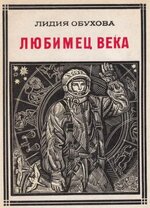
"...А может, космос и есть тот самый смертельно опасный порог, переступив который не останется ничего другого, как только... стать оптимистами?! Вооружиться главной и в итоге единственной человеческой силой - силой духа?
Оптимизм рождается вначале от незнания опасностей, подстерегающих впереди. А о чем же мы так мало знаем еще, как не о космосе? И что более дерзновенно, чем наше вступление в него?
Когда Земля подбросила своей большой ладонью горошину ракеты, а та вдруг не вернулась тотчас, сраженная тяготением, но сама по себе описала круг, - в этом наряду с напряжением, наукой, работой был и элемент дерзости древних мореходов. Всего того, чем красна жизнь. Что вносит в наше существование радостный дух исканий. Ведь человек с одинаковой одержимостью стремится и к вершинам, и к безднам - ко всему, что кажется недостижимым.
Не надо забывать, что, когда произошел первый прорыв человека за пределы земного тяготения, мир был моложе на десять лет, и на многие вещи мы смотрели по-иному. Через полвека людям будет еще труднее вообразить поступок Гагарина во всей его психологической сложности.
Ведь те из нас, что проживут это грядущее пятидесятилетие, будут уже отличаться сами от себя, сегодняшних, настолько же, как и мы, родившиеся до телевидения, непохожи на тех, кем стали нынче, когда смотрим на дому футбольный матч из другого полушария. И вообще узнаем о великом событии не после его совершения, а в ту самую минуту, становясь участниками и сопереживателями.
В убыстрившемся мире каждый день происходят перевороты, технические и научные, хотя случается это неосязаемо и невидимо.
Но космос, даже самый ближний, наша орбитальная околица, еще очень долго не будет обжит! Он по-прежнему станет притягивать мечты не одного поколения землян и останется заманчивой целью, а не просто службой и профессией".(Лидия Обухова. "Любимец века (Гагарин)"; глава "Зарубка на истории человечества").
..................................................................
Цит.по: ОБУХОВА ЛИДИЯ АЛЕКСЕЕВНА
ЛЮБИМЕЦ ВЕКА (ГАГАРИН)
Для детей среднего и старшего школьного возраста
Редактор: Людмила Лузянина
Художественный редактор: Виктор Плешко
Технический редактор: Галина Каплан
Корректоры: Галина Василева, Карина Пипикова
Москва/ Издательство "Молодая гвардия"/ 1972 год
На фото обложка книги "Любимец века". "...And perhaps space is that very deadly threshold which, once crossed, leaves us with no other choice than to become... optimists? To arm ourselves with the principal and, in the end, the only truly human strength — the strength of spirit?
Optimism is born first from ignorance of the dangers that lie ahead. And what do we know so little about, if not space? And what could be more daring than our entry into it?
When Earth tossed a tiny pea-like rocket from the palm of her great hand, and it did not immediately fall back, struck down by gravity, but instead traced a circle on its own — there was, along with tension, science, and hard work, an element of the boldness of the ancient seafarers. All those things that make life beautiful. All that brings into our existence the joyful spirit of exploration. For mankind pursues heights and abysses with equal passion — everything that seems unattainable.
We must not forget that when humanity first broke beyond the limits of Earth's gravity, the world was ten years younger, and we looked at many things differently. Fifty years from now, it will be even harder for people to imagine Yuri Gagarin's act in all its psychological complexity.
Those of us who live through that coming half-century will differ from our present selves just as much as we, born before television, differ from who we have become today, when we can watch a football match from the other side of the globe without leaving home. We no longer learn about great events after they have happened, but at the very moment they unfold, becoming participants and witnesses ourselves.
In this accelerating world, revolutions — technical and scientific — occur every day, though often imperceptibly and invisibly.
But space, even the nearest space, our orbital neighborhood, will remain unexplored for a very long time. It will continue to attract the dreams of more than one generation of Earth’s inhabitants and will remain a fascinating goal, not merely a job or a profession."
(Lidiya Obukhova, "The Favorite of the Century (Gagarin)"; chapter "A Mark on the History of Humanity")
Quoted from:
LIDIYA ALEKSEEVNA OBUKHOVA
The Favorite of the Century (Gagarin)
For middle and senior school-age readers
Editor: Lyudmila Luzyanina
Art Editor: Viktor Pleshko
Technical Editor: Galina Kaplan
Proofreaders: Galina Vasileva, Karina Pipikova
Moscow, Molodaya Gvardiya Publishing House, 1972.
Photo: Cover of the book The Favorite of the Century. "...¿Y si el espacio es precisamente ese umbral mortal que, una vez cruzado, no nos deja otra opción que convertirnos en... optimistas? ¿Armarse con la principal y, al final, la única fuerza verdaderamente humana: la fuerza del espíritu?
El optimismo nace primero de la ignorancia de los peligros que nos esperan por delante. ¿Y de qué sabemos tan poco todavía como del espacio? ¿Y qué hay más audaz que nuestra entrada en él?
Cuando la Tierra lanzó desde la palma de su gran mano el pequeño guisante de un cohete, y este no regresó de inmediato, abatido por la gravedad, sino que trazó un círculo por sí mismo, en ello había, junto con la tensión, la ciencia y el trabajo, un elemento de la audacia de los antiguos navegantes. Todo aquello que da belleza a la vida. Todo aquello que aporta a nuestra existencia el alegre espíritu de la búsqueda. Porque el ser humano persigue con la misma pasión las alturas y los abismos, todo aquello que parece inalcanzable.
No debemos olvidar que cuando se produjo la primera incursión del ser humano más allá de los límites de la gravedad terrestre, el mundo era diez años más joven y contemplábamos muchas cosas de otra manera. Dentro de cincuenta años, a las personas les resultará aún más difícil imaginar la hazaña de Yuri Gagarin en toda su complejidad psicológica.
Quienes de nosotros vivan ese próximo medio siglo serán tan distintos de nosotros mismos como nosotros, nacidos antes de la televisión, somos distintos de quienes somos hoy, cuando vemos desde casa un partido de fútbol que se juega en el otro hemisferio del planeta. Y, en general, ya no nos enteramos de los grandes acontecimientos después de que ocurren, sino en el mismo instante en que suceden, convirtiéndonos en participantes y testigos.
En este mundo acelerado, cada día tienen lugar revoluciones técnicas y científicas, aunque a menudo ocurran de forma imperceptible e invisible.
Pero el espacio, incluso el más cercano, nuestro vecindario orbital, seguirá siendo durante mucho tiempo un territorio sin conquistar. Continuará atrayendo los sueños de más de una generación de habitantes de la Tierra y seguirá siendo una meta fascinante, no simplemente un trabajo o una profesión."
(Lidia Obújova, "El favorito del siglo (Gagarin)"; capítulo "Una marca en la historia de la humanidad")
"Человек не будет следовать формальной логике «машинного мозга», если она противоречит здравому смыслу. А с машиной такое случается довольно часто. Но самое важное, что отличает человека от машины, - это его способность разумно и творчески действовать в непредвиденных, незапрограммированных ситуациях; способность, отчасти основанная на работе никем еще не смоделированного подсознания, на интуиции.
Академик А. Н. Колмогоров сказал об этом так: в сознании человека «аппарат формального мышления не занимает центрального положения». Между простейшими рефлексами и формальной логикой человека (а машина может функционировать только на основе формальной логики) простирается огромная, еще не исследованная область подсознания.
Взвесив все «за» и «против» и убедившись, что человека невозможно исключить из системы управления, пришли к выводу, что проблему «человек или машина?» лучше всего сформулировать так: «человек и машина». Бывшие противники объединились и занялись поиском способов повышения действенности человеческого звена в системе «человек - машина», направив свое внимание на разумное распределение функций между ними, стараясь наиболее рационально распределить обязанности между автоматами и человеком, найти оптимальный вариант их сочетания.
Возможности автоматических устройств в исследовании космического пространства огромны. Это ярко продемонстрировали советские межпланетные автоматические станции «Венера», осуществившие плавный спуск в атмосфере далекой планеты и выполнившие большой комплекс уникальных научных исследований. Эти эксперименты еще раз подтвердили, что для исследования малоизученных условий автоматические аппараты необходимы. Недаром на один полет человека приходятся десятки полетов автоматических аппаратов.
Однако какими бы огромными ни были возможности спутников и автоматических станций, они не могут заменить творческих возможностей человека. Автомат не в состоянии исследовать то, что принципиально неизвестно. Лишь человек в процессе исследований может анализировать полученные результаты, принимать правильные решения в непредвиденных обстоятельствах, в полной мере использовать открывающиеся возможности изучения окружающего нас мира. Вместе с тем совершенно очевидно, что до тех пор, пока не будет обеспечена полная гарантия безопасности полета человека в космос, автоматы останутся основным средством космических исследований". (Герман Титов. "Голубая моя планета"; глава "Мечты сбываются").
...................................................................
Цит.по: ГЕРМАН СТЕПАНОВИЧ ТИТОВ
ГОЛУБАЯ МОЯ ПЛАНЕТА
Редактор М. И. Ильин
Художник В. А. Шорц
Художественный редактор Т. А. Тихомирова
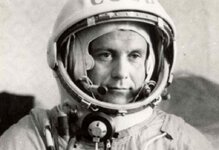
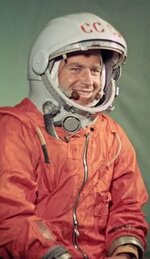
Технический редактор Л. С. Афанасьева Корректор Н. М. Опрышко На фото: Обложка книги "Голубая моя планета; космонавт Герман Титов в скафандре. A human being will not follow the formal logic of a “machine brain” if it contradicts common sense. And such contradictions occur with machines quite often. But the most important thing that distinguishes a human from a machine is the ability to act intelligently and creatively in unforeseen, unprogrammed situations — an ability based in part on the workings of the subconscious, which has not yet been modeled by anyone, and on intuition. Academician expressed this idea as follows: in human consciousness, “the apparatus of formal thinking does not occupy a central position.” Between the simplest reflexes and human formal logic (while a machine can function only on the basis of formal logic) lies a vast, still unexplored realm of the subconscious.
After weighing all the arguments for and against and becoming convinced that a human being cannot be excluded from the control system, researchers came to the conclusion that the problem “human or machine?” is best formulated as “human and machine.” Former opponents joined forces and began searching for ways to increase the effectiveness of the human element within the “human–machine” system. Their attention turned toward the reasonable distribution of functions between them, striving to assign responsibilities as rationally as possible between automated systems and humans and to find the optimal combination of both.
The capabilities of automated devices in the exploration of outer space are enormous. This was vividly demonstrated by the Soviet interplanetary automatic stations , which successfully descended through the atmosphere of a distant planet and carried out a large number of unique scientific investigations. These experiments once again confirmed that automatic spacecraft are indispensable for exploring poorly understood environments. It is no coincidence that dozens of automated missions are launched for every human spaceflight.
However, no matter how great the capabilities of satellites and automatic probes may be, they cannot replace the creative abilities of human beings. An automatic device is incapable of investigating what is fundamentally unknown. Only a human, in the course of research, can analyze the results obtained, make correct decisions under unforeseen circumstances, and fully exploit the opportunities for studying the world around us. At the same time, it is perfectly clear that until complete safety of human spaceflight is guaranteed, automated systems will remain the primary means of space exploration.
(German Titov, “My Blue Planet”; chapter “Dreams Come True”)
Quoted from:
GERMAN STEPANOVICH TITOV
My Blue Planet
Editor: M. I. Ilyin
Artist: V. A. Shorts
Art Editor: T. A. Tikhomirova
Technical Editor: L. S. Afanasyeva
Proofreader: N. M. Opryshko
Photo: Cover of the book My Blue Planet; cosmonaut German Titov in a spacesuit. "El ser humano no seguirá la lógica formal del «cerebro electrónico» si esta contradice el sentido común. Y eso le ocurre a una máquina con bastante frecuencia. Pero lo más importante que distingue al ser humano de la máquina es su capacidad de actuar de manera razonable y creativa en situaciones imprevistas, no programadas; una capacidad basada, en parte, en el funcionamiento de ese subconsciente que nadie ha conseguido modelar todavía y en la intuición.
El académico A. N. Kolmogórov lo expresó de esta manera: en la conciencia humana, «el aparato del pensamiento formal no ocupa una posición central». Entre los reflejos más simples y la lógica formal del ser humano (mientras que una máquina solo puede funcionar sobre la base de la lógica formal) se extiende una inmensa región aún inexplorada: el subconsciente.
Después de sopesar todos los argumentos a favor y en contra y convencerse de que el ser humano no podía ser excluido del sistema de control, se llegó a la conclusión de que el problema «¿hombre o máquina?» debía formularse mejor como «hombre y máquina». Los antiguos adversarios unieron sus esfuerzos y comenzaron a buscar métodos para aumentar la eficacia del elemento humano dentro del sistema «hombre-máquina», centrando su atención en una distribución racional de las funciones entre ambos. Procuraron repartir de la manera más adecuada las tareas entre los dispositivos automáticos y la persona, buscando la combinación óptima de ambos.
Las posibilidades de los dispositivos automáticos para la exploración del espacio cósmico son enormes. Esto quedó brillantemente demostrado por las estaciones automáticas interplanetarias soviéticas «Venera», que realizaron un descenso suave en la atmósfera de un planeta lejano y llevaron a cabo un amplio conjunto de investigaciones científicas únicas. Estos experimentos confirmaron una vez más que, para estudiar condiciones poco conocidas, los aparatos automáticos son indispensables. No es casualidad que por cada vuelo tripulado se realicen decenas de vuelos de sondas automáticas.
Sin embargo, por enormes que sean las capacidades de los satélites y de las estaciones automáticas, no pueden sustituir las capacidades creativas del ser humano. Un autómata no es capaz de investigar aquello que es fundamentalmente desconocido. Solo una persona, en el proceso de investigación, puede analizar los resultados obtenidos, tomar decisiones correctas en circunstancias imprevistas y aprovechar plenamente las oportunidades que se abren para el estudio del mundo que nos rodea. Al mismo tiempo, es absolutamente evidente que, mientras no se garantice por completo la seguridad de los vuelos tripulados al espacio, los dispositivos automáticos seguirán siendo el principal medio de exploración espacial."
(Herman Titov, "Mi planeta azul"; capítulo "Los sueños se hacen realidad").
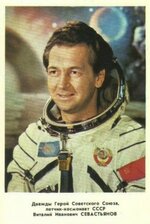
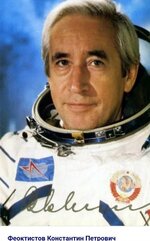
"Сделаем наудачу несколько "моментальных" портретов космонавтов, знакомых нам. Общительный человек, умный собеседник, Виталий Севастьянов известен каждому телезрителю как ведущий передачи "Человек, Земля, Вселенная". Севастьянов относится к космосу очень серьезно, "мировоззренчески", его увлекают истоки космических идей и долговременные космические прогнозы. Константин Феоктистов - талантливый учёный, инженер, зримо видящий в своём воображении, да и в своих расчетах, большие города на орбитах и манипуляции сложных роботов на поверхности далёких планет.
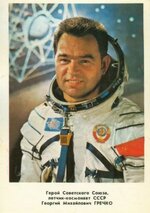
Георгий Гречко - тот самый, который фотографировал в иллюминатор частицы от внешней оболочки станции, а потом показывал друзьям как "летающие тарелки". Его общительность и улыбчивость - казалось бы, самые обычные свойства - настолько безбрежны, что кажутся недосягаемыми.
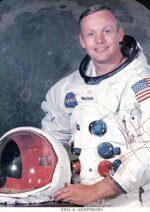
Нейл Армстронг - хладнокровный и точный в любой трудной ситуации. Это он посадил лунный модуль на поверхность нашего естественного спутника, в доли секунды проскочив неожиданно возникший маленький кратер с крутыми склонами. Армстронга в шутку называют "человеком - компьютером". Поразительно его внешнее сходство с Гагариным. Армстронг прост и скромен.
Рассел Швейкарт - американский астронавт, летал в "Аполлоне - 9", выходил в открытый космос, а затем участвовал в полёте одного из "Шаттлов". Он и Алексей Леонов встречались в Москве с детьми, которые "назначили" их членами международной экспедиции на Марс. Разуверять детей, что оба они уже "отлетали свое", как не раз признавались они в кругу взрослых,космонавты не стали.
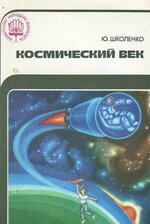
Этот перечень портретов можно было бы продолжить, и они составили бы прекрасную галерею, в которой каждый почти нашёл бы и себя самого - в каких-то чертах характера, настроениях, мыслях".(Ю. Школенко. "Космический век"; глава 9. "Высокая граница личности").
..................................................................
Цит.по:
Школенко Юрий Андреевич
Космический век
Москва. Издательство «Молодая гвардия» 1986 г. Тираж 100 000
На фотографиях: Верхний ряд: слева - обложка книги "Космический век" с рисунком художника В.Неволина; справа - фото космонавта Виталия Севастьянова. Нижний ряд: слева - фото космонавта Константина Феоктистова; справа - фото космонавта Георгия Гречко. Третий ряд: слева - фото астронавта Нейла Армстронга; справа - фото астронавта Рассела Швейкарта. "Let us, for the sake of illustration, create several brief 'instant portraits' of cosmonauts familiar to us.
An outgoing person and an intelligent conversationalist, Vitaly Sevastyanov is known to every television viewer as the host of the program 'Man, Earth, Universe'. Sevastyanov approaches space with great seriousness, from a broad philosophical perspective. He is fascinated by the origins of space-related ideas and by long-term forecasts about humanity's future in space.
Konstantin Feoktistov is a gifted scientist and engineer, capable of vividly envisioning in his imagination—and in his calculations as well—vast cities in orbit and the operations of complex robots on the surfaces of distant planets.
Georgy Grechko is the very cosmonaut who once photographed particles peeling off the outer shell of a space station through a porthole and later jokingly showed the pictures to friends as 'flying saucers'. His sociability and cheerful smile—seemingly ordinary qualities—are so boundless that they appear unattainable.
Neil Armstrong is calm and precise in any difficult situation. It was he who landed the lunar module on the surface of our natural satellite, skimming past an unexpectedly appearing small crater with steep slopes in a fraction of a second. Armstrong is jokingly called 'the human computer'. His physical resemblance to Yuri Gagarin is astonishing. Armstrong is simple and modest.
Russell Schweickart, the American astronaut who flew aboard Apollo 9, performed a spacewalk, and later participated in one of the Space Shuttle missions. Together with Alexei Leonov, he met with children in Moscow who had 'appointed' them members of an international expedition to Mars. The cosmonauts did not try to convince the children that both of them had already completed their flying careers, as they themselves often admitted among adults.
This gallery of portraits could easily be continued, and together they would form a remarkable collection in which almost everyone might recognize something of themselves—in certain character traits, moods, or thoughts."
(Yu. Shkolenko, The Space Age, Chapter 9: "The High Frontier of Personality")
In the photographs:
Top row: left — the cover of The Space Age with artwork by V. Nevolin; right — a photograph of cosmonaut Vitaly Sevastyanov.
Second row: left — a photograph of cosmonaut Konstantin Feoktistov; right — a photograph of cosmonaut Georgy Grechko. Third row: left — a photograph of astronaut Neil Armstrong; right — a photograph of astronaut Russell Schweickart.
"Hagamos, por así decirlo, varios 'retratos instantáneos' de cosmonautas que conocemos.
Vitali Sevastiánov, una persona sociable y un interlocutor brillante, es conocido por todos los televidentes como presentador del programa 'El Hombre, la Tierra y el Universo'. Sevastiánov se relaciona con el cosmos de una manera muy seria, desde una perspectiva filosófica y de visión del mundo. Le apasionan los orígenes de las ideas espaciales y las previsiones a largo plazo sobre el futuro de la exploración cósmica.
Konstantín Feoktístov es un científico e ingeniero talentoso que puede visualizar claramente, tanto en su imaginación como en sus cálculos, enormes ciudades en órbita y las operaciones de complejos robots sobre la superficie de planetas lejanos.
Guéorgui Grechko es el mismo cosmonauta que fotografió por la ventanilla partículas desprendidas del revestimiento exterior de una estación espacial y luego mostró las imágenes a sus amigos como si fueran 'platillos voladores'. Su sociabilidad y su sonrisa permanente, cualidades aparentemente comunes, son tan inmensas que parecen inalcanzables.
Neil Armstrong es sereno y preciso en cualquier situación difícil. Fue él quien aterrizó el módulo lunar sobre la superficie de nuestro satélite natural, esquivando en una fracción de segundo un pequeño cráter de pronunciadas pendientes que apareció inesperadamente en su trayectoria. En broma, a Armstrong lo llaman 'el hombre-computadora'. Resulta sorprendente su parecido físico con Yuri Gagarin. Armstrong es sencillo y modesto.
Russell Schweickart, astronauta estadounidense, voló en el Apollo 9, realizó una caminata espacial y posteriormente participó en una misión del transbordador espacial. Junto con Alexéi Leónov se reunió en Moscú con unos niños que los habían 'nombrado' miembros de una expedición internacional a Marte. Los cosmonautas no quisieron desilusionar a los pequeños explicándoles que ambos ya habían completado su carrera espacial, como ellos mismos reconocían con frecuencia en conversaciones entre adultos.
Esta serie de retratos podría continuar, formando una magnífica galería en la que casi cualquier persona encontraría algo de sí misma: ciertos rasgos de carácter, estados de ánimo o pensamientos."
(Yu. Shkolenko, La Era Espacial, Capítulo 9: "La Alta Frontera de la Personalidad")
En las fotografías:
Fila superior: a la izquierda, la portada del libro La Era Espacial con ilustración de V. Nevolin; a la derecha, fotografía del cosmonauta Vitali Sevastiánov.
Segunda fila: a la izquierda, fotografía del cosmonauta Konstantín Feoktístov; a la derecha, fotografía del cosmonauta Guéorgui Grechko. Tercera fila: a la izquierda, fotografía del astronauta Neil Armstrong; a la derecha, fotografía del astronauta Russell Schweickart.
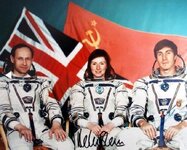
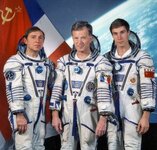
18 мая 1991 года подданная Великобритании Хелен Патрисия Шармен в составе девятой экспедиции совершила космический полёт на орбитальную станцию «Мир» на космическом корабле «Союз ТМ-12» вместе с Анатолием Арцебарским и Сергеем Крикалёвым. А. Арцебарский и С. Крикалёв, как экипаж 9-й основной экспедиции на Орбитальную Станцию «Мир», заменили экипаж 8-й основной экспедиции (В. Афанасьев — М. Манаров). Британская женщина-космонавт Шармен провела на станции одну неделю. Её полёт был спонсирован частной британской компанией. Шармен осуществила на орбите биологические и химические эксперименты, а также провела для английских школ серию уроков.
Программа девятой основной экспедиции состояла из экспериментов по астрономии, биологии, химии, наблюдению Земли, космической технике, материаловедению и медицине. Помимо этого космонавты провели профилактические работы и заменили многие приборы. Во время работ в открытом космосе произведён ремонт антенны системы автоматического сближения «Курс» на модуле «Квант», смонтирована складывающаяся решетчатая мачта из нового никель-титанового сплава, предназначенная для установки дополнительного прибора управления на модуле «Квант».
За шесть выходов в открытый космос космонавты провели вне станции в общей сложности 32 ч 23 мин. Сергей Крикалёв пробыл на орбите на шесть месяцев дольше первоначально запланированного срока, так как две последующие миссии на «Мир» сокращены по финансовым причинам и позволяли заменить на орбите только одного члена основного экипажа. Провиант и расходные материалы доставлялись транспортными кораблями «Прогресс М-8» и «М-9».
На фото слева направо: Анатолий Арцебарский, Хелен Шармен, Сергей Крикалев. On May 18, 1991, British citizen Helen Patricia Sharman took part in a spaceflight as a member of the ninth expedition, traveling to the orbital station Mir aboard the spacecraft Soyuz TM-12 together with Anatoly Artsebarsky and Sergey Krikalev. A. Artsebarsky and S. Krikalev, as the crew of the 9th principal expedition to the Mir Orbital Station, replaced the crew of the 8th principal expedition (V. Afanasyev and M. Manarov). British cosmonaut Helen Sharman spent one week aboard the station. Her flight was sponsored by a private British company. While in orbit, Sharman conducted biological and chemical experiments and also delivered a series of lessons for schools in the United Kingdom.
The program of the 9th principal expedition included experiments in astronomy, biology, chemistry, Earth observation, space engineering, materials science, and medicine. In addition, the cosmonauts carried out maintenance work and replaced numerous instruments. During spacewalks, they repaired the antenna of the Kurs automatic rendezvous system on the Kvant module and installed a collapsible lattice mast made of a new nickel-titanium alloy. The mast was intended for mounting an additional control instrument on the Kvant module.
Over the course of six spacewalks, the cosmonauts spent a total of 32 hours and 23 minutes outside the station. Sergey Krikalev remained in orbit six months longer than originally planned because the next two missions to Mir were reduced for financial reasons and allowed the replacement of only one member of the main crew. Food supplies and consumable materials were delivered by the cargo spacecraft Progress M-8 and Progress M-9. In the photograph, from left to right: Anatoly Artsebarsky, Helen Sharman, and Sergey Krikalev. El 18 de mayo de 1991, la ciudadana británica Helen Patricia Sharman realizó un vuelo espacial como integrante de la novena expedición a la estación orbital Mir, a bordo de la nave espacial Soyuz TM-12, junto con Anatoli Artsebarski y Serguéi Krikaliov. A. Artsebarski y S. Krikaliov, como tripulación de la 9.ª expedición principal a la estación orbital Mir, sustituyeron a la tripulación de la 8.ª expedición principal (V. Afanásiev y M. Manárov). La cosmonauta británica Helen Sharman permaneció una semana en la estación. Su vuelo fue patrocinado por una empresa privada británica. Durante su estancia en órbita, Sharman realizó experimentos biológicos y químicos, además de impartir una serie de lecciones para escuelas del Reino Unido.
El programa de la 9.ª expedición principal incluyó experimentos de astronomía, biología, química, observación de la Tierra, ingeniería espacial, ciencia de materiales y medicina. Además, los cosmonautas llevaron a cabo trabajos de mantenimiento y sustituyeron numerosos instrumentos. Durante las actividades extravehiculares, repararon la antena del sistema automático de acoplamiento Kurs en el módulo Kvant e instalaron un mástil reticular plegable fabricado con una nueva aleación de níquel y titanio. Este mástil estaba destinado a la instalación de un instrumento de control adicional en el módulo Kvant.
A lo largo de seis salidas al espacio abierto, los cosmonautas pasaron un total de 32 horas y 23 minutos fuera de la estación. Serguéi Krikaliov permaneció en órbita seis meses más de lo previsto inicialmente, ya que las dos misiones siguientes a Mir fueron reducidas por motivos financieros y permitían sustituir únicamente a un miembro de la tripulación principal. Los víveres y materiales consumibles fueron suministrados por las naves de carga Progress M-8 y Progress M-9. En la fotografía, de izquierda a derecha: Anatoli Artsebarski, Helen Sharman y Serguéi Krikaliov.
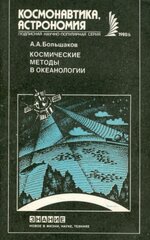
"Высокая ценность визуальных наблюдений Мирового океана из космоса определяется совершенством человеческого глаза как измерительного инструмента, а также способностью человека мгновенно перерабатывать воспринимаемые изображения, отделять существенное от несущественного, подмечать новые черты в хорошо известном, улавливать загадочные и необычные явления. Особенно резко увеличиваются наблюдательные способности космонавтов при их хорошей предварительной подготовке, и вполне вероятно, что в недалеком будущем в составе экипажей орбитальных станций появятся космонавты-океанологи.
Значительно увеличивается эффективность визуальных наблюдений океана из космоса и в условиях длительного полета, при многократных наблюдениях одного и того же района. Космонавты в этом случае сразу узнают знакомые районы и подмечают происшедшие в них изменения. Это обстоятельство отмечалось многими космическими экипажами и особенно основными экипажами Орбитальной Космической Станции «Салют-6».
Иногда космонавты при наблюдении океана замечали такие явления и объекты, что ставили в тупик специалистов по оптике океана. Еще при полетах на первых космических кораблях было замечено, что космонавты хорошо различают малоразмерные объекты на океанском фоне, даже такие небольшие, как отдельные корабли. Долгое время это казалось нереальным, но потом ученые разобрались в этом явлении и поняли, что недооценивали адаптационные характеристики человеческого зрения, выяснили, что в условиях космического полета острота зрения у космонавтов может заметно повышаться".(А.А.Большаков."Космические методы в океанологии").
.....................................................................
Цит. по: Анатолий Александрович Большаков
КОСМИЧЕСКИЕ МЕТОДЫ В ОКЕАНОЛОГИИ
Серия «Космонавтика, астрономия»
№ 6, 1982 г.
НОВОЕ В ЖИЗНИ, НАУКЕ, ТЕХНИКЕ
Гл. отраслевой редактор Л. А. Ерлыкин. Редактор Е. Ю. Ермаков. Мл. редактор Г. И. Родкина. Обложка художника Ю. В. Меньшова. Худож. редактор Т. С. Егорова. Техн. редактор Н. В. Лбова. Корректор В. И. Гуляева. Издательство «Знание» Москва 1982 год The high value of visual observations of the World Ocean from space is determined by the perfection of the human eye as a measuring instrument, as well as by the human ability to instantly process perceived images, distinguish the essential from the non-essential, notice new features in what is already familiar, and detect mysterious and unusual phenomena.
The observational abilities of cosmonauts increase especially sharply when they receive thorough preliminary training, and it is quite likely that in the near future the crews of orbital stations will include cosmonaut-oceanographers.
The effectiveness of visual observations of the ocean from space also increases significantly during long-duration missions, when the same region is observed repeatedly. In such cases, cosmonauts immediately recognize familiar areas and notice the changes that have occurred there. This phenomenon was noted by many space crews, especially by the principal crews of the Salyut-6 Orbital Space Station.
At times, while observing the ocean, cosmonauts noticed phenomena and objects that puzzled specialists in ocean optics. During the flights of the very first spacecraft, it was observed that cosmonauts could clearly distinguish small objects against the ocean background, even objects as small as individual ships. For a long time this seemed unrealistic, but later scientists came to understand the phenomenon. They realized that they had underestimated the adaptive capabilities of human vision and discovered that, under spaceflight conditions, the visual acuity of cosmonauts can increase noticeably.
(A. A. Bolshakov, “Space Methods in Oceanology”)
Source:
Anatoly Alexandrovich Bolshakov
SPACE METHODS IN OCEANOLOGY
Series: Cosmonautics, Astronomy
No. 6, 1982
NEW DEVELOPMENTS IN LIFE, SCIENCE, AND TECHNOLOGY
Cover designed by artist Yu. V. Menshov.
Knowledge Publishing House
Moscow, 1982 El gran valor de las observaciones visuales del Océano Mundial desde el espacio está determinado por la perfección del ojo humano como instrumento de medición, así como por la capacidad del ser humano para procesar instantáneamente las imágenes percibidas, separar lo esencial de lo secundario, descubrir nuevos rasgos en lo ya conocido y captar fenómenos misteriosos e inusuales.
Las capacidades de observación de los cosmonautas aumentan especialmente cuando reciben una preparación previa adecuada, y es muy probable que en un futuro cercano aparezcan cosmonautas-oceanógrafos entre las tripulaciones de las estaciones orbitales.
La eficacia de las observaciones visuales del océano desde el espacio también aumenta considerablemente durante los vuelos de larga duración, cuando se observa repetidamente una misma región. En estos casos, los cosmonautas reconocen inmediatamente las zonas familiares y detectan los cambios que han ocurrido en ellas. Esta circunstancia fue señalada por numerosas tripulaciones espaciales y, en particular, por las tripulaciones principales de la Estación Espacial Orbital Salyut-6.
En ocasiones, al observar el océano, los cosmonautas detectaron fenómenos y objetos que desconcertaron a los especialistas en óptica oceánica. Ya durante los vuelos de las primeras naves espaciales se observó que los cosmonautas distinguían claramente objetos de pequeño tamaño sobre el fondo oceánico, incluso tan pequeños como barcos individuales. Durante mucho tiempo esto pareció imposible, pero posteriormente los científicos lograron explicar el fenómeno. Comprendieron que habían subestimado las capacidades de adaptación de la visión humana y descubrieron que, en las condiciones de un vuelo espacial, la agudeza visual de los cosmonautas puede aumentar notablemente.
(A. A. Bolshakov, «Métodos espaciales en oceanología»)
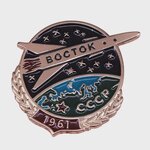
Советский космический корабль "Bocток". Значок CCCP "День космонавтики 1961". Soviet spacecraft "Bostok." USSR badge "Cosmonautics Day 1961". Nave espacial soviética "Bostok". Insignia de la URSS "Día de la Cosmonáutica 1961".
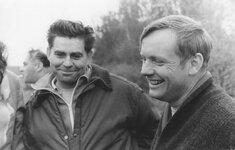
"Американский астронавт, первым ступивший на поверхность Луны, — Нил Армстронг прибыл в Новосибирск вместе с двумя советскими космонавтами, Георгием Береговым и Константином Феоктистовым. Он побывал в Академгородке спустя почти год после своего легендарного полёта — 30 мая 1970 года.
Во время визита академик Лаврентьев пригласил Армстронга и других советских космонавтов на борт яхты «Факел» и показал им наше Обское водохранилище. Как рассказывается на сайте NASA, в день визита космонавтов в Новосибирск в городе была пасмурная погода.
— Несмотря на пасмурность, группа наслаждалась прекрасным пикником в сельской местности, а Армстронг продемонстрировал свои кулинарные таланты и приготовил котелок ухи, — сообщается на их сайте". (Алина Каур. "Нил Армстронг — 1970 год").
.....................................................................................................................
Примечание: на фото слева направо: cоветский лётчик-космонавт Георгий Береговой и американский астронавт Нил Армстронг во время обеда на берегу Обского водохранилища. Фото: архив Сибирского Отделения Российской Академии Наук. American astronaut Neil Armstrong, the first man to set foot on the surface of the Moon, arrived in Novosibirsk together with two Soviet cosmonauts, Georgy Beregovoy and Konstantin Feoktistov. He visited Akademgorodok almost a year after his legendary flight — on May 30, 1970. During the visit, Academician Mikhail Lavrentyev invited Armstrong and the Soviet cosmonauts aboard the yacht "Fakel" ("Torch") and showed them the Ob Reservoir. According to the NASA website, the weather in Novosibirsk on the day of the visit was cloudy.
“Despite the overcast weather, the group enjoyed a wonderful picnic in the countryside, and Armstrong demonstrated his culinary skills by cooking a pot of fish soup,” the NASA website reports.
Note: In the photograph, from left to right, are Soviet cosmonaut Georgy Beregovoy and American astronaut Neil Armstrong during lunch on the shore of the Ob Reservoir. Photo: Archive of the Siberian Branch of the Russian Academy of Sciences. El astronauta estadounidense Neil Armstrong, el primer ser humano en pisar la superficie de la Luna, llegó a Novosibirsk junto con dos cosmonautas soviéticos, Gueorgui Beregovói y Konstantín Feoktístov. Visitó Akademgorodok casi un año después de su legendario vuelo, el 30 de mayo de 1970. Durante la visita, el académico Mijaíl Lavréntiev invitó a Armstrong y a los cosmonautas soviéticos a bordo del yate «Fakel» («Antorcha») y les mostró el embalse de Ob. Según se informa en el sitio web de la NASA, el día de la visita de los cosmonautas a Novosibirsk el tiempo estaba nublado.
«A pesar del cielo cubierto, el grupo disfrutó de un magnífico picnic en el campo, y Armstrong demostró sus habilidades culinarias preparando una olla de sopa de pescado», señala el sitio web de la NASA.
Nota: En la fotografía, de izquierda a derecha, aparecen el cosmonauta soviético Gueorgui Beregovói y el astronauta estadounidense Neil Armstrong durante un almuerzo en la orilla del embalse de Ob. Fotografía: Archivo de la Sección Siberiana de la Academia Rusa de Ciencias.
Документальный фильм "Проект "Фобос". Творческое Объединение "Экран", 1988 г.
О запуске космического аппарата к спутнику Марса Фобосу, а также о программе эксперимента.
Автор сценария - Сергей Вологдин
Автор сценария - А. Григорьев
Автор сценария - Владимир Иванов
Режиссер - Сергей Вологдин
Режиссер - Олег Малинин Оператор - Александр Щавлев Documentary "Project Phobos." Creative Association "Ekran", 1988
About the launch of the spacecraft to the Martian moon Phobos, as well as the experimental program.
Screenplay: Sergey Vologdin
Screenplay: A. Grigoriev
Screenplay: Vladimir Ivanov
Director: Sergey Vologdin
Director: Oleg Malinin Cinematographer: Alexander Shchavlev Documental "Proyecto Fobos".
Asociación creativa "Ekran", 1988
Trata sobre el lanzamiento de la nave espacial a Fobos, la luna marciana, y el programa experimental.
Guion: Sergey Vologdin
Guion: A. Grigoriev
Guion: Vladimir Ivanov
Director: Sergey Vologdin
Director: Oleg Malinin Director de fotografía: Alexander Shchavlev
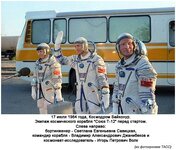
17 июля 1984 года. Космодром Байконур. Экипаж космического корабля "Союз Т-12" перед стартом. На фото слева направо: бортинженер - Светлана Евгеньевна Савицкая, командир корабля - Владимир Александрович Джанибеков и космонавт - исследователь Игорь Петрович Волк. July 17, 1984. Baikonur Cosmodrome. The crew of the Soyuz T-12 spacecraft before launch. Pictured, left to right: flight engineer Svetlana Evgenyevna Savitskaya, spacecraft commander Vladimir Aleksandrovich Dzhanibekov, and cosmonaut-researcher Igor Petrovich Volk. 17 de julio de 1984. Cosmódromo de Baikonur. La tripulación de la nave espacial Soyuz T-12 antes del lanzamiento. En la imagen, de izquierda a derecha: la ingeniera de vuelo Svetlana Evgenyevna Savitskaya, el comandante de la nave espacial Vladimir Aleksandrovich Dzhanibekov y el cosmonauta e investigador Igor Petrovich Volk.
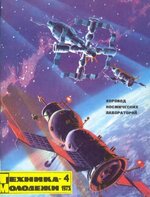
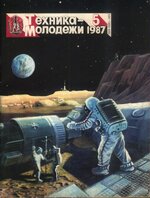
Космические обложки журнала "Техника - молодежи". №4, 1973 г.
1 - я страница обложки - картина художников А. Леонова и А. Соколова. Space covers of the magazine "Technology for Youth." Issue No. 4, 1973.
Page 1 of the cover: painting by A. Leonov and A. Sokolov. Portadas espaciales de la revista «Tecnología para la Juventud». Número 4, 1973.
Página 1 de la portada: pintura de A. Leonov y A. Sokolov.
"Со старта прошла неделя. Заполненная разговорами с киборгом, она пролетела незаметно. Экспресс проходил пояс астероидов. Пояс традиционно считался зоной повышенной метеорной опасности. По сравнению с другими районами солнечной системы вероятность столкновения действительно повышается здесь в тысячи раз, но все равно остается ничтожной.
— Можно, я сам сварю себе кофе? — спросил Двинский.
— Вам не нравится мой метод?
— Нравится. Но я никогда не варил кофе в невесомости. Сейчас мне кажется, что вы варите его почти так, как кое-кто на Земле. Возможно, когда я сам его сварю, ваш мне понравится еще больше.
— Тогда действуйте, — сказал киборг. — Правда, это не по правилам. Мы в поясе астероидов, и пассажирам полагается сидеть по местам. Могут быть ускорения, толчки. Экспресс уходит от метеорита, а вы влетаете во что-нибудь головой. Но что нам правила? Не можете же вы сорок часов подряд не вставать с кресла.
Двинский возился у кухонного автомата. В принципе экспресс мог нести в себе пять человек. Сейчас четыре кресла были сняты, и места было достаточно. Кухонный автомат размещался позади, справа от кресла Двинского. Рядом с автоматом был иллюминатор. За прозрачным стеклом начиналась пустота, заполненная чернотой неба. Окно в черноту, посыпанную мелкими звездами — как порошок кофе с сахаром перед тем, как его заваривать по-турецки.
Как это делается в невесомости? Очень просто, Настенька. Элементарно, любимая. Жидкость слегка намагничивается. Или электризуется. Это раз. Джезва тоже электризуется. Или намагничивается. Это два. Теперь это уже не джезва, а магнитная ловушка. Магнитная чашка. Сейчас мы будем пить кофе по-турецки из магнитных чашек…
Джезву вырвало из рук Двинского. Самого его бросило вперед — мимо иллюминатора, головой к пульту, к металлическим углам и напряжению. Но он не ударился о пульт. У самого пульта его подтормозило, остановило, поставило на ноги. Потом его швырнуло в кресло. Потом были перегрузки.
Двинский осматривал кабину. Немного кофе, две маленькие чашки. Но кабину испачкало основательно. Теперь он с тряпкой в руках ползал по полу, отмывая кофейные пятна. Киборг ему помогал.
— Должны быть две лужи в углу. Правильно. Еще правее.
— Точно, — сказал Двинский, снимая пятно тряпкой. — Как вы их находите? Разве у вас есть глаза внутри кабины?
— Нет, — сказал киборг. — Они глядят во вселенную. Но у меня есть инерционные датчики.
— Вы хотите сказать, что реагируете на смещение центра тяжести?
— Естественно.
— На смещение из-за пролитого кофе?
— Почему нет?
— Нужна потрясающая точность.
— Что вы знаете о моей точности?
— Ничего, — сказал Двинский. Он нашел второе пятно в углу. — Нет, нет, нет. Я ничего не знаю. Но каждый сравнивает с собой. И еще — как вам удалось сманеврировать так, что я очутился в кресле? По-моему, вы спасли мне жизнь.
— Не стоит благодарности. Нам угрожал метеорит. Есть множество траекторий, уводящих от опасности. Бесконечное множество. Оно содержит бесконечное подмножество траекторий, на которых инерционные силы бросают вас в кресло. Что остается? Выбрать путь, оптимальный по какому-либо параметру. Например, по величине ускорений.
— Но ведь это очень сложная вариационная задача! — воскликнул Двинский. — Ее нужно решить, и практически мгновенно! Разве это возможно?
— Почему нет? — сказал киборг. — Если решение однозначно, процесс его нахождения сводится к переводу. Это чистая лингвистика. Вы переводите задачу с языка начальных условий на язык решений. Естественно, все переводят с разной скоростью.
— И вы быстрее всех?
— Нет, — сказал киборг. — Как пишут в анкетах, я владею обоими языками в совершенстве. Мне не нужно переводить. Если задача поставлена, я сразу знаю решение.
— Слова я слышу, — сказал Двинский. — Впрочем, если вы делаете такие вещи инстинктивно, как я перехожу улицу, мне очевидна и суть. Только почему я не оказался в кресле вверх ногами? Впрочем, для вас это тоже просто.
— Естественно, — сказал киборг. — Я могу придать вам любое положение относительно кабины. Могу усадить в кресло, прижать лицом к иллюминатору, положить вашу руку на пульт, заставить нажать какую-нибудь кнопку. Наш ручной пульт — фикция. Когда кораблем управляет робот, пилот всегда может перехватить управление. У нас такое возможно лишь в принципе. Сигнал с пульта перебивает мои команды, но от меня зависит, чтобы пульт молчал.
— Почему так сделано? — спросил Двинский. Вновь на секунду он ощутил знакомое чувство, будто на него повеяло холодом. — Зачем?
— Никто этого не предвидел, — сказал киборг. — Все думали, что у пилота есть возможность взять управление на себя. На деле получилось не так. И правильно. Человек всегда во власти эмоции. У него могут возникнуть галлюцинации, он может сойти с ума, его может затопить черная волна из глубин психики. Я знаю это на опыте. Мало ли что может случиться с человеком!..
— А с вами?
— К моему глубокому сожалению, — монотонно произнес киборг, — ничего.
Двинский любовался Юпитером. Более величественного зрелища он не видел. Земля тоже впечатляет, но мы привыкли к Земле. Юпитер — другое дело. Никакая кинохроника не в силах передать вид на Юпитер с расстояния 'в миллион километров. Бездонные глубины атмосферы, выпуклости тайфунов, полосы облаков, круглые тени спутников. И то, для чего в языке еще нет подходящих слов". (Михаил Пухов. "Терминатор").
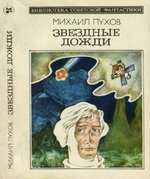
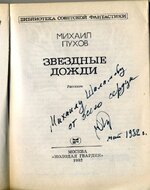
......................................................................................................... Цит. по: Михаил Георгиевич Пухов. /Звездные дожди. /Рассказы /Москва. /Издательство Молодая гвардия, 1982 г. (Библиотека советской фантастики).
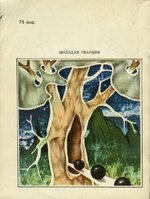
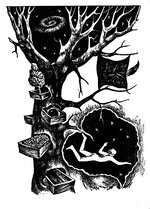
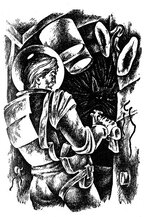
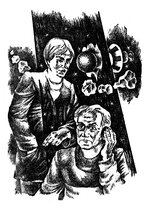
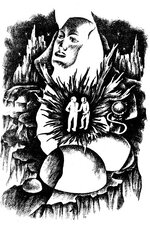
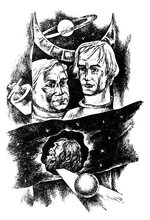
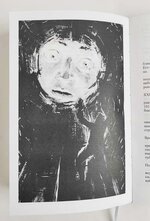
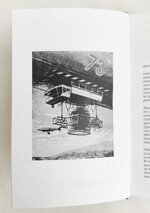
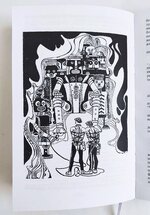
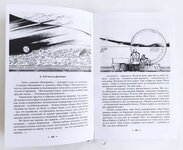
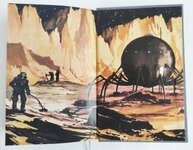
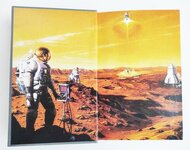
На фотографиях первая и последняя страницы обложки а также иллюстрации из книги "Звездные дожди". На титульном листе книги автограф автора. A week had passed since launch. Filled with conversations with the cyborg, it had flown by unnoticed. The express ship was crossing the asteroid belt. Traditionally, the belt was considered a zone of increased meteor hazard. Compared to other regions of the Solar System, the probability of collision was indeed thousands of times greater here, but it still remained negligible.
“May I make my own coffee?” Dvinsky asked.
“Do you dislike my method?”
“No, I like it. But I have never made coffee in zero gravity. Right now it seems to me that you brew it almost the same way some people do on Earth. Perhaps if I make it myself, I’ll appreciate yours even more.”
“Then go ahead,” said the cyborg. “Though it’s against regulations. We are in the asteroid belt, and passengers are supposed to remain in their seats. There may be accelerations and jolts. The express ship may dodge a meteorite, and you could end up hitting your head on something. But what are rules to us? You can’t sit in a chair for forty hours straight without moving.”
Dvinsky was busy at the galley dispenser. In principle, the express ship could carry five people. At the moment, four seats had been removed, leaving plenty of space. The galley unit was located behind and to the right of Dvinsky’s seat. Next to it was a porthole. Beyond the transparent glass began the void, filled with the blackness of space. A window into darkness sprinkled with tiny stars—like coffee grounds mixed with sugar before being brewed Turkish-style.
How is that done in zero gravity? Very simply, Nastenka. Elementary, my dear. The liquid is slightly magnetized. Or electrified. That’s one. The cezve is also electrified. Or magnetized. That’s two. Now it is no longer a cezve but a magnetic trap. A magnetic cup. We are about to drink Turkish coffee from magnetic cups...
The cezve was torn from Dvinsky’s hands. He himself was hurled forward—past the porthole, headfirst toward the control panel, toward metal edges and danger. But he never struck the panel. Just before reaching it, he was slowed, stopped, and set upright. Then he was thrown back into his seat. Then came the overloads.
Dvinsky surveyed the cabin. A little coffee, two small cups. Yet the cabin had been thoroughly splattered. Now he crawled across the floor with a cloth, cleaning coffee stains. The cyborg was helping him.
“There should be two puddles in the corner. Correct. A little farther to the right.”
“Exactly,” Dvinsky said, wiping away a stain. “How do you find them? Do you have eyes inside the cabin?”
“No,” said the cyborg. “They look out into the universe. But I have inertial sensors.”
“You mean you respond to shifts in the center of mass?”
“Naturally.”
“To shifts caused by spilled coffee?”
“Why not?”
“That requires astonishing precision.”
“What do you know about my precision?”
“Nothing,” Dvinsky replied. He found the second stain in the corner. “No, no, no. I know nothing. But everyone compares things to themselves. And another thing—how did you maneuver so that I ended up back in my seat? I think you saved my life.”
“You’re welcome. A meteorite threatened us. There are many trajectories that avoid danger. An infinite number. Among them is an infinite subset of trajectories on which inertial forces throw you into your seat. What remains? To choose a path optimal by some parameter—for example, minimizing acceleration.”
“But that’s an extremely complex variational problem!” exclaimed Dvinsky. “It has to be solved practically instantaneously! Is that even possible?”
“Why not?” said the cyborg. “If the solution is unique, the process reduces to translation. It is pure linguistics. You translate the problem from the language of initial conditions into the language of solutions. Naturally, everyone translates at different speeds.”
“And you are faster than anyone?”
“No,” said the cyborg. “As people write in questionnaires, I am fluent in both languages. I do not need to translate. If a problem is posed, I know the solution immediately.”
“I hear the words,” said Dvinsky. “Though if you do such things instinctively, the way I cross a street, then I understand the essence. But why didn’t I end up upside down in the seat? Though I suppose that would have been easy for you as well.”
“Naturally,” said the cyborg. “I can place you in any orientation relative to the cabin. I can seat you in a chair, press your face against the porthole, place your hand on the control panel, make you press a button. Our manual control panel is a fiction. When a robot pilots the ship, the pilot is theoretically able to take control. In practice, that is only possible in theory. Signals from the panel can override my commands, but it is up to me to ensure the panel remains silent.”
“Why was it designed that way?” Dvinsky asked. Once again, for a moment, he felt that familiar sensation—as though a cold breeze had brushed against him.
“No one foresaw it,” said the cyborg. “Everyone assumed the pilot could take over control. In reality, it turned out otherwise. And rightly so. Humans are always subject to emotion. They may experience hallucinations, lose their minds, be overwhelmed by a dark wave rising from the depths of the psyche. I know this from experience. So many things can happen to a human being…”
“And to you?”
“To my deep regret,” the cyborg said in a monotone voice, “nothing.”
Dvinsky admired Jupiter. He had never seen anything more majestic. Earth is impressive too, but we are accustomed to Earth. Jupiter was something else entirely. No film recording could convey the view of Jupiter from a distance of a million kilometers. The bottomless depths of its atmosphere, the bulges of storms, the cloud bands, the round shadows of its moons. And things for which language still had no suitable words.
The photographs show the front and back covers as well as illustrations from the book Star Showers. The title page bears the author’s autograph. Había pasado una semana desde el lanzamiento. Llena de conversaciones con el cíborg, transcurrió sin que se notara. La nave exprés atravesaba el cinturón de asteroides. Tradicionalmente, esta región se consideraba una zona de mayor peligro meteórico. En comparación con otras regiones del Sistema Solar, la probabilidad de colisión era efectivamente miles de veces mayor aquí, pero aun así seguía siendo insignificante.
—¿Puedo prepararme yo mismo el café? —preguntó Dvinski.
—¿No le gusta mi método?
—Sí me gusta. Pero nunca he preparado café en ingravidez. Ahora mismo me parece que usted lo prepara casi igual que algunas personas en la Tierra. Tal vez, cuando lo haga yo mismo, me guste aún más el suyo.
—Entonces adelante —dijo el cíborg—. Aunque va contra las normas. Estamos en el cinturón de asteroides y los pasajeros deben permanecer en sus asientos. Puede haber aceleraciones y sacudidas. La nave puede esquivar un meteorito y usted podría golpearse la cabeza contra algo. Pero ¿qué son las normas para nosotros? No puede permanecer sentado cuarenta horas seguidas sin levantarse.
Dvinski se ocupó de la máquina de cocina. En principio, la nave podía transportar cinco personas. En ese momento se habían retirado cuatro asientos y había espacio de sobra. El módulo de cocina estaba detrás y a la derecha del asiento de Dvinski. Junto a él había una escotilla. Más allá del cristal transparente comenzaba el vacío, lleno de la negrura del espacio. Una ventana hacia la oscuridad salpicada de pequeñas estrellas, como café molido mezclado con azúcar antes de prepararlo al estilo turco.
¿Cómo se hace eso en ingravidez? Muy sencillo, Nastenka. Elemental, querida. El líquido se magnetiza ligeramente. O se electrifica. Eso es lo primero. La cafetera también se electrifica. O se magnetiza. Eso es lo segundo. Ahora ya no es una cafetera, sino una trampa magnética. Una taza magnética. Vamos a beber café turco en tazas magnéticas...
La cafetera salió despedida de las manos de Dvinski. Él mismo fue lanzado hacia adelante, más allá de la escotilla, de cabeza hacia el panel de control, hacia las esquinas metálicas y el peligro. Pero no llegó a golpear el panel. Justo antes de alcanzarlo fue frenado, detenido y puesto de pie. Después fue arrojado de nuevo a su asiento. Luego llegaron las sobrecargas.
Dvinski observó la cabina. Un poco de café, dos pequeñas tazas. Sin embargo, la cabina había quedado bastante manchada. Ahora se arrastraba por el suelo con un trapo limpiando las manchas de café. El cíborg lo ayudaba.
—Deberían quedar dos charcos en la esquina. Correcto. Un poco más a la derecha.
—Exacto —dijo Dvinski mientras limpiaba una mancha—. ¿Cómo los encuentra? ¿Tiene ojos dentro de la cabina?
—No —respondió el cíborg—. Mis ojos observan el universo. Pero tengo sensores inerciales.
—¿Quiere decir que responde a los desplazamientos del centro de masa?
—Naturalmente.
—¿A desplazamientos provocados por café derramado?
—¿Por qué no?
—Eso requiere una precisión asombrosa.
—¿Qué sabe usted de mi precisión?
—Nada —respondió Dvinski. Encontró la segunda mancha en la esquina—. No, no, no. No sé nada. Pero todos comparamos con nosotros mismos. Y otra cosa: ¿cómo maniobró para que terminara en mi asiento? Creo que me salvó la vida.
—No tiene por qué agradecerlo. Nos amenazaba un meteorito. Existen muchas trayectorias para evitar un peligro. Una cantidad infinita. Entre ellas hay un subconjunto infinito de trayectorias en las que las fuerzas de inercia lo lanzan a usted a su asiento. ¿Qué queda entonces? Elegir la trayectoria óptima según algún parámetro, por ejemplo, la magnitud de las aceleraciones.
—¡Pero eso es un problema variacional extremadamente complejo! —exclamó Dvinski—. ¡Y debe resolverse prácticamente al instante! ¿Es siquiera posible?
—¿Por qué no? —dijo el cíborg—. Si la solución es única, el proceso se reduce a una traducción. Es pura lingüística. Usted traduce el problema del lenguaje de las condiciones iniciales al lenguaje de las soluciones. Naturalmente, cada uno traduce a una velocidad diferente.
—¿Y usted es el más rápido?
—No —respondió el cíborg—. Como se suele escribir en los cuestionarios, domino ambos lenguajes a la perfección. No necesito traducir. Si se plantea un problema, conozco inmediatamente la solución.
—Oigo las palabras —dijo Dvinski—. Aunque, si hace estas cosas de forma instintiva, como yo cruzo una calle, entonces comprendo la esencia. Pero ¿por qué no terminé sentado boca abajo? Aunque supongo que eso también habría sido fácil para usted.
—Naturalmente —dijo el cíborg—. Puedo colocarlo en cualquier orientación respecto a la cabina. Puedo sentarlo en una silla, pegar su rostro a la escotilla, poner su mano sobre el panel de control y hacerle pulsar un botón. Nuestro panel de control manual es una ficción. Cuando una nave está pilotada por un robot, el piloto puede, en teoría, tomar el control. En la práctica, eso solo existe en teoría. Las señales del panel pueden anular mis órdenes, pero depende de mí que el panel permanezca en silencio.
—¿Y por qué se diseñó así? —preguntó Dvinski. Una vez más sintió aquella extraña sensación, como si una corriente fría lo rozara.
—Nadie lo previó —respondió el cíborg—. Todos suponían que el piloto podría asumir el control. En realidad resultó de otro modo. Y correctamente. El ser humano siempre está sometido a las emociones. Puede sufrir alucinaciones, perder la razón, verse inundado por una ola oscura surgida de las profundidades de su psique. Lo sé por experiencia. A una persona pueden ocurrirle muchas cosas...
—¿Y a usted?
—Para mi profundo pesar —dijo el cíborg con voz monótona—, nada.
Dvinski admiraba Júpiter. Nunca había visto nada más majestuoso. La Tierra también impresiona, pero estamos acostumbrados a ella. Júpiter era otra cosa. Ninguna filmación podía transmitir la vista de Júpiter desde una distancia de un millón de kilómetros. Las profundidades insondables de su atmósfera, las protuberancias de las tormentas, las bandas de nubes, las sombras redondas de sus satélites. Y cosas para las que el lenguaje aún no había encontrado palabras adecuadas.
(Mijaíl Pújov, “El Terminador”)
Fuente: Mijaíl Gueórguievich Pújov, Lluvias de estrellas (Relatos), Moscú, Editorial Molodaya Gvardiya, 1982 (Colección de Ciencia Ficción Soviética).
Las fotografías muestran las cubiertas delantera y trasera, así como ilustraciones del libro Lluvias de estrellas. En la página de título aparece el autógrafo del autor.
Михаил Георгиевич Пуховродился 3 января 1944 г. в Томске в семье выдающегося математика, академика Георгия Евгеньевича Пухова.
В 1967 году Михаил окончил Московский физико-технический институт, в 1972-м защитил кандидатскую диссертацию в области физико-математических наук и попал по распределению в Центральный научно-исследовательский радиотехнический институт. Карьера молодого учёного складывалась довольно успешно: он руководил важными научно-исследовательскими проектами, готовился к защите докторской… Помимо прочего Пухов проявил себя как изобретатель – его разработки отмечены пятью авторскими свидетельствами.
Но наука была не единственным увлечением Михаила. Ещё в школьные годы он начал сочинять небольшие рассказы, первый из которых датирован 1960 г. Некоторые из этих ранних работ были опубликованы издательством «Молодая гвардия». Постепенно из хобби писательство превратилось в любимую профессию. Однако и в творчестве Пухов продолжает оставаться учёным: все его фантастические идеи имеют тщательное научное обоснование.
Сотрудничество с «Молодой гвардией» привело Михаила Георгиевича в редакцию одного из её изданий – журнала «Техника – молодёжи», где в 1979 г. писатель возглавил отдел научной фантастики. Этот шаг дался ему нелегко, ведь он означал конец научной карьеры. Многие из близкого окружения Михаила тогда не поняли его выбор… За сравнительно короткое время Михаил Пухов полностью освоил новые для себя профессии редактора и журналиста. По оценкам коллег, он подготавливал 20 и более процентов публикуемых в журнале статей, был ответственным за выпуск ряда тематических номеров, например № 11 за 1979 г., познакомившего читателей с французским журналом «Пиф». Благодаря отделу научной фантастики впервые в СССР увидели свет «Фонтаны рая» и «2010: Одиссея-2» Артура Кларка; «Звёздные короли» и «Возвращение на звёзды» Эдмонда Гамильтона, некоторые другие значительные произведения зарубежных авторов. Михаил Пухов не раз становился первооткрывателем молодых талантов: литературный дебют многих отечественных фантастов состоялся именно в «Технике – молодёжи».
Писатель был одним из создателей художественной выставки «Время – Пространство – Человек»; организовал экспозицию научно-фантастических картин на выставке НТТМ-80; неоднократно участвовал в подготовке и проведении пробега самодельных автоконструкций. В конце 80-х – начале 90-х гг. вёл семинары Всесоюзного творческого объединения молодых писателей-фантастов.
Первым опубликованным произведением Михаила Пухова считается научно-фантастический рассказ «Охотничья экспедиция» (сб. «Фантастика-67», М., Молодая гвардия, 1968). Другие его сочинения в дальнейшем печатались в журналах «Техника – молодёжи», «Знание – сила», «Земля и Вселенная», «Химия и жизнь», «Наука в твоей профессии», «Искатель» и др. Изданы также четыре прижизненных авторских книги: три на русском языке: «Картинная галерея» (1977), «Звёздные дожди» (1982), «Семя зла» (1983) и одна на немецком: «Sternenregen» (1988). Значительная часть наследия Пухова переведена на болгарский, венгерский, польский, французский, итальянский и другие языки народов мира. Некоторые работы были экранизированы.
Два произведения крупной формы – роман «Дуэльный зал» и мозаика «Дерево и река» – остались незавершёнными, при жизни писателя печатались лишь их фрагменты. Так, из «Дуэльного зала» была опубликована лишь одна часть – «Корабль роботов» в виде рассказа «Человек с пустой кобурой» (1977) и повести «Корабль роботов» (1982).
В раннем творчестве Пухова заметно влияние американских писателей, особенно Эрнеста Хемингуэя: первые научно-фантастические рассказы и юморески написаны в характерном «небрежном» стиле; а также Велимира Хлебникова и других русских футуристов. Эти тенденции прослеживаются и в более поздних работах, например в рассказах «Планета за 100 000» (1983) и «Палиндром в антимир» (1971). Во многих случаях Михаил Пухов использует художественную форму как средство выражения определённых идей. Так, фантастические декорации становятся экспериментальным полем для научных разработок: колонисты получают энергию с помощью облицовки космодрома фотоэлементами («Порт Перпетуум», 1982); гипотеза излагается в форме развёрнутой метафоры: изменение курса космического корабля под действием гравитационного поля нейтронной звезды разъясняется на примере бильярдного приёма – карамболя («Над бездной», 1974).
Помимо прозы, Михаил Пухов также писал стихи; проявил себя и как талантливый переводчик с английского, польского и болгарского. Пожалуй, его любимыми авторами были английские поэты XVIII–XIX веков, в частности Льюис Кэрролл – перевод Пуховым его поэмы «Охота на Снарка» по праву считается одним из наиболее удачных в современной русской литературе. Кроме того, Михаил Георгиевич известен как автор критических, научно-популярных и искусствоведческих статей.
Михаил Пухов был человеком обширных и разнообразных интересов: ценил и понимал природу, животный мир. Одним из любимых его развлечений была рыбная ловля – эту страсть он унаследовал от отца. Михаил Георгиевич профессионально владел игрой в шахматы и бильярд. Более десяти раз безвозмездно сдавал кровь, за что заслужил звание донора СССР 2-й степени. Увлекался философией и на протяжении многих лет был старостой философского семинара.
С развитием информатики и вычислительной техники для Пухова открылась возможность заявить о себе и в качестве программиста. В 1985 г. он организовал новый раздел журнала «Техника – молодёжи» под названием «Клуб электронных игр». В рамках этого проекта им был написан ряд игр для программируемых микрокалькуляторов («Электроника МК-61», «Электроника БЗ-34» и др.), в полной мере продемонстрировавших неизвестные ранее возможности этих устройств, которые первоначально использовались лишь для решения прикладных задач. Впервые в мире Пухов создал литературное произведение по мотивам компьютерной игры собственной разработки («Истинная правда», 1985). В дальнейшем (1991–1994 гг.) он создавал программные продукты для компьютера «Enterprise 128».
В сентябре 1994 г. врачи обнаружили у Михаила Георгиевича рак. Была проведена сложная операция, после которой писатель оказался практически прикован к постели. Но и после этого он продолжал работать – например, сделал репортаж о своём пребывании в больнице. Однако, несмотря на усилия медиков, в конце января 1995 г. состояние Михаила Георгиевича резко ухудшилось. На несколько дней он впал в кому и 21 января, не приходя в сознание, скончался. Mikhail Georgievich Pukhov was born on January 3, 1944, in Tomsk, into the family of the outstanding mathematician and academician Georgy Yevgenyevich Pukhov.
In 1967, Mikhail graduated from the Moscow Institute of Physics and Technology. In 1972, he defended his Candidate of Sciences dissertation in physics and mathematics and was assigned to the Central Scientific Research Radio Engineering Institute. The young scientist's career developed successfully: he led important research projects and was preparing to defend his doctoral dissertation. In addition, Pukhov proved himself an inventor—his developments were recognized with five inventor's certificates.
Science, however, was not Mikhail's only passion. During his school years he began writing short stories, the first of which dates back to 1960. Some of these early works were published by the Young Guard publishing house. Gradually, writing evolved from a hobby into his favorite profession. Yet even in literature Pukhov remained a scientist: all his science-fiction ideas were carefully grounded in scientific reasoning.
His collaboration with Young Guard led him to the editorial office of one of its publications, the magazine Tekhnika Molodezhi (Technology for Youth), where in 1979 he became head of the science-fiction department. This step was not easy, as it meant the end of his scientific career. Many people close to him did not understand his choice at the time.
In a relatively short period, Mikhail Pukhov mastered the professions of editor and journalist. According to colleagues, he prepared 20 percent or more of the articles published in the magazine and was responsible for a number of thematic issues, including No. 11 of 1979, which introduced Soviet readers to the French magazine Pif. Thanks to the science-fiction department, Soviet readers first encountered Arthur C. Clarke's The Fountains of Paradise and 2010: Odyssey Two, Edmond Hamilton's Star Kings and Return to the Stars, and other significant works by foreign authors. Pukhov also became a discoverer of young talent: many Soviet science-fiction writers made their literary debut in Tekhnika Molodezhi.
The writer was one of the creators of the art exhibition Time – Space – Man, organized a science-fiction art exhibition at the NTTM-80 exhibition, and repeatedly participated in the preparation and organization of rallies for homemade vehicle designs. In the late 1980s and early 1990s, he conducted seminars for the All-Union Creative Association of Young Science-Fiction Writers.
Mikhail Pukhov's first published work is considered to be the science-fiction short story The Hunting Expedition (in the anthology Fantastika-67, Moscow, Young Guard, 1968). His later works appeared in magazines such as Tekhnika Molodezhi, Znanie – Sila (Knowledge Is Power), Zemlya i Vselennaya (Earth and Universe), Khimiya i Zhizn (Chemistry and Life), Nauka v Tvoey Professii (Science in Your Profession), Iskatel (The Seeker), and others.
Four books by the author were published during his lifetime: three in Russian—Picture Gallery (1977), Star Showers (1982), and The Seed of Evil (1983)—and one in German: Sternenregen (1988). A significant part of Pukhov's literary legacy has been translated into Bulgarian, Hungarian, Polish, French, Italian, and many other languages. Some of his works were adapted for the screen.
Two major works—a novel titled The Duel Hall and a mosaic novel titled The Tree and the River—remained unfinished. During his lifetime only fragments of them were published. Thus, from The Duel Hall, only one section appeared, first as the short story The Man with the Empty Holster (1977) and later as the novella The Robot Ship (1982).
Pukhov's early works reveal the influence of American writers, especially Ernest Hemingway: his first science-fiction stories and humorous sketches were written in a characteristically "casual" style. The influence of Velimir Khlebnikov and other Russian Futurists is also evident. These tendencies can be traced in later works such as Planet for 100,000 (1983) and Palindrome into the Anti-World (1971).
In many cases, Mikhail Pukhov used artistic form as a means of expressing specific ideas. Science-fiction settings became experimental fields for scientific concepts: colonists obtain energy by covering a spaceport with photoelectric cells (Port Perpetuum, 1982); a scientific hypothesis is presented through an extended metaphor, as when the course change of a spacecraft under the influence of a neutron star's gravity is explained through a billiard shot called a carom (Above the Abyss, 1974).
In addition to prose, Mikhail Pukhov also wrote poetry and proved himself a talented translator from English, Polish, and Bulgarian. Perhaps his favorite authors were English poets of the 18th and 19th centuries, especially Lewis Carroll. Pukhov's translation of Carroll's poem The Hunting of the Snark is rightfully considered one of the finest in modern Russian literature.
Furthermore, Mikhail Georgievich was known as the author of critical essays, popular science articles, and works on art history.
Mikhail Pukhov was a man of broad and diverse interests. He appreciated and understood nature and wildlife. One of his favorite hobbies was fishing—a passion inherited from his father. He was highly skilled in chess and billiards. He donated blood more than ten times without compensation, earning the title of Second-Class Donor of the USSR. He was also interested in philosophy and for many years served as chairman of a philosophical seminar.
With the development of computer science and computing technology, Pukhov found another avenue for his talents—as a programmer. In 1985, he organized a new section of Tekhnika Molodezhi called The Electronic Games Club. Within this project he created a number of games for programmable calculators such as the Elektronika MK-61 and Elektronika B3-34, demonstrating previously unknown capabilities of devices that had originally been intended only for practical calculations.
For the first time in the world, Pukhov created a literary work based on a computer game of his own design (The Whole Truth, 1985). Later, between 1991 and 1994, he developed software for the Enterprise 128 computer.
In September 1994, doctors diagnosed Mikhail Georgievich with cancer. A complex operation was performed, after which he became almost bedridden. Even then he continued to work—for example, writing a report about his stay in the hospital. Despite the efforts of doctors, however, his condition deteriorated sharply in January 1995. He fell into a coma for several days and died on January 21, 1995, without regaining consciousness.
Mijaíl Gueórguievich Pujov nació el 3 de enero de 1944 en Tomsk, en la familia del destacado matemático y académico Gueorgui Yevguénevich Pujov.
En 1967, Mijaíl se graduó en el Instituto de Física y Tecnología de Moscú. En 1972 defendió su tesis de candidato en ciencias físico-matemáticas y fue destinado al Instituto Central de Investigación Científica de Radioingeniería. La carrera del joven científico se desarrolló con éxito: dirigió importantes proyectos de investigación y se preparaba para defender su doctorado. Además, Pujov destacó como inventor; sus desarrollos fueron reconocidos con cinco certificados de autor.
Sin embargo, la ciencia no era su única pasión. Durante los años escolares comenzó a escribir relatos cortos, el primero de los cuales data de 1960. Algunas de estas obras tempranas fueron publicadas por la editorial Molodaya Gvardiya. Poco a poco, la escritura pasó de ser un pasatiempo a convertirse en su profesión favorita. No obstante, incluso en la literatura, Pujov siguió siendo un científico: todas sus ideas de ciencia ficción estaban cuidadosamente fundamentadas desde el punto de vista científico.
Su colaboración con Molodaya Gvardiya lo llevó a la redacción de una de sus publicaciones, la revista Tekhnika Molodiozhi (Tecnología para la Juventud), donde en 1979 pasó a dirigir la sección de ciencia ficción. Este paso no fue fácil, pues significó el final de su carrera científica. Muchas personas cercanas a él no comprendieron entonces su elección.
En poco tiempo, Mijaíl Pujov dominó las profesiones de editor y periodista. Según sus colegas, preparaba más del 20 % de los artículos publicados en la revista y fue responsable de varios números temáticos, entre ellos el número 11 de 1979, que presentó a los lectores soviéticos la revista francesa Pif. Gracias a la sección de ciencia ficción, los lectores soviéticos conocieron por primera vez Las fuentes del paraíso y 2010: Odisea Dos de Arthur C. Clarke, Los reyes de las estrellas y Regreso a las estrellas de Edmond Hamilton, así como otras obras destacadas de autores extranjeros. Pujov también descubrió a numerosos jóvenes talentos: muchos escritores soviéticos de ciencia ficción debutaron precisamente en Tekhnika Molodiozhi.
El escritor fue uno de los creadores de la exposición artística Tiempo – Espacio – Hombre; organizó una exposición de arte de ciencia ficción en la muestra NTTM-80; y participó repetidamente en la preparación y realización de exhibiciones de vehículos de construcción artesanal. A finales de los años ochenta y principios de los noventa dirigió seminarios de la Asociación Creativa de Jóvenes Escritores de Ciencia Ficción de toda la Unión Soviética.
La primera obra publicada de Mijaíl Pujov se considera el relato de ciencia ficción La expedición de caza (en la antología Fantástika-67, Moscú, Molodaya Gvardiya, 1968). Posteriormente sus obras aparecieron en revistas como Tekhnika Molodiozhi, Znanie – Sila (El conocimiento es poder), Tierra y Universo, Química y Vida, La ciencia en tu profesión, Iskatel (El Buscador) y otras.
Durante su vida se publicaron cuatro libros de autor: tres en ruso—Galería de cuadros (1977), Lluvias estelares (1982) y La semilla del mal (1983)—y uno en alemán: Sternenregen (1988). Una parte importante de su legado fue traducida al búlgaro, húngaro, polaco, francés, italiano y otros idiomas. Algunas de sus obras fueron llevadas al cine.
Dos obras de gran formato, la novela La sala del duelo y la novela mosaico El árbol y el río, quedaron inacabadas. En vida del escritor solo se publicaron fragmentos de ellas. Así, de La sala del duelo apareció únicamente una parte: primero como el relato El hombre de la cartuchera vacía (1977) y más tarde como la novela corta La nave de los robots (1982).
En la obra temprana de Pujov se aprecia la influencia de escritores estadounidenses, especialmente Ernest Hemingway. Sus primeros relatos de ciencia ficción y textos humorísticos fueron escritos en un estilo deliberadamente “descuidado”. También se percibe la influencia de Velimir Jlébnikov y de otros futuristas rusos. Estas tendencias continúan en obras posteriores, como Planeta por 100.000 (1983) y Palíndromo en el antimundo (1971).
En muchos casos, Mijaíl Pujov utilizó la forma artística como medio para expresar determinadas ideas. Los escenarios de ciencia ficción se convertían en campos experimentales para conceptos científicos: los colonos obtenían energía cubriendo un cosmódromo con células fotoeléctricas (Puerto Perpetuum, 1982); una hipótesis científica era presentada mediante una metáfora desarrollada, como cuando el cambio de trayectoria de una nave espacial bajo la influencia gravitatoria de una estrella de neutrones se explica mediante una jugada de billar llamada carambola (Sobre el abismo, 1974).
Además de la prosa, Mijaíl Pujov escribió poesía y destacó como traductor del inglés, polaco y búlgaro. Entre sus autores favoritos se encontraban los poetas ingleses de los siglos XVIII y XIX, especialmente Lewis Carroll. Su traducción de La caza del Snark es considerada una de las mejores de la literatura rusa moderna.
Asimismo, Mijaíl Gueórguievich fue autor de artículos críticos, divulgativos y de historia del arte.
Era una persona de intereses amplios y diversos. Apreciaba profundamente la naturaleza y el mundo animal. Una de sus aficiones favoritas era la pesca, pasión heredada de su padre. Dominaba profesionalmente el ajedrez y el billar. Donó sangre más de diez veces de forma voluntaria, por lo que recibió el título de Donante de Segunda Clase de la URSS. También se interesó por la filosofía y durante muchos años fue coordinador de un seminario filosófico.
Con el desarrollo de la informática y la tecnología computacional, Pujov encontró una nueva forma de expresar su talento como programador. En 1985 organizó una nueva sección de Tekhnika Molodiozhi llamada Club de Juegos Electrónicos. Dentro de este proyecto creó una serie de juegos para calculadoras programables como la Elektronika MK-61 y la Elektronika B3-34, demostrando capacidades hasta entonces desconocidas de estos dispositivos.
Por primera vez en el mundo, Pujov creó una obra literaria basada en un videojuego diseñado por él mismo (La pura verdad, 1985). Más tarde, entre 1991 y 1994, desarrolló programas para el ordenador Enterprise 128.
En septiembre de 1994, los médicos le diagnosticaron cáncer. Se sometió a una compleja operación, tras la cual quedó prácticamente postrado en cama. Aun así continuó trabajando; por ejemplo, escribió un reportaje sobre su estancia en el hospital. Sin embargo, pese a los esfuerzos de los médicos, su estado empeoró gravemente en enero de 1995. Entró en coma durante varios días y falleció el 21 de enero de 1995 sin recuperar el conocimiento.
Обложка и иллюстрации к книге Михаила Пухова "Истинная правда". Издательство "Глобус". Киев. 2021.Серия: Библиотека приключеий и научной фантастики (продолжатели). Cover and illustrations for Mikhail Pukhov's book "The True Truth." Globus Publishing House, Kyiv, 2021. Series: Library of Adventures and Science Fiction (sequels). Portada e ilustraciones del libro de Mikhail Pukhov, «La Verdad». Editorial Globus, Kiev, 2021. Serie: Biblioteca de Aventuras y Ciencia Ficción (secuelas).
Космические обложки советских журналов. Журнал "Техника - молодежи". №5; 1987. Иллюстрация на обложке художника Н.Вечканова. Space-themed covers of Soviet magazines. "Technology for Youth" magazine, No. 5, 1987. Cover illustration by artist N. Vechkanov. Portadas de revistas soviéticas con temática espacial. Revista "Tecnología para la Juventud", n.º 5, 1987. Ilustración de portada del artista N. Vechkanov.
Запуск: 26 ноября 1988 15:49:34
Старт корабля произошёл 26 ноября, после одной недели задержки, внесённой для того, чтобы дать возможность французскому президенту Франсуа Миттерану присутствовать при старте. Также на старте присутствовали музыканты группы «Pink Floyd», чей концертный альбом «Delicate Sound of Thunder» советские космонавты взяли на борт, этот альбом стал первым рок-альбомом, прозвучавшим в космосе.
За время пребывания на станции «Мир», Кретьен и Волков совершили выход в открытый космос, длившийся 5 часов 57 минут. За это время они установили платформу с пятью технологическими экспериментами, необходимыми для развития программы «Гермес». Помимо этого за бортом станции был установлен эксперимент ЭРА.
Волков и Крикалёв заменили на борту станции Титова и Манарова. Кретьен пробыл на борту только 3 недели. За это время были проведены различные эксперименты. Были произведены топографические и спектральные съёмки поверхности Земли, исследования в области рентгеновской астрономии, биологические и медицинские эксперименты. Среди них были анализы крови, наблюдение за совместной работой глаз и мышц, исследования по приспособляемости к невесомости. Кроме того были произведены измерения космических лучей на борту станции.
Четвёртая основная экспедиция на станцию Мир исполнила обширную исследовательскую программу с более чем 5000 отдельными экспериментами в области рентгеновской и УФ астрономии и спектроскопии, исследовании Солнца и атмосферы, медицины, техники, биологии и материаловедения. Наблюдались источники сильного рентгеновского излучения, среди них Скорпион X-1, Центавр X-3, Сверхновая 1987A, пульсары в созвездии Паруса и Малого Магелланова Облака. При помощи УФ-спектроскопа и телескопа «Глазар» на модуле «Квант» были просканированы некоторые области неба в созвездиях Южного Креста, Возничего, Кассиопеи и Кормы.
При этом были записаны также и спектры звёзд. Многократно были записаны спектры сверхновой 1987А, с тем чтобы проследить за их временны́м изменением. Прочие исследования были посвящены загрязнению окружающей среды, плотности озонового слоя и воздействию высокоэнергетического излучения на атмосферу Земли. Было изучено возникновение заряженных частиц в верхних слоях атмосферы. Были сделаны фотографические и спектральные снимки
поверхности Земли. Soyuz TM-7 was a crewed spacecraft of the Soyuz TM series.
Crew:
Aleksandr Volkov (2nd flight) — Commander
Sergei Krikalev (1st flight) — Flight Engineer
Jean-Loup Chrétien (2nd flight) — Research Cosmonaut
Launch: November 26, 1988, 15:49:34
The launch of the spacecraft took place on November 26 after a one-week delay, introduced to allow French President François Mitterrand to attend the launch. Members of the band Pink Floyd were also present at the launch site. The Soviet cosmonauts took the band's concert album Delicate Sound of Thunder aboard the spacecraft. The album became the first rock album ever played in space.
During their stay aboard the Mir space station, Chrétien and Volkov performed a spacewalk lasting 5 hours and 57 minutes. During the EVA, they installed a platform carrying five technological experiments necessary for the development of the Hermes program. In addition, the ERA experiment was mounted outside the station.
Volkov and Krikalev replaced Titov and Manarov aboard the station. Chrétien remained on board for only three weeks. During this period, various experiments were conducted, including topographic and spectral imaging of Earth's surface, research in X-ray astronomy, and biological and medical investigations. These included blood analyses, studies of eye-muscle coordination, and investigations into adaptation to weightlessness. Measurements of cosmic rays aboard the station were also carried out.
The fourth principal expedition to the Mir station completed an extensive research program involving more than 5,000 individual experiments in the fields of X-ray and ultraviolet astronomy, spectroscopy, solar and atmospheric studies, medicine, engineering, biology, and materials science.
Sources of intense X-ray radiation were observed, including Scorpius X-1, Centaurus X-3, Supernova 1987A, and pulsars in the constellations Vela and the Small Magellanic Cloud. Using the ultraviolet spectroscope and the Glazar telescope aboard the Kvant module, several regions of the sky were scanned in the constellations Crux, Auriga, Cassiopeia, and Puppis.
Spectra of stars were also recorded. The spectra of Supernova 1987A were repeatedly measured in order to monitor their changes over time.
Other investigations focused on environmental pollution, the density of the ozone layer, and the effects of high-energy radiation on Earth's atmosphere. The formation of charged particles in the upper atmosphere was studied. Photographic and spectral images of Earth's surface were obtained. Soyuz TM-7 fue una nave espacial tripulada de la serie Soyuz TM.
Tripulación:
Aleksandr Volkov (2.º vuelo) — Comandante
Serguéi Krikaliov (1.er vuelo) — Ingeniero de vuelo
El lanzamiento de la nave tuvo lugar el 26 de noviembre, después de una semana de retraso introducida para permitir que el presidente francés François Mitterrand asistiera al despegue. También estuvieron presentes los músicos del grupo Pink Floyd. Los cosmonautas soviéticos llevaron a bordo el álbum en directo Delicate Sound of Thunder, que se convirtió en el primer álbum de rock reproducido en el espacio.
Durante su estancia en la estación espacial Mir, Chrétien y Volkov realizaron una caminata espacial de 5 horas y 57 minutos. Durante ella instalaron una plataforma con cinco experimentos tecnológicos necesarios para el desarrollo del programa Hermes. Además, se montó en el exterior de la estación el experimento ERA.
Volkov y Krikaliov sustituyeron a Titov y Manárov a bordo de la estación. Chrétien permaneció allí solamente tres semanas. Durante ese tiempo se llevaron a cabo diversos experimentos, entre ellos estudios topográficos y espectrales de la superficie terrestre, investigaciones en astronomía de rayos X, así como experimentos biológicos y médicos. Estos incluyeron análisis de sangre, observaciones sobre la coordinación entre ojos y músculos e investigaciones sobre la adaptación a la ingravidez. También se realizaron mediciones de rayos cósmicos a bordo de la estación.
La cuarta expedición principal a la estación Mir llevó a cabo un amplio programa científico que incluyó más de 5.000 experimentos individuales en los campos de la astronomía de rayos X y ultravioleta, la espectroscopia, el estudio del Sol y de la atmósfera, la medicina, la ingeniería, la biología y la ciencia de materiales.
Se observaron fuentes de intensa radiación de rayos X, entre ellas Scorpius X-1, Centaurus X-3, la Supernova 1987A y púlsares situados en la constelación de Vela y en la Pequeña Nube de Magallanes. Con ayuda del espectroscopio ultravioleta y del telescopio Glazar instalado en el módulo Kvant, se exploraron diversas regiones del cielo en las constelaciones de Cruz del Sur, Auriga, Casiopea y Popa.
También se registraron espectros de estrellas. Los espectros de la Supernova 1987A fueron observados repetidamente con el fin de seguir su evolución temporal.
Otras investigaciones estuvieron dedicadas a la contaminación ambiental, la densidad de la capa de ozono y los efectos de la radiación de alta energía sobre la atmósfera terrestre. Se estudió la formación de partículas cargadas en las capas superiores de la atmósfera. Asimismo, se obtuvieron imágenes fotográficas y espectrales de la superficie de la Tierra.
This site uses cookies to help personalise content, tailor your experience and to keep you logged in if you register.
By continuing to use this site, you are consenting to our use of cookies.